All American students know what happened in 1492. “Columbus sailed the ocean blue!” (Do they still teach that song to kids?) Something else historically-significant happened that year. Spain’s Catholic monarchs expelled the Moors/Muslims/Arabs (not interchangeable terms but often used that way) after living in peaceful coexistence for hundreds of years. The two groups believed in the same God but different prophets. (Or so many would say. ) It worked … until it didn’t.
It’s natural to consider religious tensions while visiting the Alhambra, the top tourist spot in Spain. Those tensions underlie its very existence. This astounding hilltop city — a complex, really — overlooking Granada was built by the Muslim sultans of Spain. But very little remains of their accomplishments or lives after the Christian takeover, because the victor often erases evidence of the defeated. Our Alhambra tour, in photos and captions, below. (Captions are thin because information was thin, even though we had audio guides. Now, I know I should have arranged a personal guide.) In spite of some disappointments, such as lack of signage, it was a beautiful day.
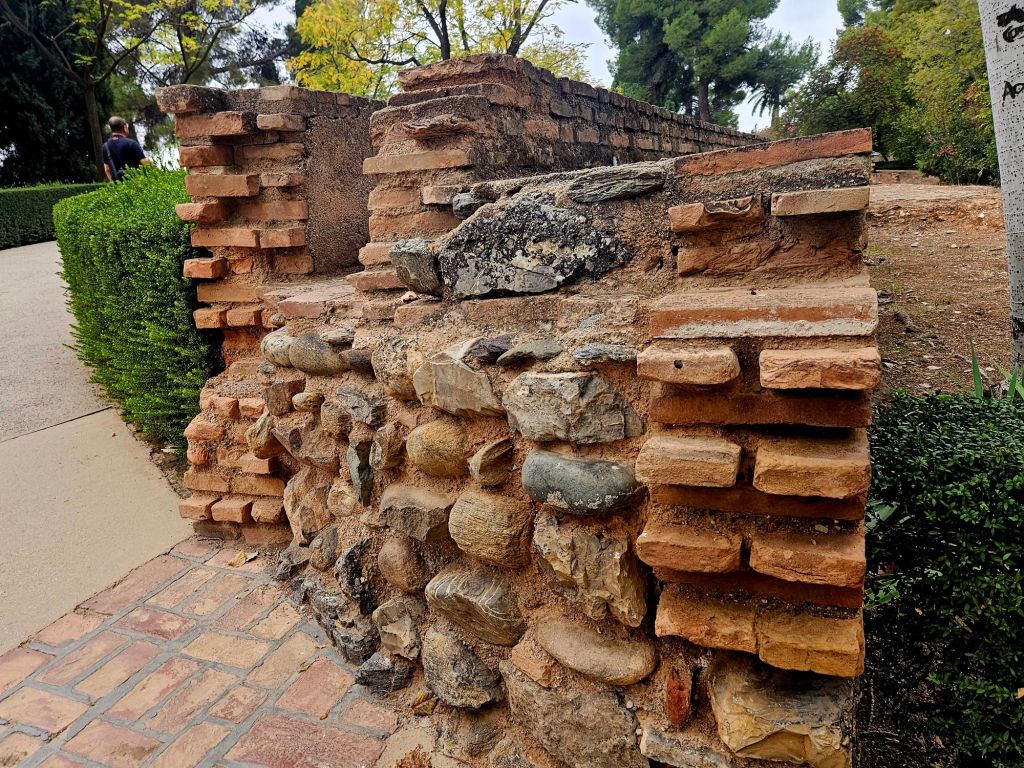
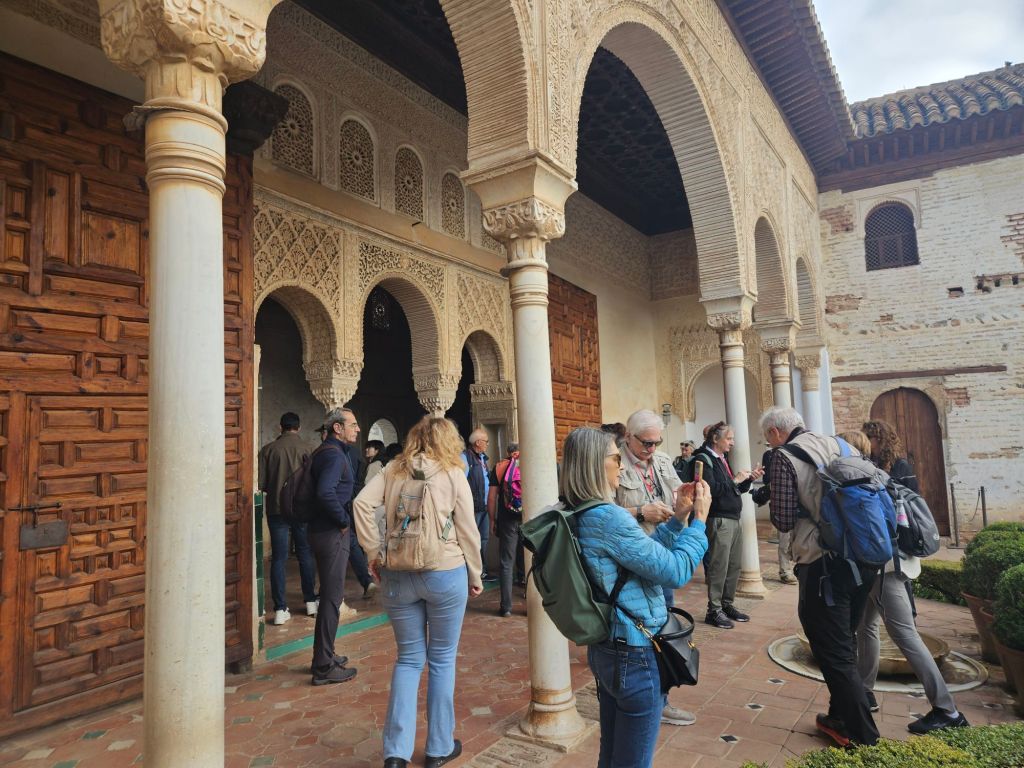
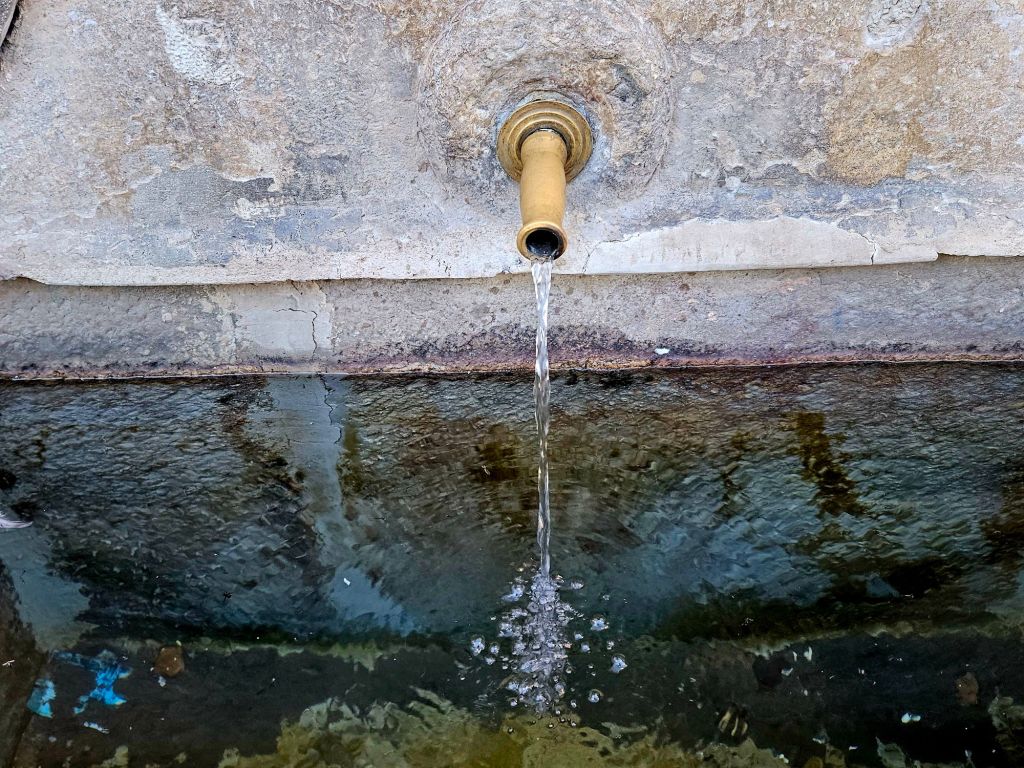
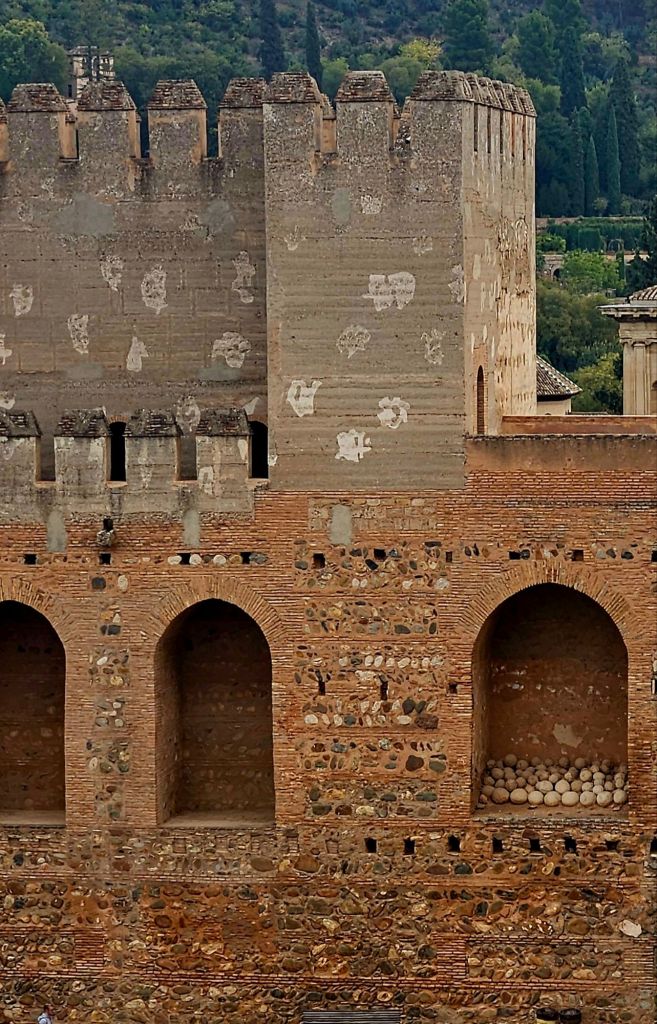
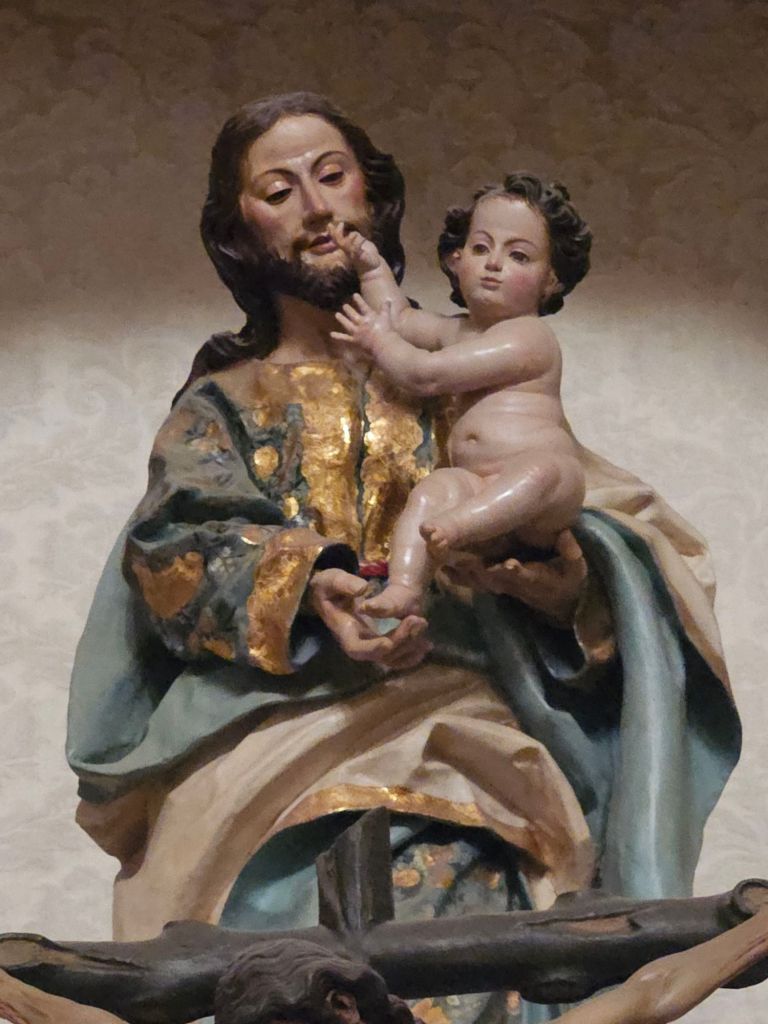
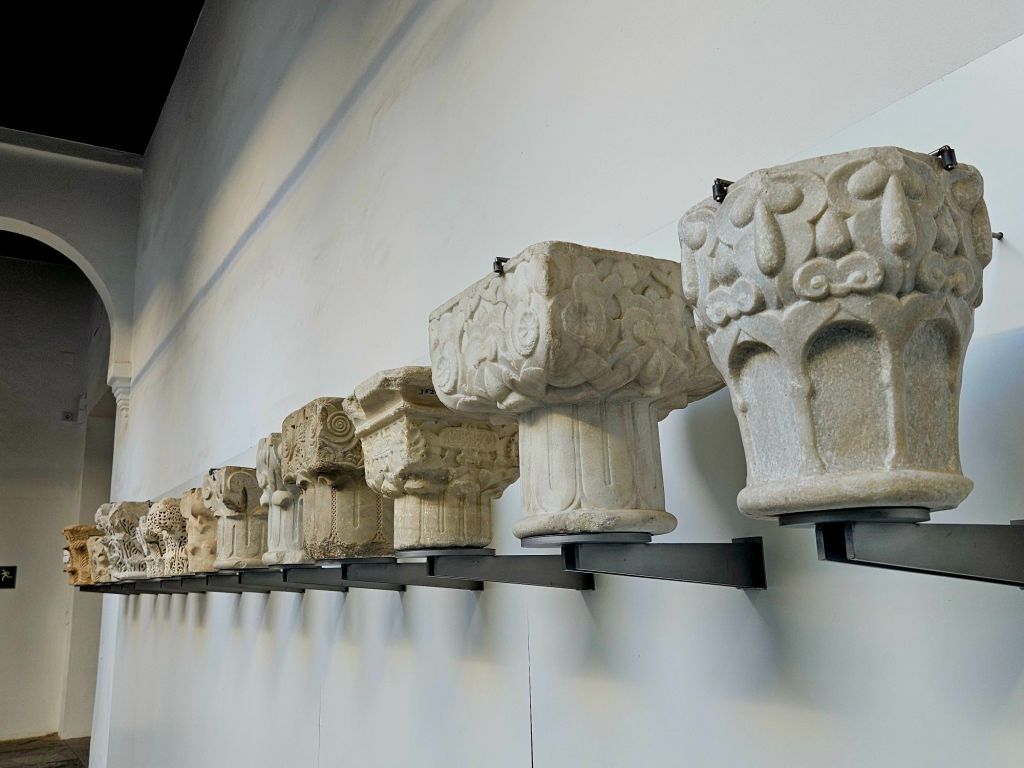
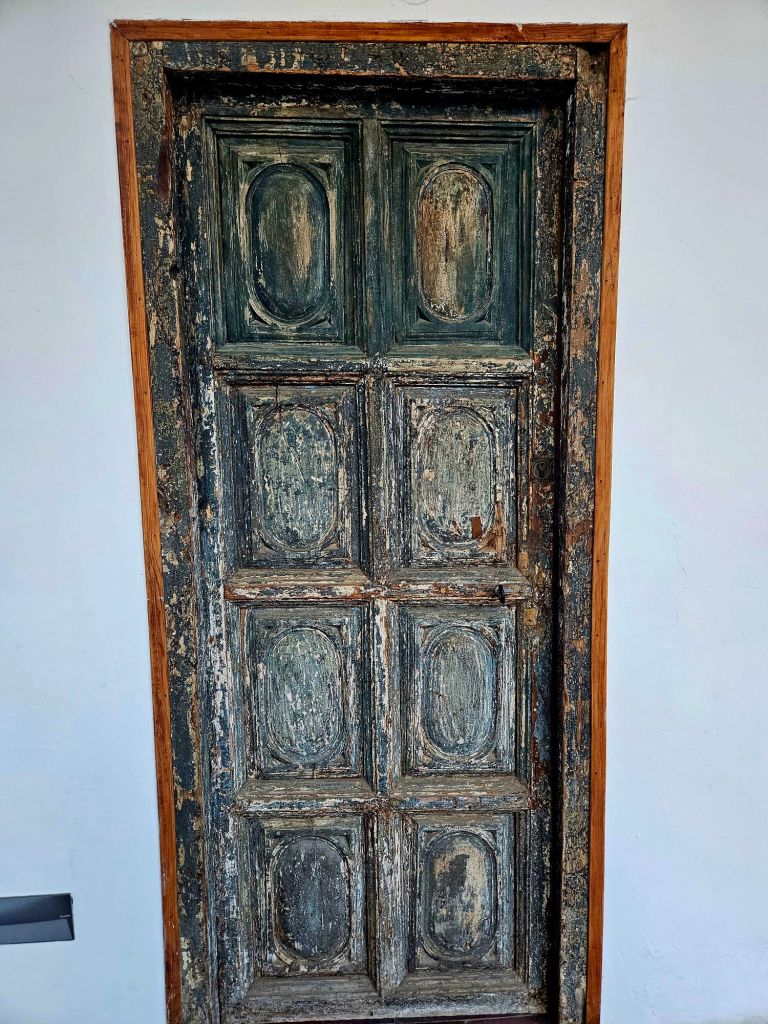
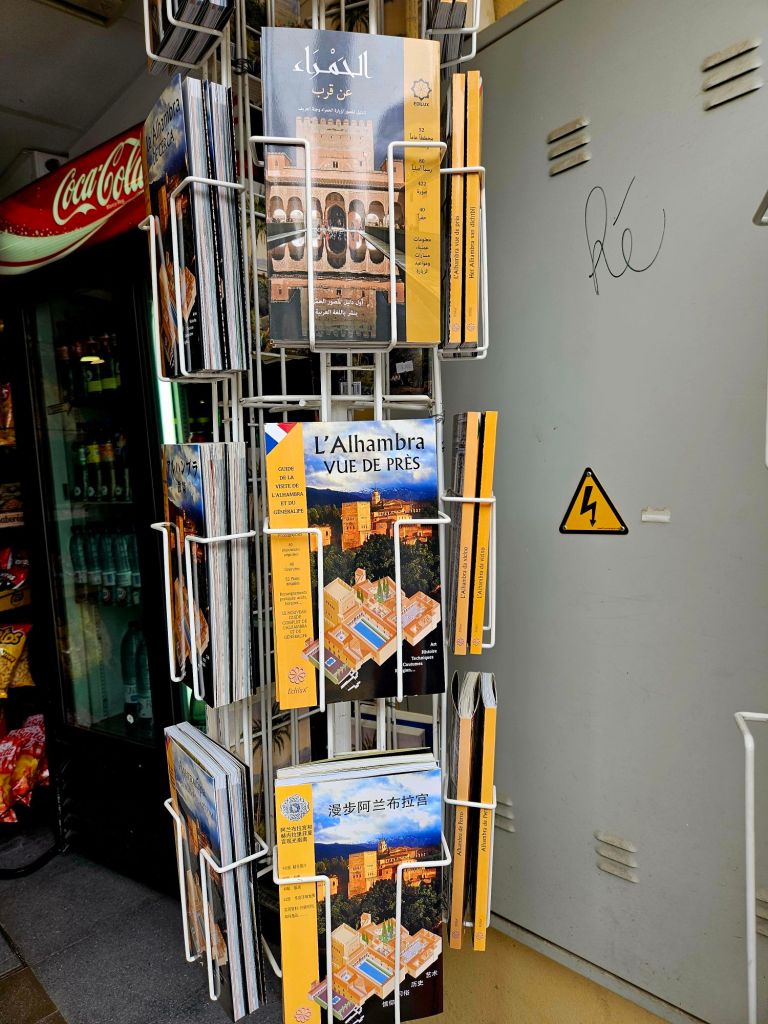
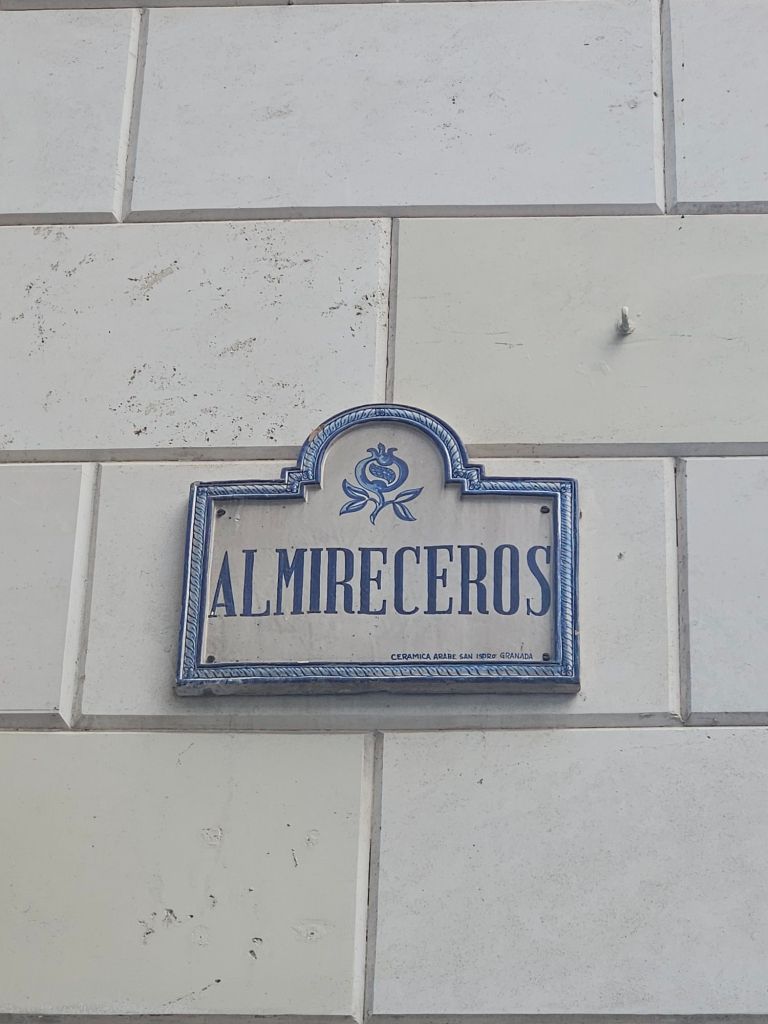
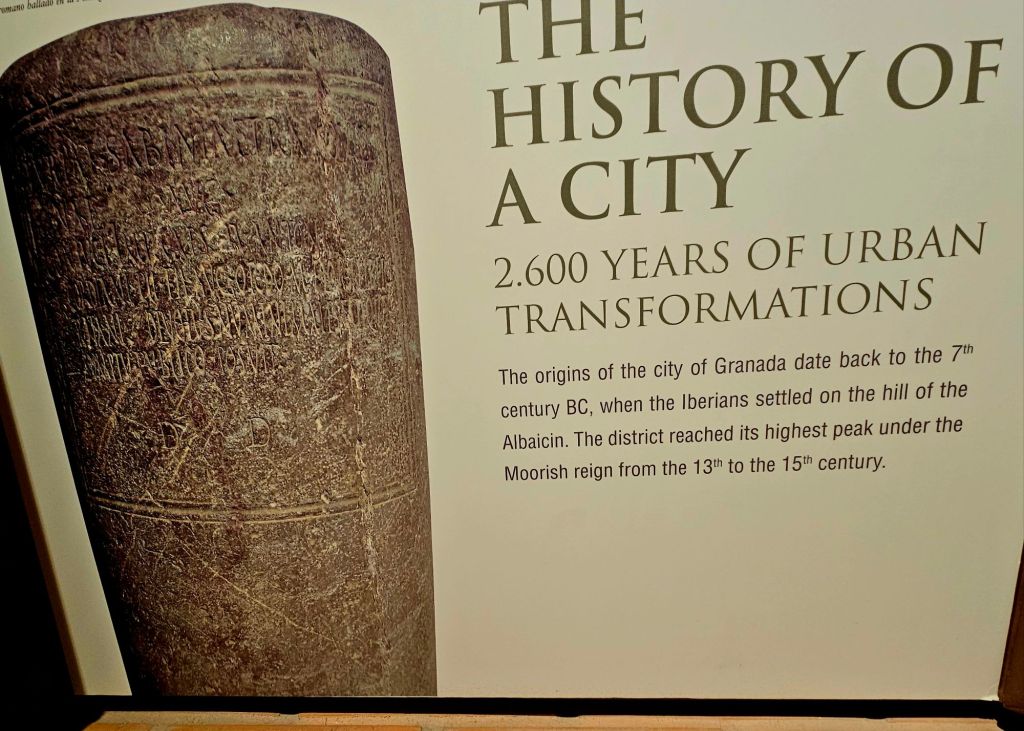
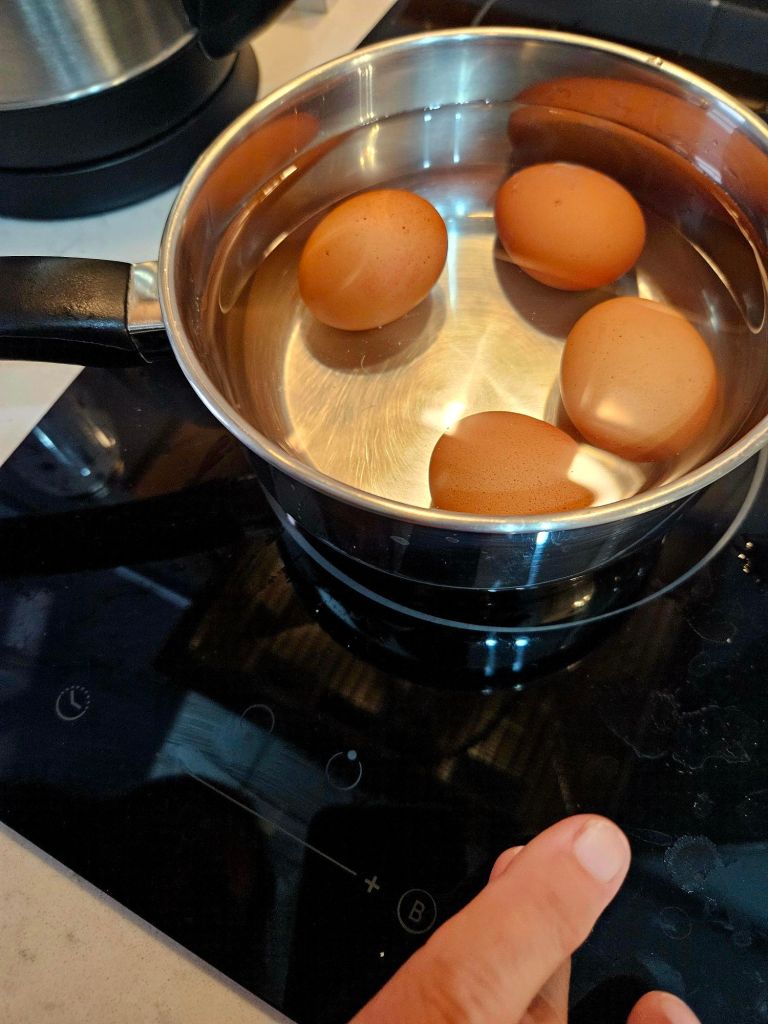
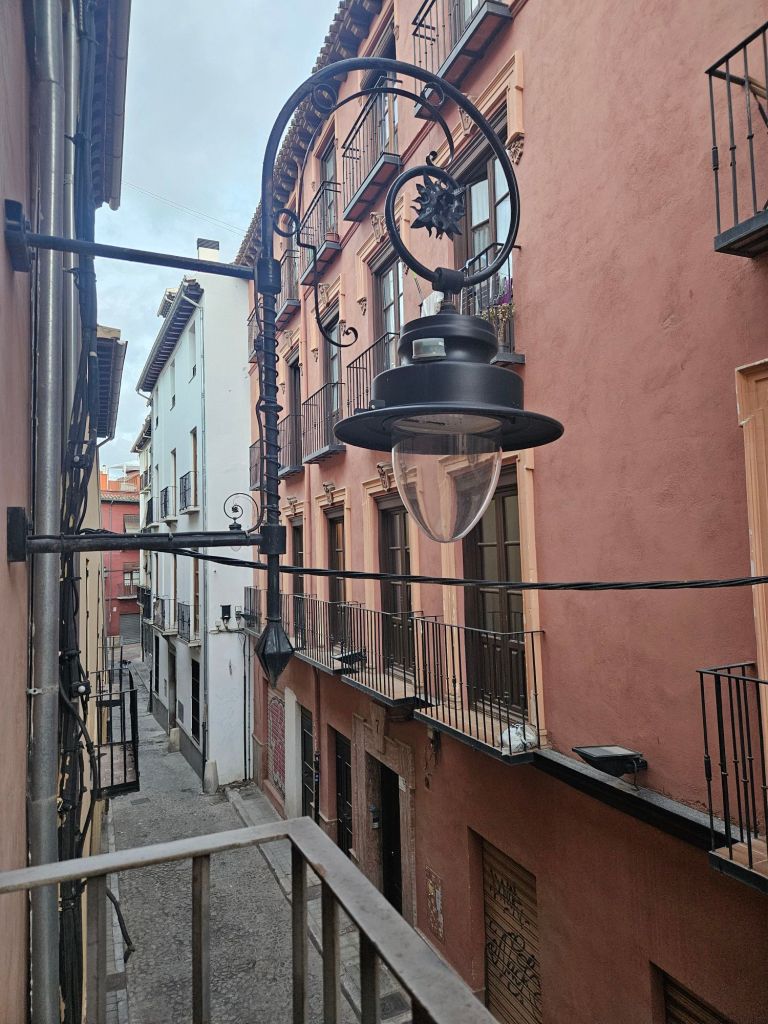
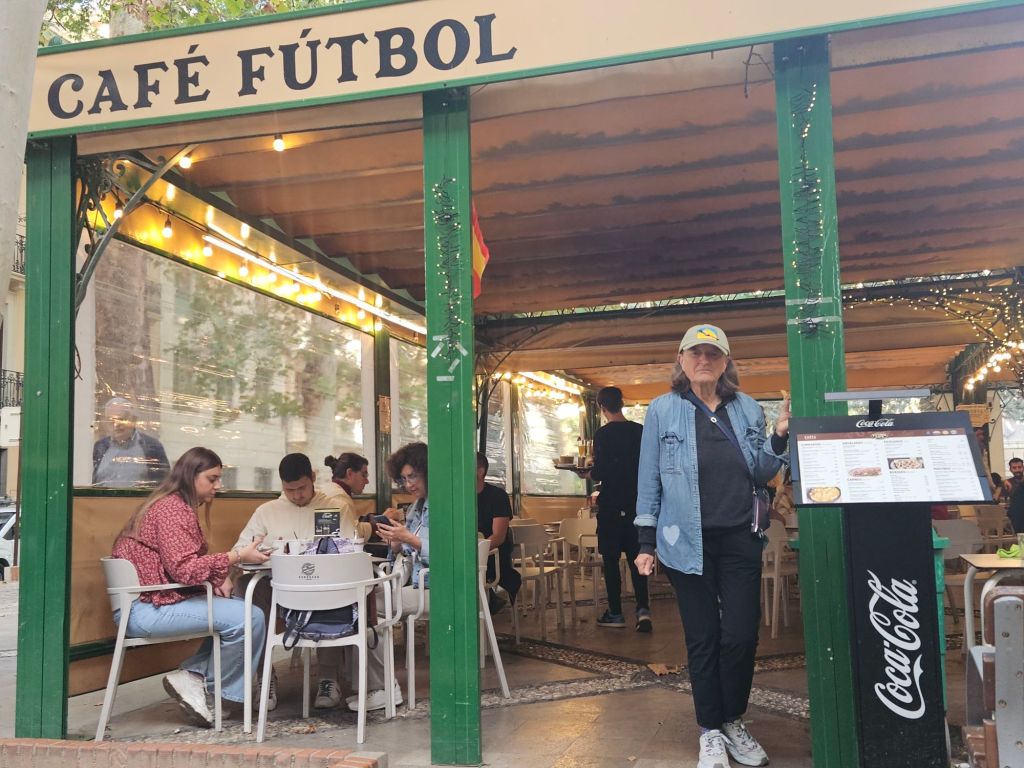
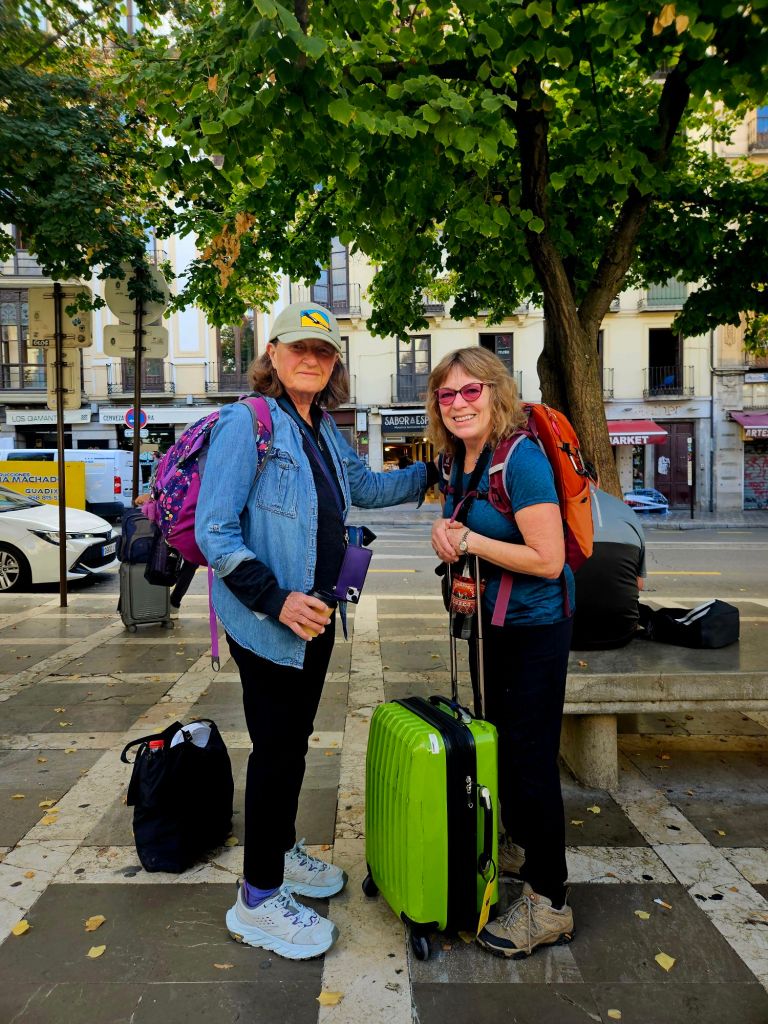
The view of Granada from Alhambre. These fabulous views erase (at least for awhile) some personal challenges that followed me across the ocean. Which is another reason that travel can be good. Orchards surround the palace and other buildings because they fed the inhabitants. Up to 40,000 lived on this hilltop during Muslim rule (1238-1492).We aren’t big fans of formal gardens, but the carved cedar hedges were…!Courtyard after courtyard, with trimmed hedges and fountains.Ginny walking under oleander boughs.The astonishing architecture included curved stone walkways and steps……and the rocks alone could tell so many stories – for example, the odd mixture here. Unfortunately, the lack of written descriptions left us wondering.We spent most of our tour in the sultans’ “summer palace,” designed so that both air and water circulate freely. That huge tree trunk is where the wife of the last sultan supposedly met her lover. (One wonders, always, about these old stories. Legend or truth? Depends on number of sources and their validity.)Arches are a common and distinctive feature of Moorish architecture.Water was a major concern for a hilltop city, and evidence abounded about how carefully it was directed and used.These water troughs bordered steps all over Alhambra.This was the only genuinely Moorish thing (other than building and courtyard outlines) that we saw in this complex built by Moors — a former bath of sorts, I think. I’m not the only one to notice this. James Michener (in his book Iberia) mourns the historic loss. The Alcazaba is the military section of Alhambra. Obviously, a fortress.This must be the barracks, divided into tiny rooms. The bell atop that tower rings regularly. We were glad it didn’t ring while we were standing up there.A pile of cannonballs rests in the wall.One of the original gates into Alhambra is oddly positioned on a hillside, specifically to deter aggressors. I guess all these defenses worked — until the Catholic forces arrived.A curious thing about our Alhambra tour…when we picked up our tickets, a pile of these booksmarks sat on the counter. In Spain. I remember seeing pictures of President Carter while in Egypt. Unless we travel, we don’t always realize how much impact our foreign policy — and culture – has (or had?) on the world.After Alhambra, we toured other historic places such as this private home that looks like a Roman amphitheater, reminding us how much impact ancient Rome had on this part of the world. (We also saw evidence of Roman aqueducts. Also not labeled.) There’s another empire that led the world for a long time…until it didn’t.Visits to local churches included surprises, such as this Bible scene featuring a woman. (Mary or Martha? I always forget which was which. )You rarely see a man holding the baby Jesus. Must be Joseph?These column toppers date from the 400s to the 1500s. The most recent ones were created almost 300 years before the U.S. was born. (Explaining why we were part of “The New World.”)We walked by lots of old carved wooden doors like this. No explanation of their origin or history. I looked for guides in English but couldn’t find any. Could be they had sold out, but I’ve noticed that English is the last language I hear here. After Spanish, French and Italian are most common.I mentioned in the last post how tricky it was to find our way around on foot. Here’s a typical street sign, about 12″x16″. It’s attached to one building, on one corner of an intersection. You have to really look around to figure out what street you’re on.This sign captures the bottom line about Granada.Back at the apartment, we had fun figuring out the induction stovetop. I have one in Michigan, but this one had different symbols and no words. After punching everything multiple times, and sometimes two at once, we finally figured out how to boil eggs. 😄 And the Nespresso maker! So quirky, we wasted several capsules before figuring out just how to insert them so they don’t get dented or fall through. And I used to own one of these. This kind of logistical challenge while traveling seems sort of predictable. Meant to build up one’s resilience? Since we are about to start “a pilgrimage,” it can only help!The view from our 2nd-floor balcony as we prepare to walk our luggage several blocks to the taxi queue. In spite of the logistics challenges and considerable noise, we enjoyed this Airbnb.Our last treat before leaving Granada was eat-out breakfast: cafe-con-leche for me and mimosas for Ginny, plus churros, at Cafe Futbol. Must stand for “football,” but it wasn’t a sports bar.Ready to jump in a taxi for the airport. Sister Ginny and I hope to put the city behind us and start our trek tomorrow, but, as of this writing, we’re stuck in the Madrid airport (six hours so far) hoping to get to our final destination about midnight. We meet up with a third person – the friend of Ginny’s who planned this – to start our 70+-mile El Camino hike. Our lodging is pre-planned. So we will start walking tomorrow, no matter how tired. I remind myself this was Ginny’s idea, and she’s almost 80. So let the pilgrimage, with all its uncertainty and challenges, begin! Maybe it already has.
Note: I am writing this blog from my phone while traveling, so please forgive any typos or errors. Historical updates and corrections welcome!








 For Many Moons
The lack of explanatory signage is especially regrettable to word people.
LikeLiked by 1 person
Beautiful pictures. Faulty theology. Very faulty.
LikeLiked by 1 person