Some hire an expert. Some try to figure it out themselves. I’m the 2nd kind, with mixed results.
A house isn’t a home until the landscaping is done. As with this house itself, DiY is preferred when possible. (I’m all for experts in areas where my knowledge is lacking and consequences are big — like science, medicine and plumbing — but otherwise prefer to learn myself.) Jeff was the lead with the big stuff, like taking down or moving a few hundred trees, but the small stuff is mine. It’s trial-and-error and calls for patience. Here’s the current results in photos and captions at Camp Many Moons in Michigan’s Upper Peninsula, just months after the house was proclaimed habitable.
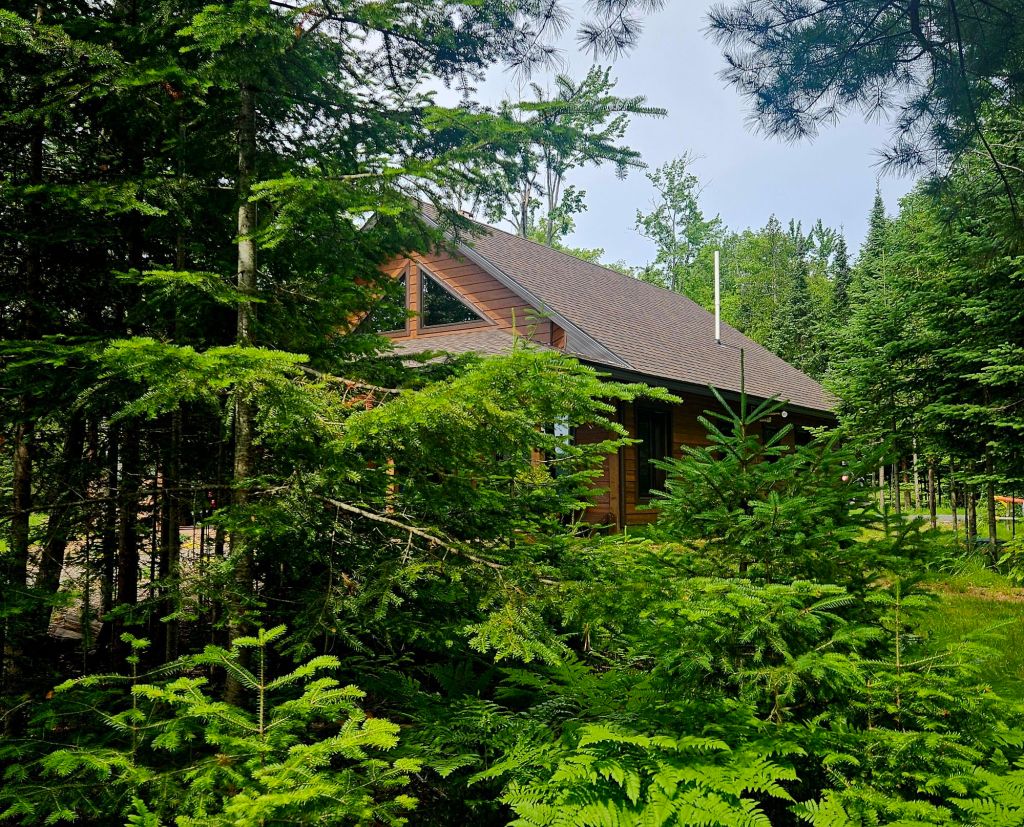
The first priority was to keep lots of green, since it’s nature that drew me here. Thus, consistent but careful trimming of the abundant balsam trees so that the house “peeks through.”
When I arrived recently after two months away, I was delighted to see my new ground covers spreading on the lakeside. But what’s all that other uninvited stuff?
Horse tails, taking over unclaimed areas. I love them in the woods-y areas like this, but they threatened to crowd out my new ground cover.
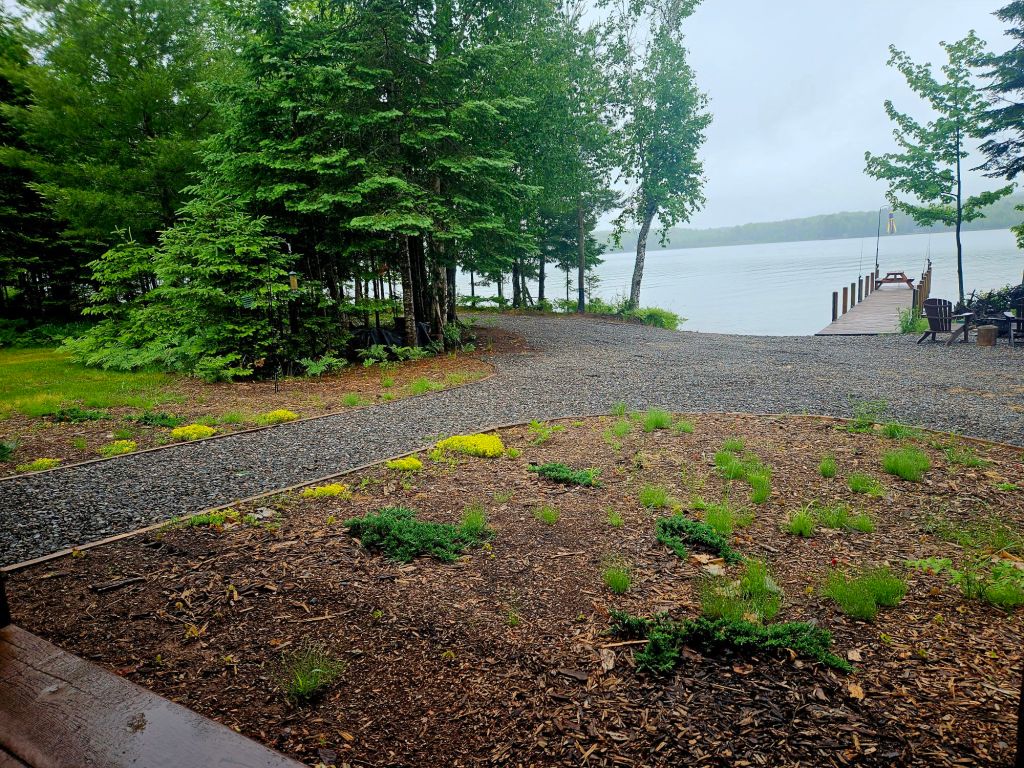
After some pulling, the lakeside looked cleaner. Landscaping with new plantings takes constant vigilance until the “wanted” takes hold and spreads enough to crowd out the “unwanted.” (Here, the “wanted” is the stonecrop and juniper.) Credit to Jeff for creating the wooden borders.
I’m thrilled the gold moss stonecrop is spreading vigorously in its first summer. (The creeping juniper will spread more slowly.) I bought eight small plants by mail-order, which is always risky.
Also thrilled to see my first big-leaf lupine! I harvested hundreds of seeds from wild plants on the roadside, dried them in paper bags for a few months, and scattered them on the property. Two years later, I see five plants so far. (Free, except for labor!) I spread seeds two years in a row so may have an invasion problem before long. That’s when “the wanted” becomes “unwanted.”
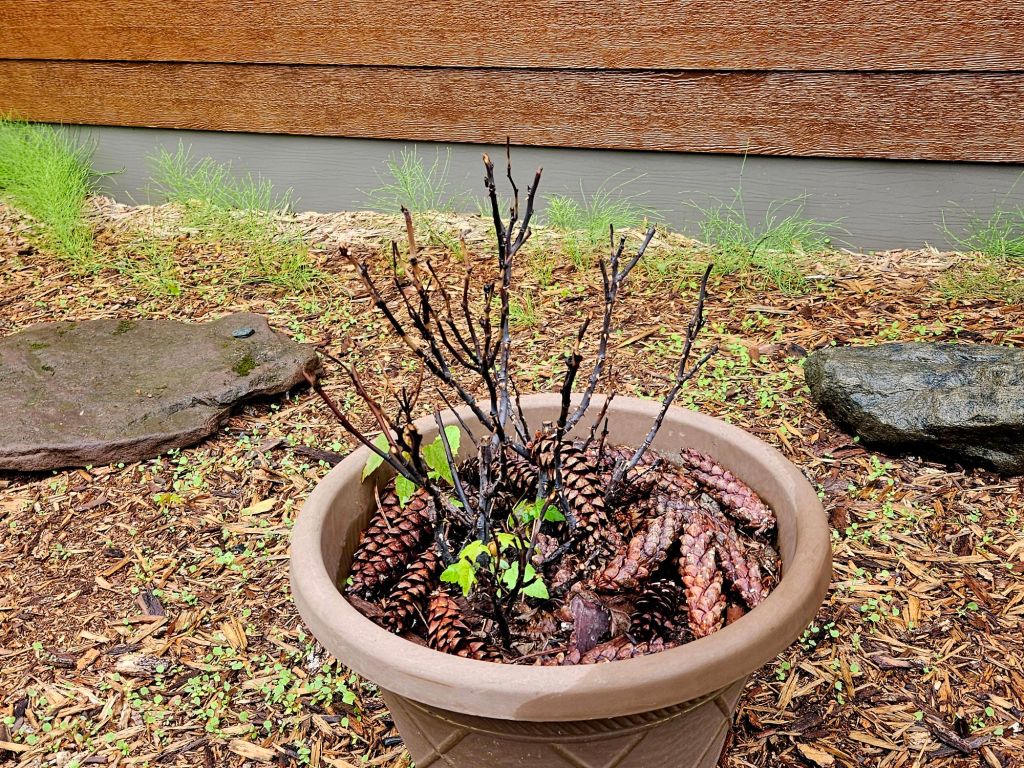
I found casualties, too, like this mini rose bush in a pot. Too little rain? Not enough mulch? Since I’m not here year-round, it’s hard to tell. I’ll wait awhile before deciding if it’s really dead.
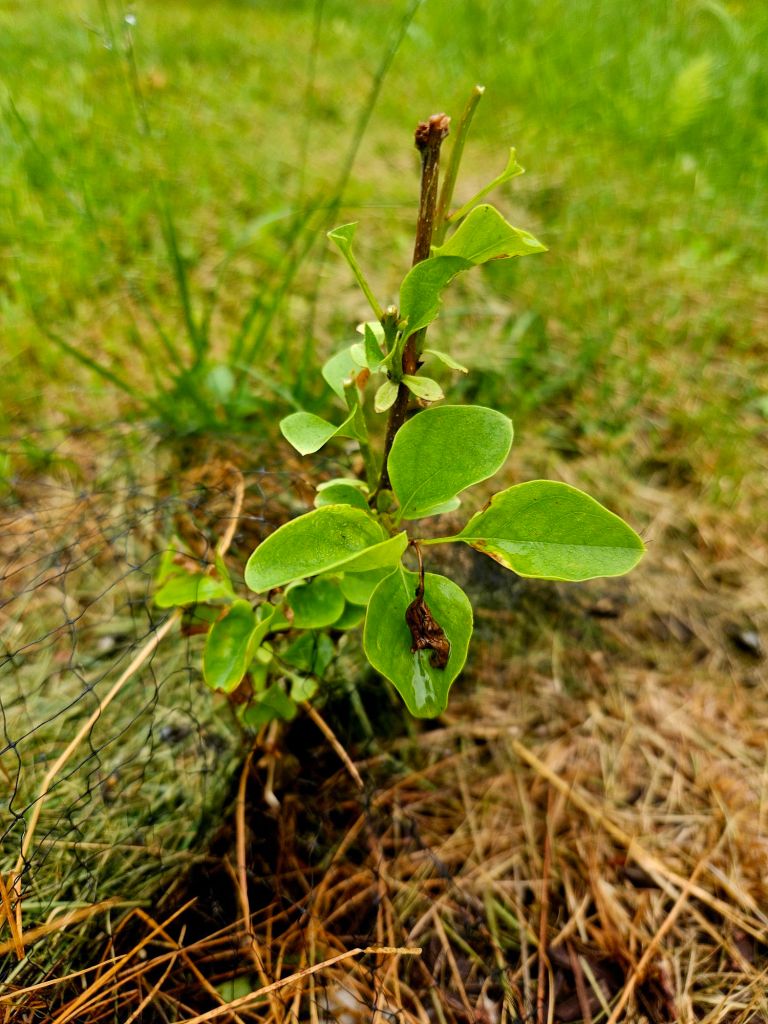
I thought this baby lilac was killed by the deer, but lo-and-behold, new growth. One shouldn’t be too quick to sign the death certificate because sometimes life lurks under the carnage.
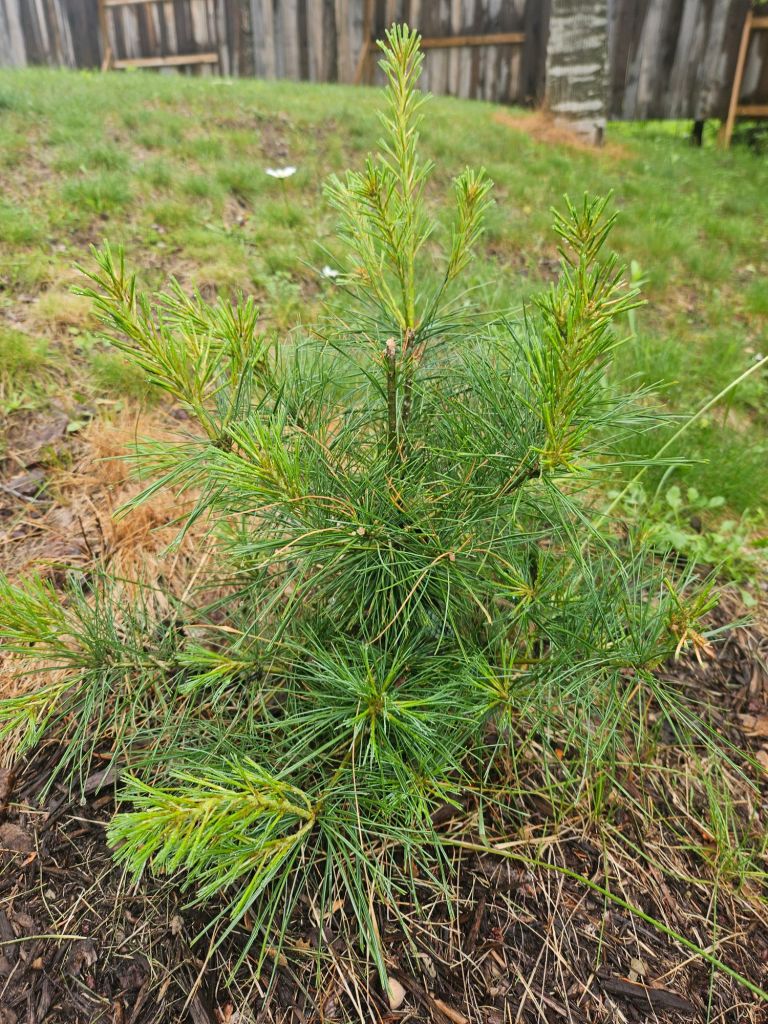
This Eastern White Pine was a 6-inch sapling when I planted it three years ago. It’s doing well, but only because of ongoing efforts to deter deer. (Notice one nibbled bud.) I got six of these as a gift for joining the Arbor Foundation. Only three survived their first year.
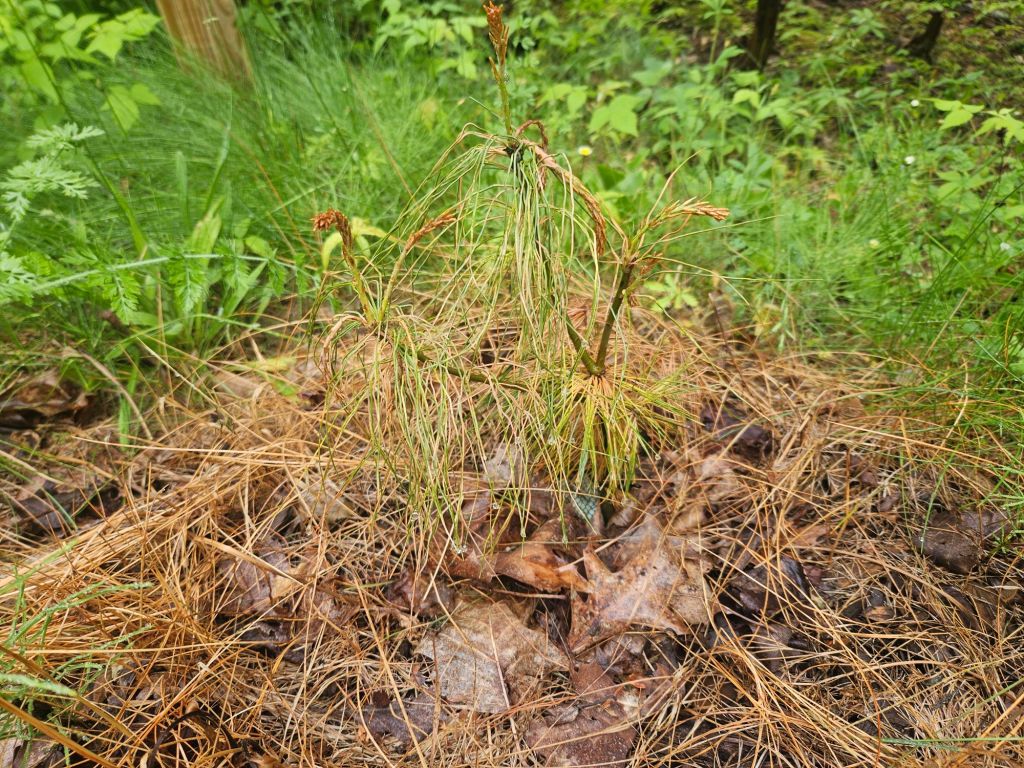
This baby white pine died over the winter after hanging on for years. 😦
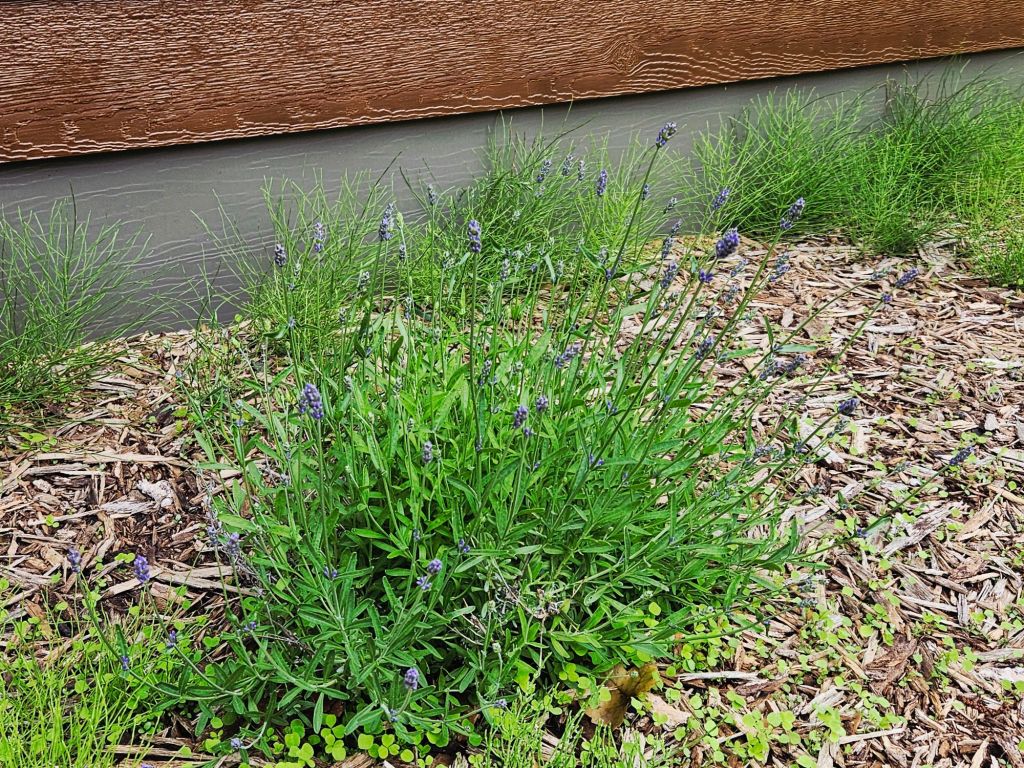
But my lavender plant near the front door is doing well! I always pick plants that are called “deer-resistant,” and this one seems to actually be that. It was untouched by deer last winter.
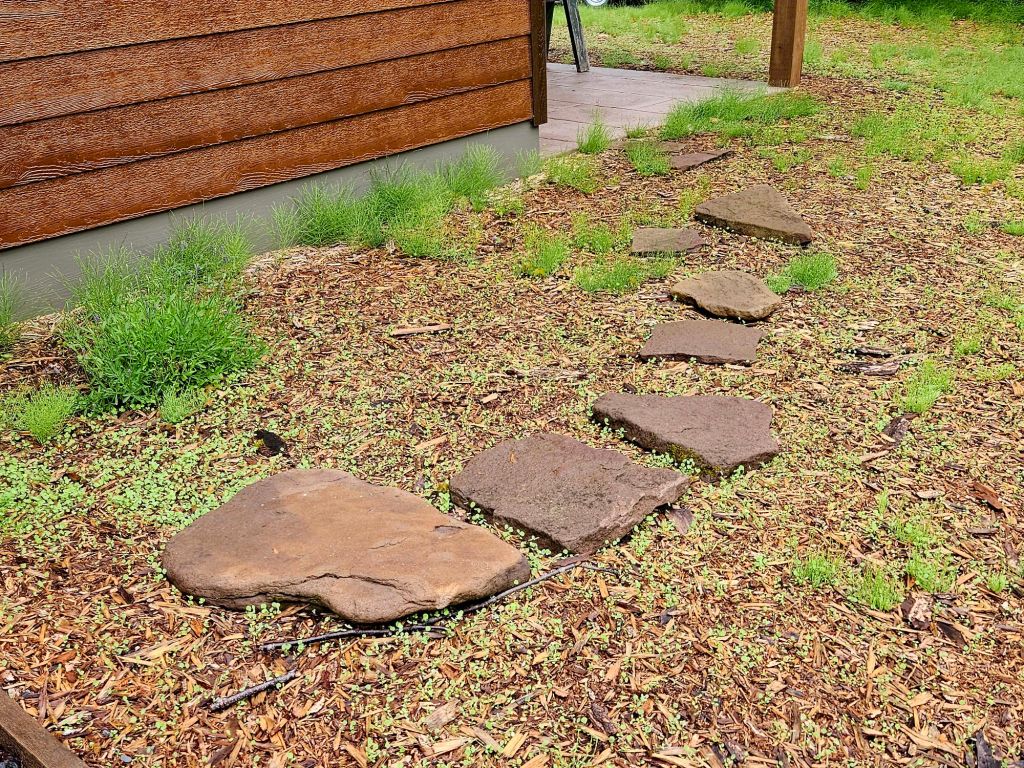
Landscaping also includes thoughtful placement of stones from the Lake Superior shoreline. This path leads from the front porch to the side porch.
Tree placement is relevant, too–which to cut and which to leave? This copse (small grove) of trees near the front door is intentional, to screen the house from the road. Copse is an old-fashioned word but I love it. Remember Pickett’s Charge? On the last day of the Battle of Gettysburg, his target was “the copse of trees.” It stuck in my head.
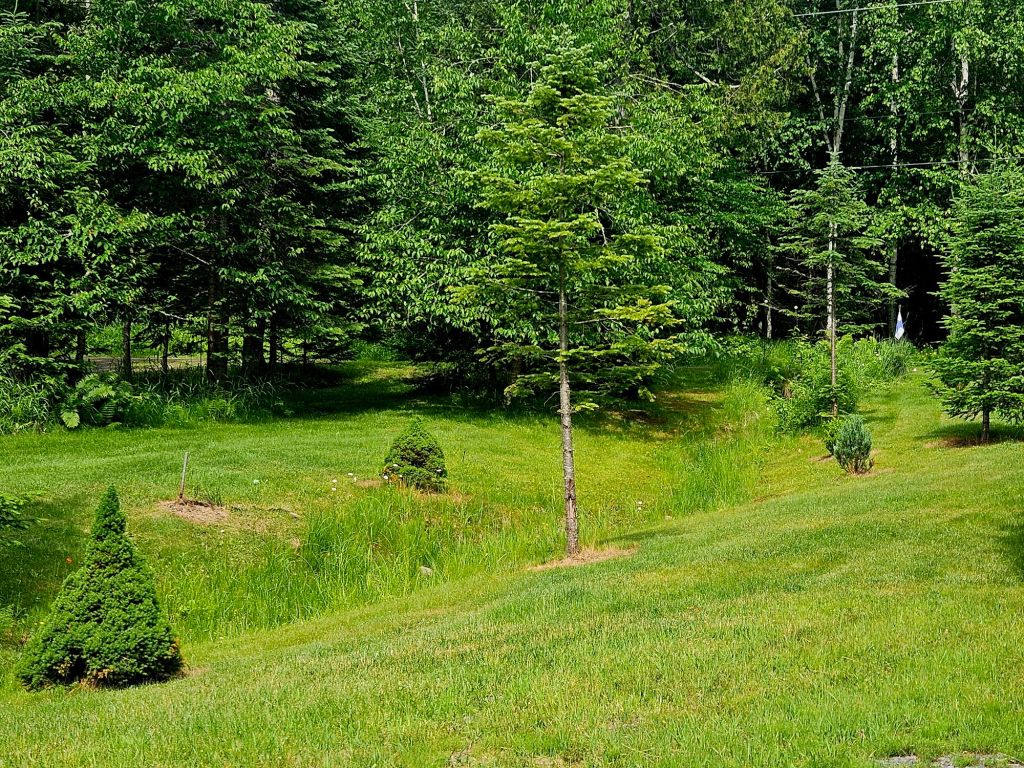
The road-side “meadow” shows that choice of cut-or-keep. I would’ve preferred to leave more trees, but most needed to be sacrificed in order to place drain tile underground. Jeff did that years ago, soon after I bought the land. It was essential to drain the ground.
Speaking of drainage, the existing ditch was expanded but is barely visible here. I’ll have to trim back the growth, which is ironic since I caused some of it. See that balsam in the middle? I put it there when it was a few feet tall, to add resilience to the ditch wall. How it grew in a few years! I’ll need to trim it back soon. Plant & prune, plant & prune..
Sometimes, a mature balsam needs trimming, especially if it has brown limbs. This one near the ditch took a hit from some vehicle. I use those loppers to take down dead or low limbs.
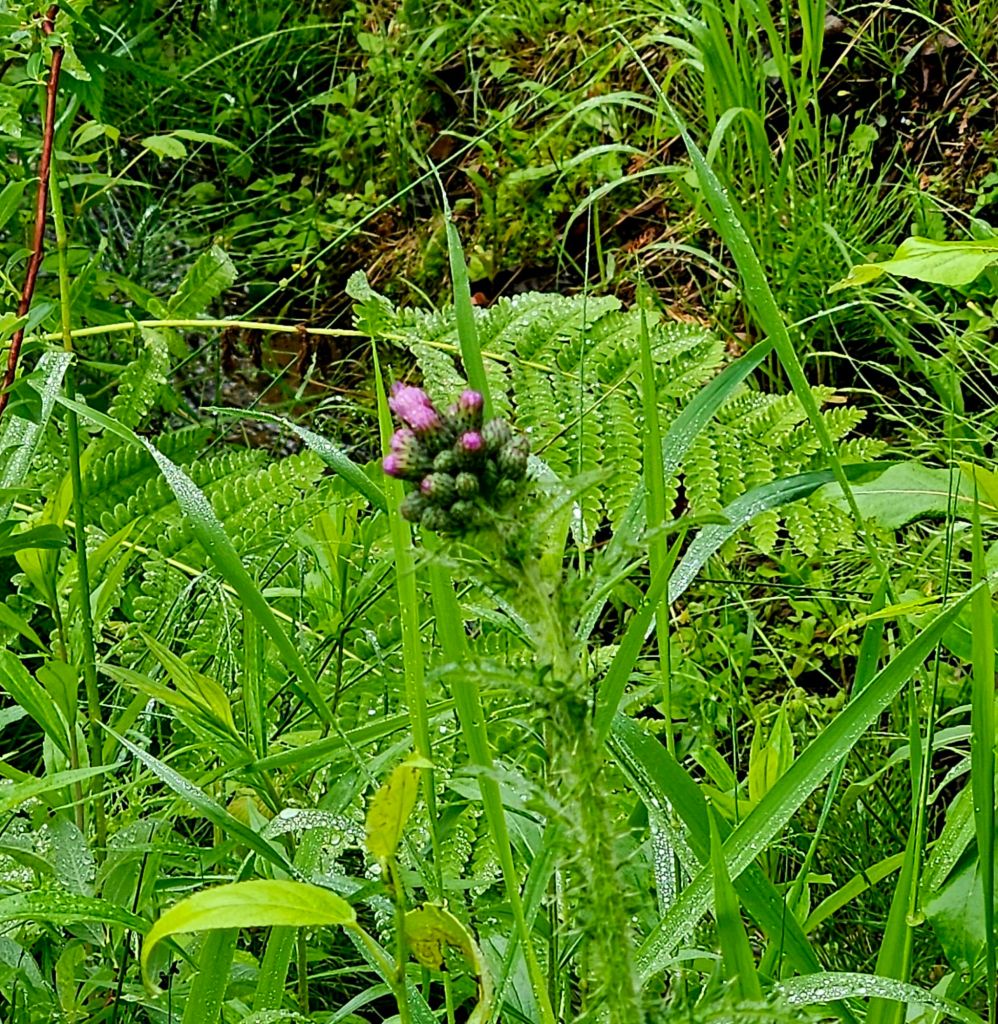
Uh-oh. Next to the ditch, a stalk of bull thistle. Been fighting these scratchy and fast-spreading weeds for years….days of weed-pulling every summer, yanking out the rosettes that are flat on the ground before they have a chance to grow into stalks. If this seed head broke open, it would spread 5,000 seeds. I saw only one stalk, though, so the years of work paid off.
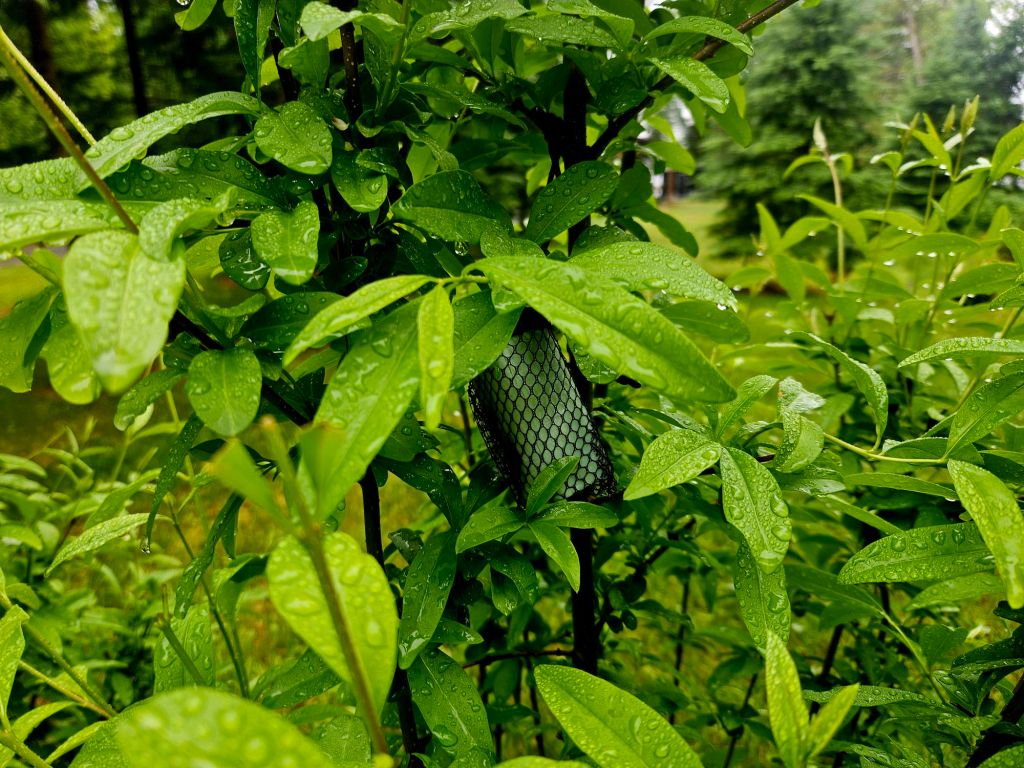
At the head of the ditch, next to the road, the privet hedges are doing ok. We transplanted them a year or so ago, from an area where they were wilting, in a continuing effort to create privacy. In spite of some deer nibbling, they seem healthy.
This is why they’re still growing. See the green rectangle? That’s a natural deterrent called “Deer No No,” recommended by a reader of this blog. It apparently kept the deer away all winter. (It didn’t hurt that we fed them.)
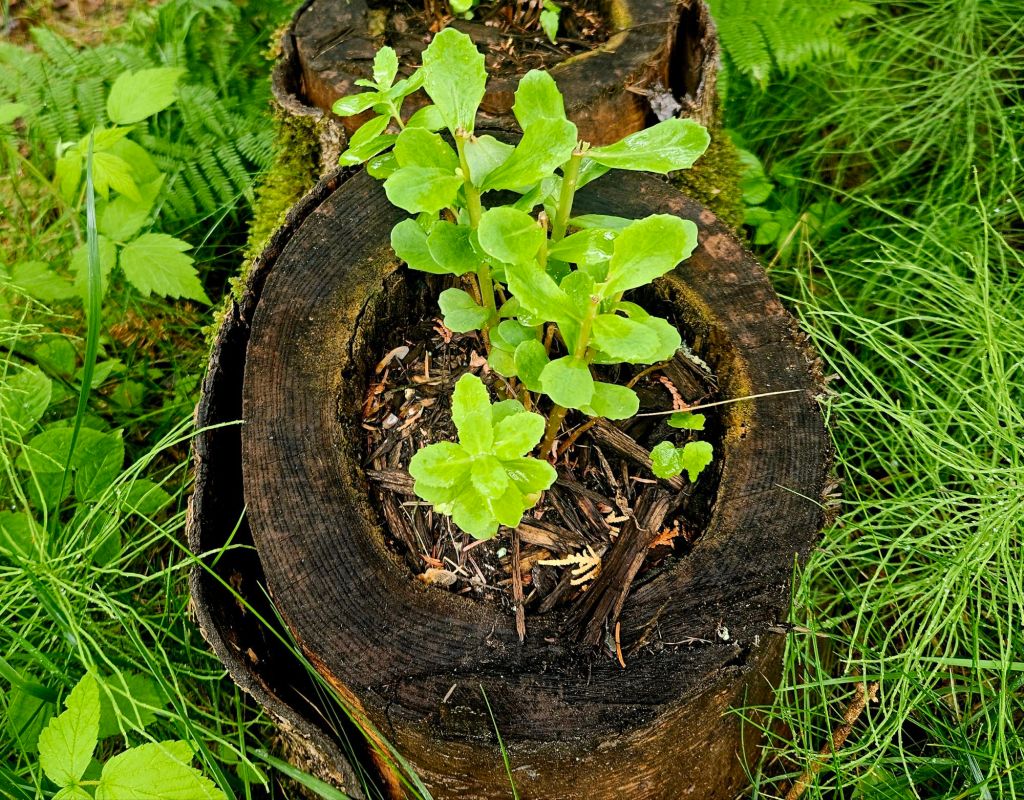
One plant that has never failed me–the hardy sedum. I brought some from Virginia years ago and have been dividing and planting it all over, even inside tree stumps. It’s decoration, at least! Pink blossoms will appear soon.
Equally hardy, my beloved ferns. I transplanted these from elsewhere to soften the north wall. These are called “Interrupted Ferns.” (I wonder who interrupted them. 🙂 ) I use an app called “Picture This” to identify plants.
Speaking of apps, I also have one called Merlin for birds. It identified these four in 26 seconds as I sat outside today with my morning coffee.
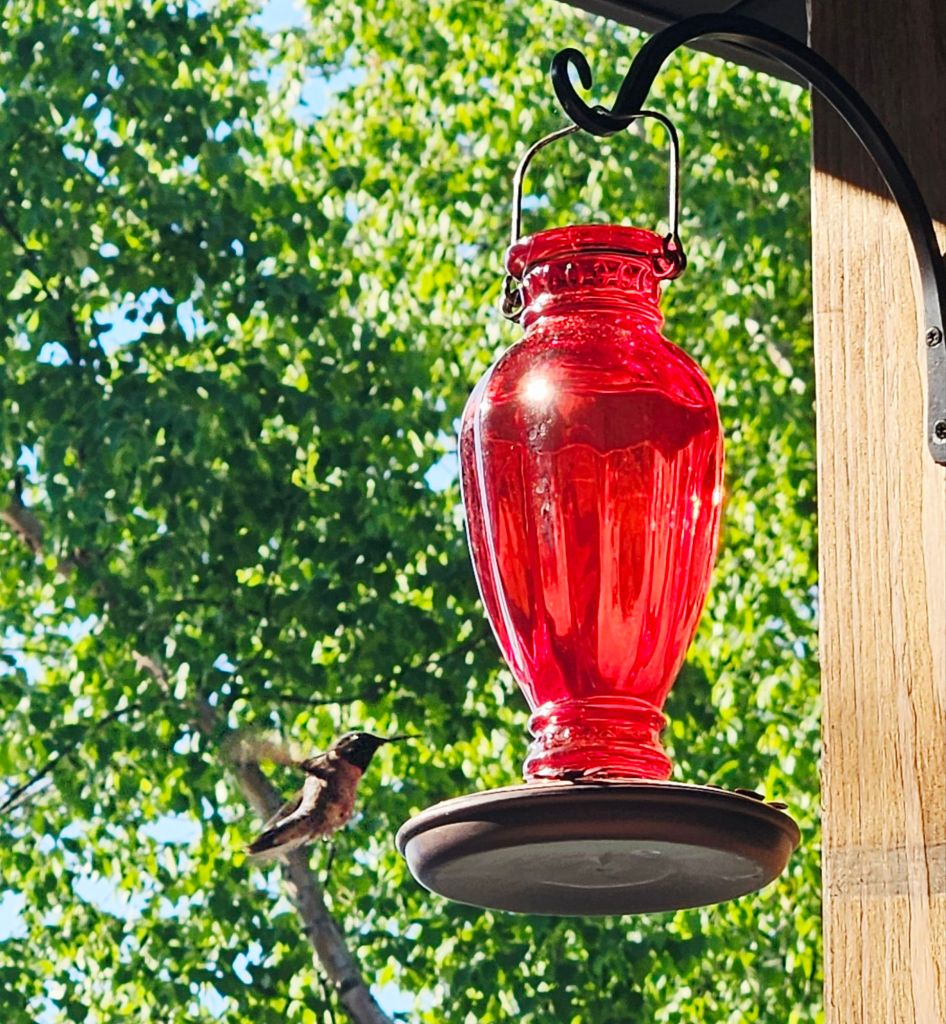
One bird it doesn’t register is the hummingbird, a regular visitor at my new feeder which hangs from the lakeside porch.
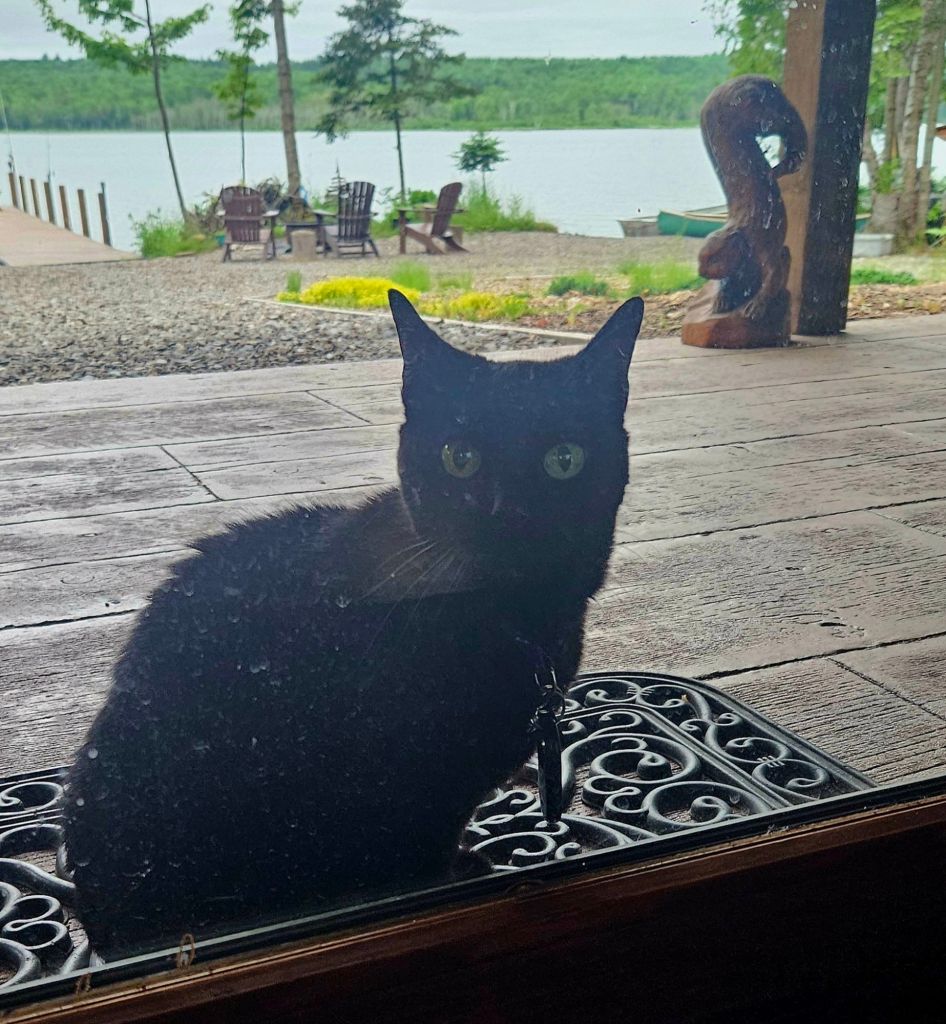
Boo seems uninterested in the birds, and I’m glad. At age 16, she’s probably too old to hunt. She goes out often, but asks to come back in quickly.
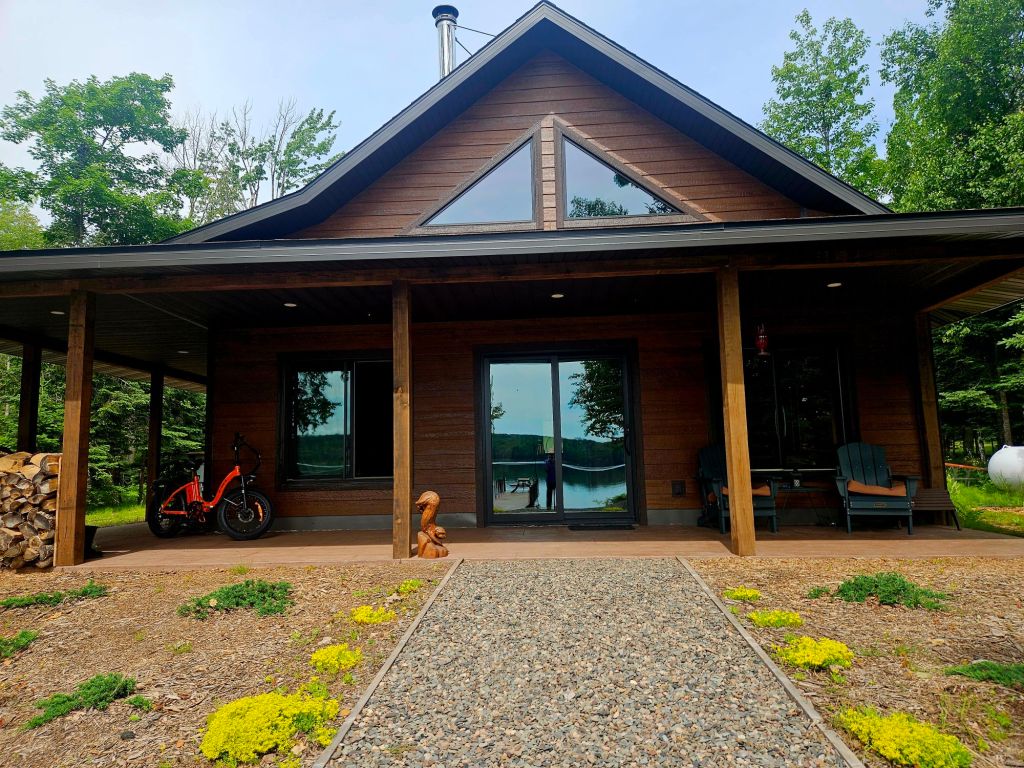
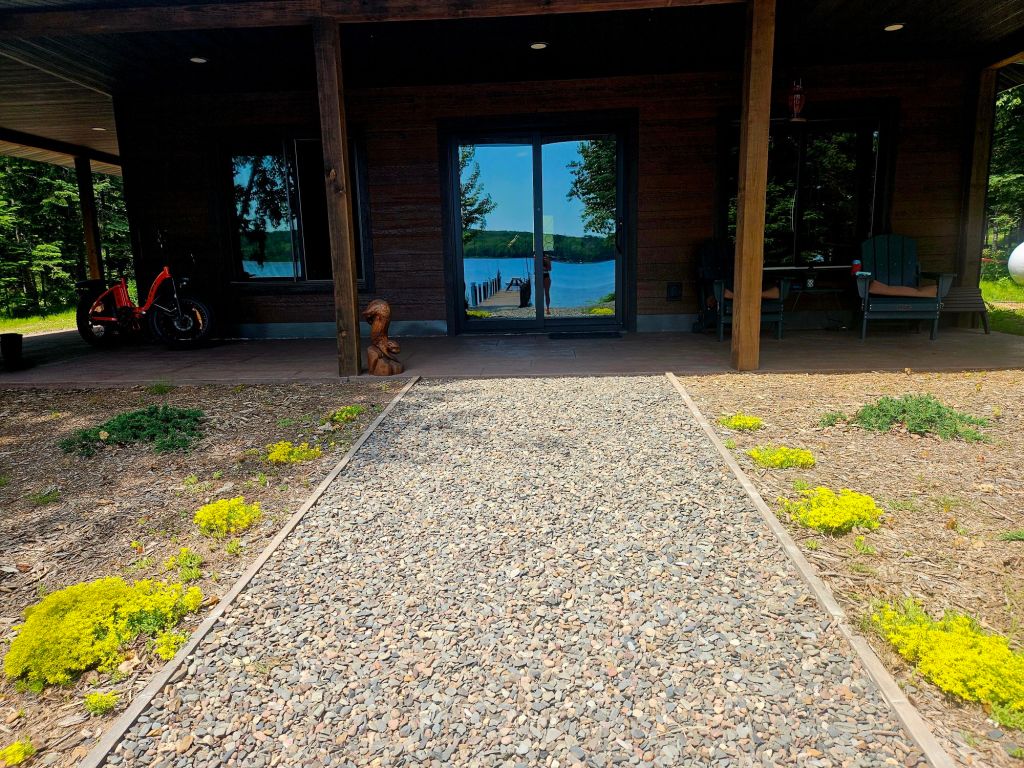
So there it is, the Cabin at Many Moons, with its new groundcover taking root. The water view is the centerpiece — see the reflection in the patio door? — but it doesn’t hurt to have some color between house and waterfront.
The whole view to and from the house is inviting and attractive. The landscaping that is forever ongoing makes all the difference. It’s nice to know the name of the plants that you have chosen and nurtured; those that did and didn’t survive through the winter and with the deer. I’m glad you are finding your groove.









 For Many Moons
The whole view to and from the house is inviting and attractive. The landscaping that is forever ongoing makes all the difference. It’s nice to know the name of the plants that you have chosen and nurtured; those that did and didn’t survive through the winter and with the deer. I’m glad you are finding your groove.
LikeLike
Wow! These photos are so inviting! What a lot of work….and beautiful results. Did you tell us about what looks like a sculpture on the porch?
LikeLike