And now, Antarctica. (Source: long-forgotten personal photo albums.)
Every human life includes events that almost nobody knows about. Those with children or grandchildren often share those events that way. The rest of us find other ways — like a public blog. It feels bold. I fear being judged for showing off. I’m pushing through it because (1) it’s an international treasure, (2) more people are visiting as tourists, (3) working there was one of the great privileges of my life.
Visiting Antarctica today by cruise ship will cost you at least $7,000. In the late 1990s, I watched from McMurdo Station as the first modern cruise ship arrived as a kind of test. It cost me nothing but time, sleep, and the courage to sleep outside. (More on that below.) That’s because I worked for the National Science Foundation (NSF) — a federal agency in spite of its name — which coordinates all U.S.-sponsored activity in Antarctica. Science is the reason the U.S. is there. I was NSF’s Media Director. So journalists who wanted to visit “The Ice” had to go through me and/or my staff, along with NSF’s Office of Polar Programs (OPP). For years, staff members who worked for me or OPP were the lucky escorts. As staff members left, it fell to me. Twice. I considered it a reward for years of management headaches. And what a reward! In photos and captions below. (Note: This post continues a peek into my life, uncovered while cleaning my office. Post #1 of “A Life Exposed” series is posted here and under “Reflections” on my main menu.)
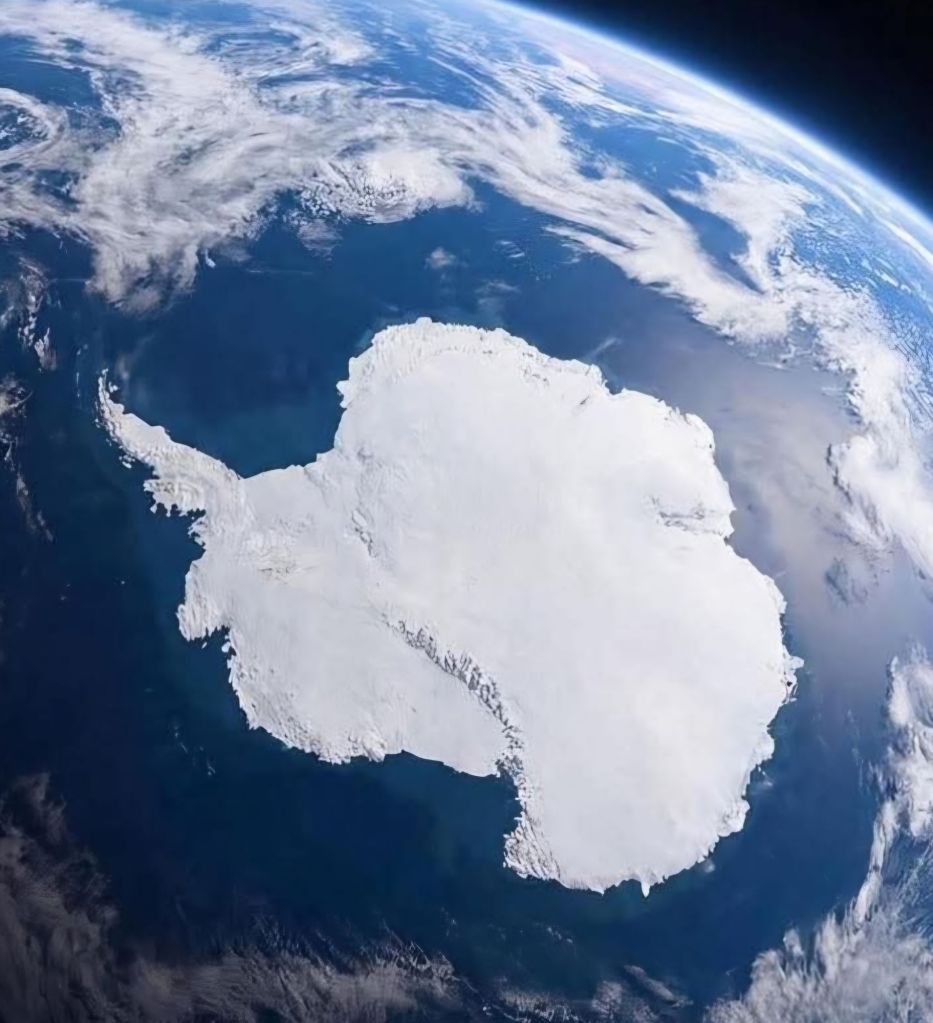
Antarctica is the southernmost and least-populated continent on earth.
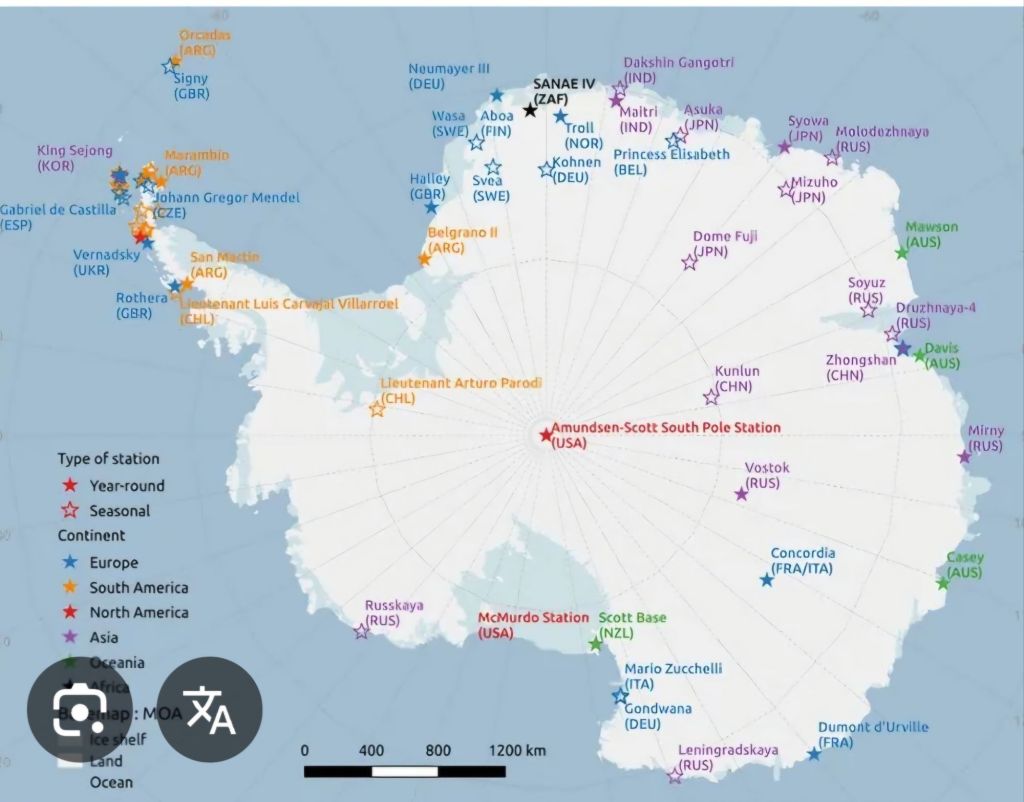
The U.S. operates three research stations, in red. I’ve been to all three. McMurdo Station, on the coast, is the largest on the continent. (At least 50 countries operate research stations there; all have signed the Antarctic Treaty which designates the entire continent as a scientific preserve.) South Pole Station is in the center. Palmer Station is on the top-left peninsula.
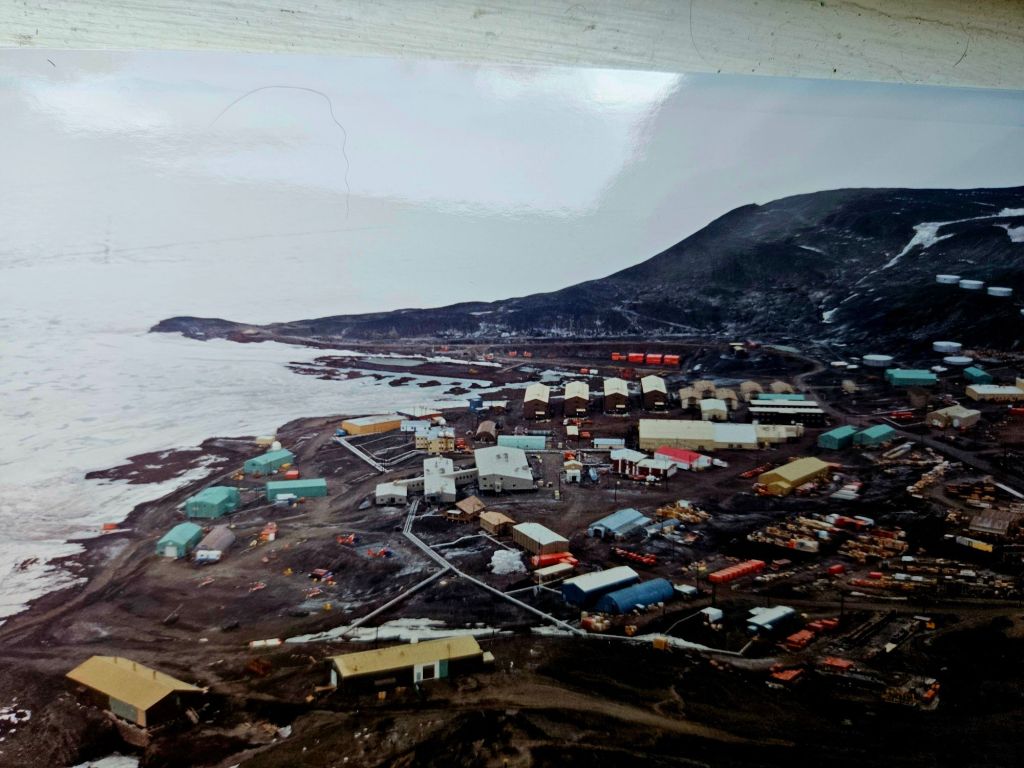
McMurdo Station on the shore of Ross Sea is manned by at least 1,000 in summer and around 200 in winter. In summer, it looks like a mining town as the snow melts. (Read more about its history here.) I took this picture of McMurdo while arriving by plane….
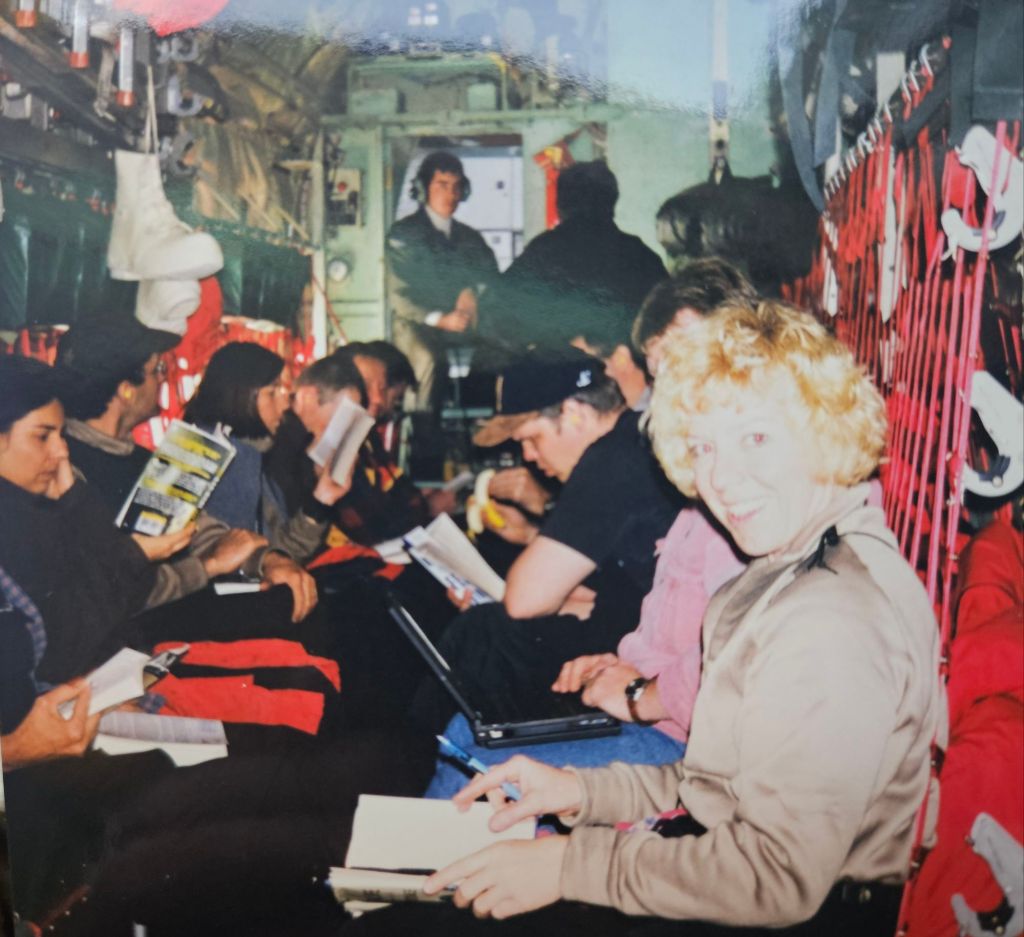
…since when I went there, in the late 90s, military cargo plane from New Zealand was the only way to arrive. During the 7-hour flight, we mostly read while sitting knee-to-knee. (That hairdo makes me grimace! A month on “The Ice” required drastic measures. 😄)
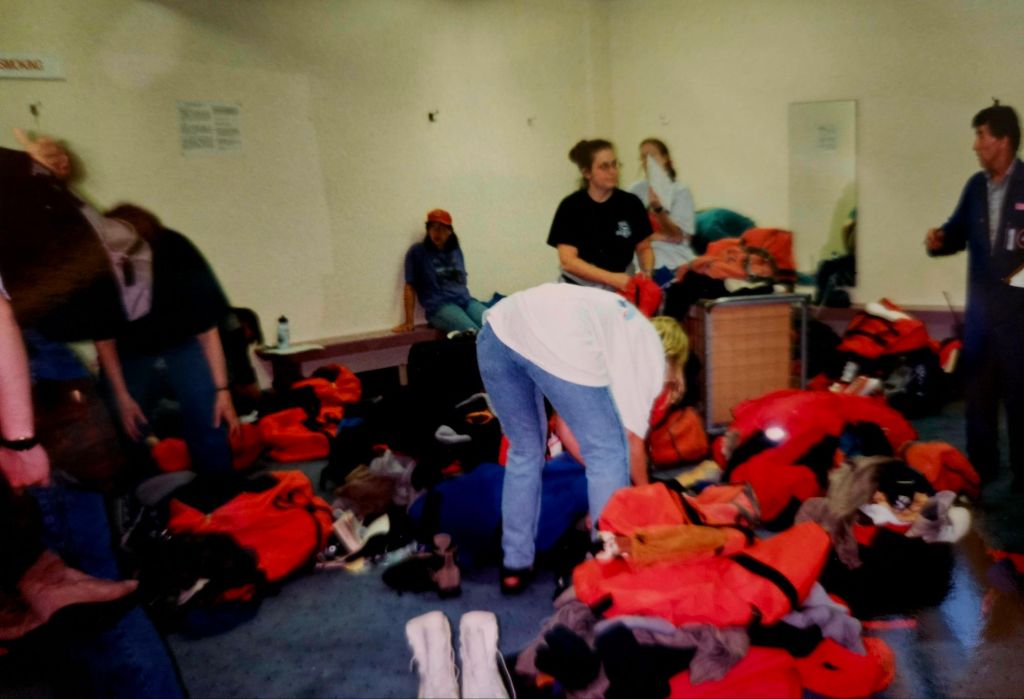
Before boarding the plane, we were issued cold-weather gear in Christchurch, New Zealand…
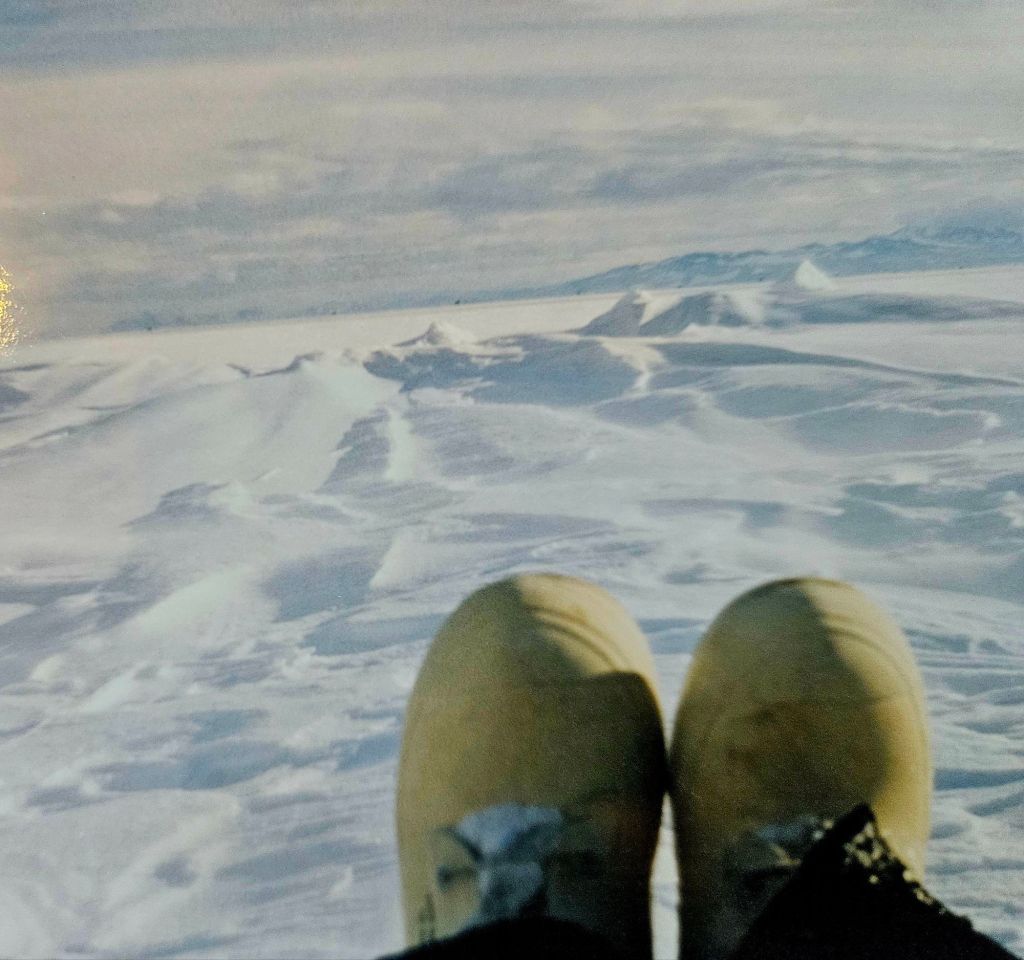
…including these clunky but warm “bunny boots.” (Those are my feet.) The terrain on “The Ice” is constantly changing and constantly fascinating. I was raised in snow, so this view isn’t odd to me…but knowing that this same scene extends almost 1,500 miles? Whew.
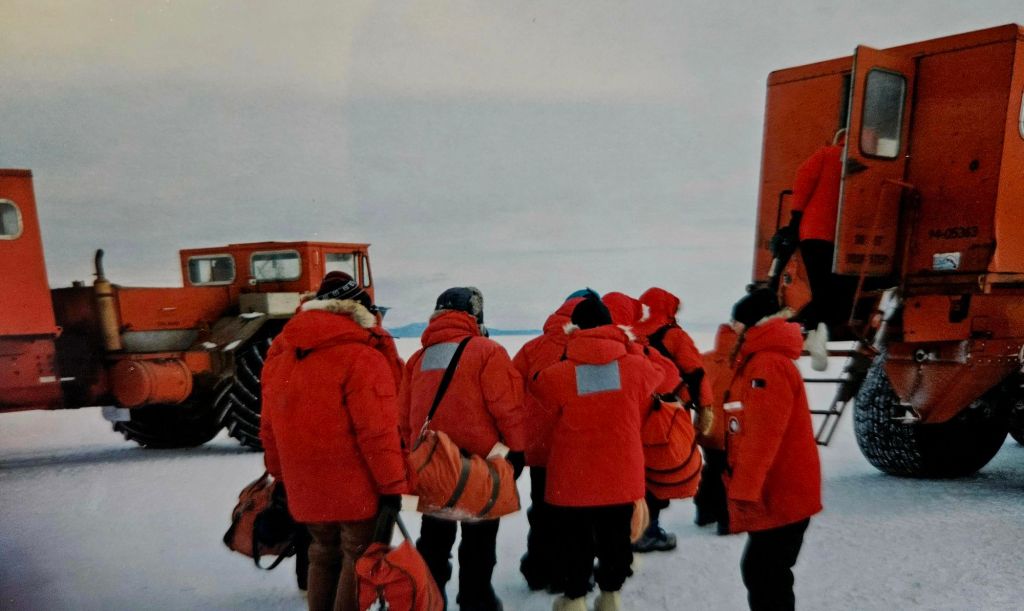
After arrival, we were taken to the base by huge “people-movers.” Both the planes and people-movers are specially equipped for ice and snow.
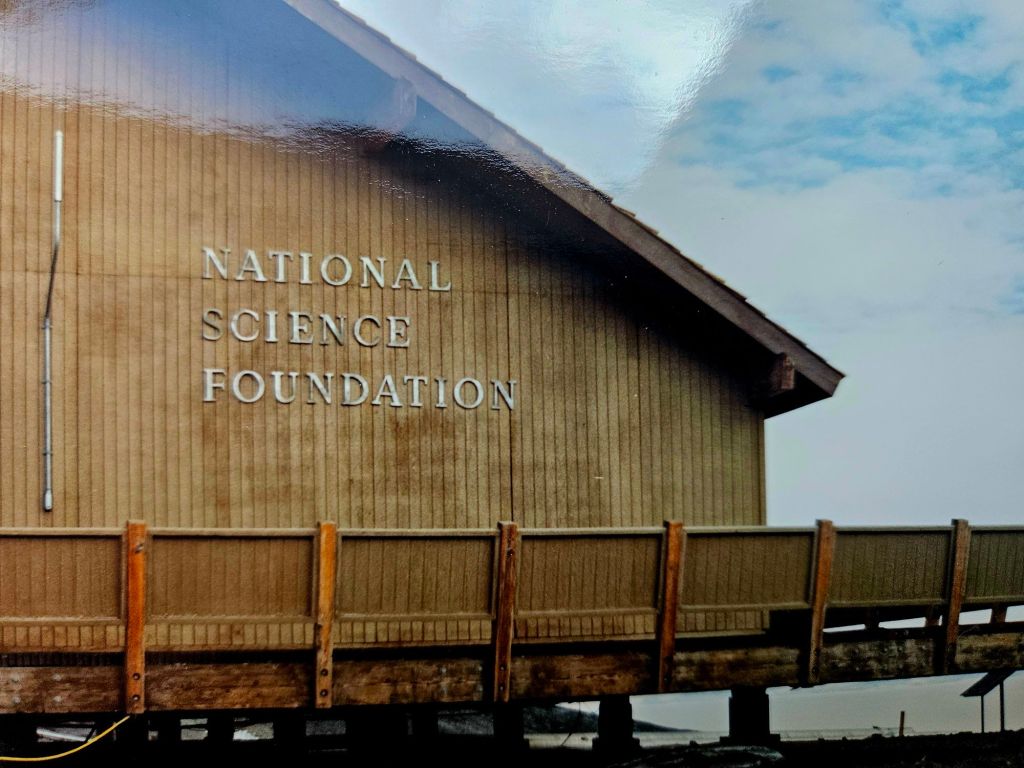
We checked into the NSF HQ to plan schedules, transportation and interviews. (It amazed me then, and still does, how few people realize that science is our reason for being there — especially this past year, as NSF and other science agencies were zapped in the presidential priority to shrink the federal government. Cutting waste makes sense but the method made no sense to me.) The first few days are also spent adjusting to the 24-hour sunlight.
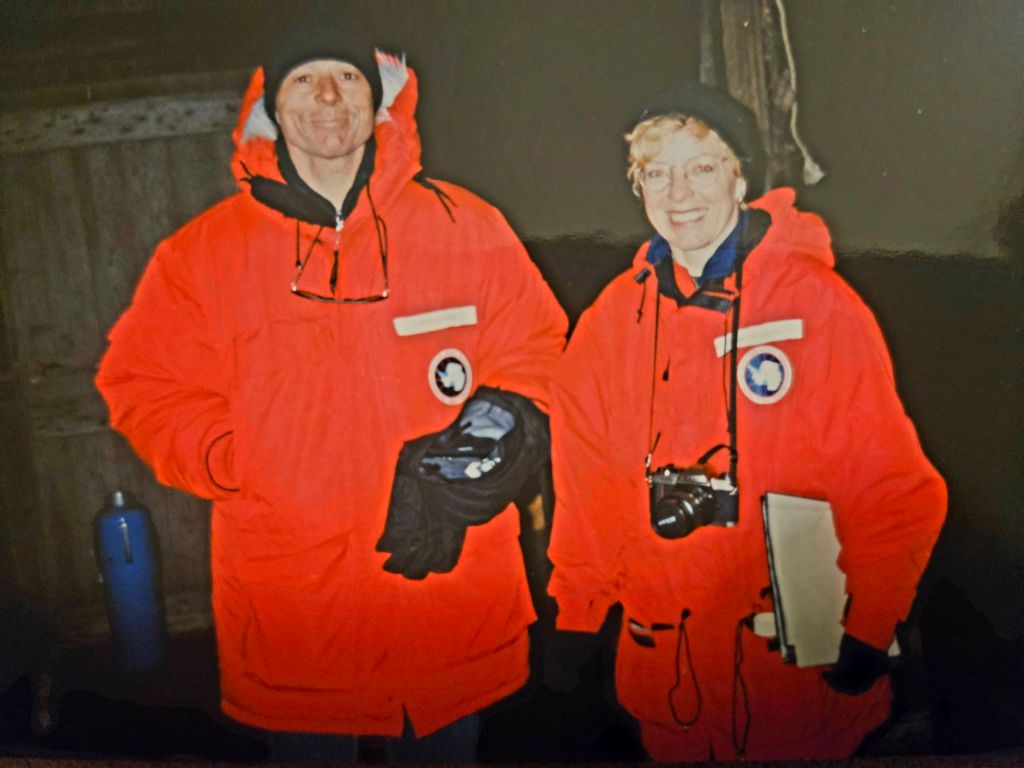
We all wore the standard red parka, including me and Curt Suplee, then science editor of The Washington Post. I worked closely with Curt for years, and he was just one of my “charges.”
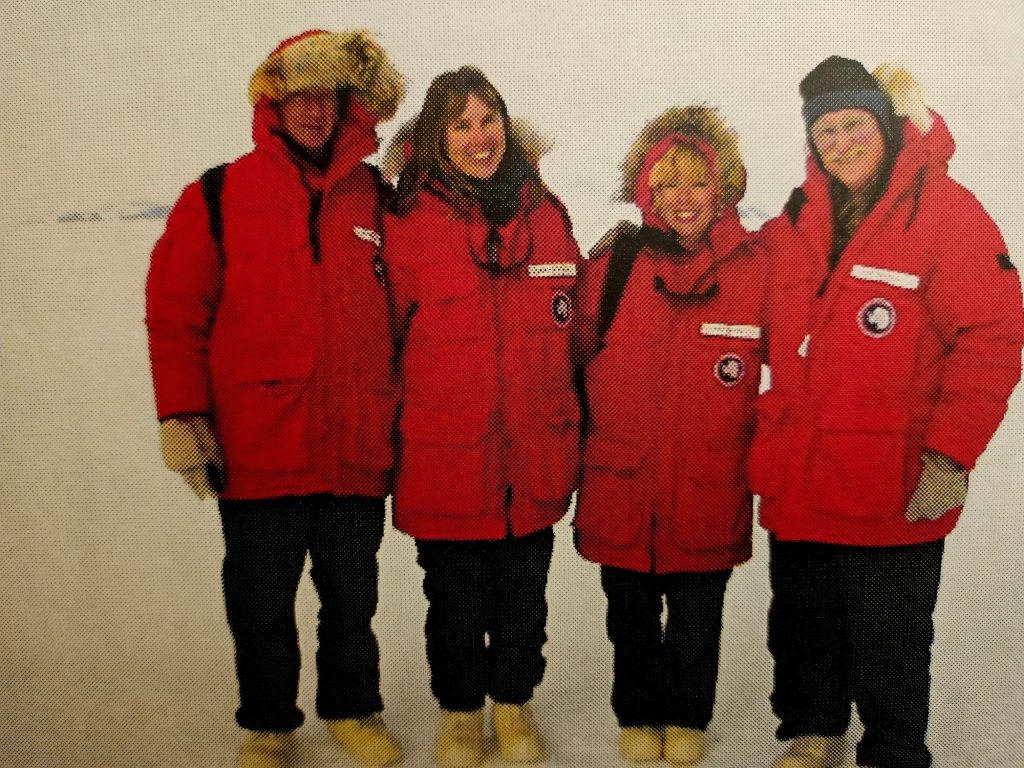
The others included Jack Williams (on right), weather editor for USA Today, and two science magazines writers. I escorted seven media reps total, including a CBS News crew. “Escorting” sounds like walking them from place to place but it was much more than that — especially since each had a different schedule and different needs.
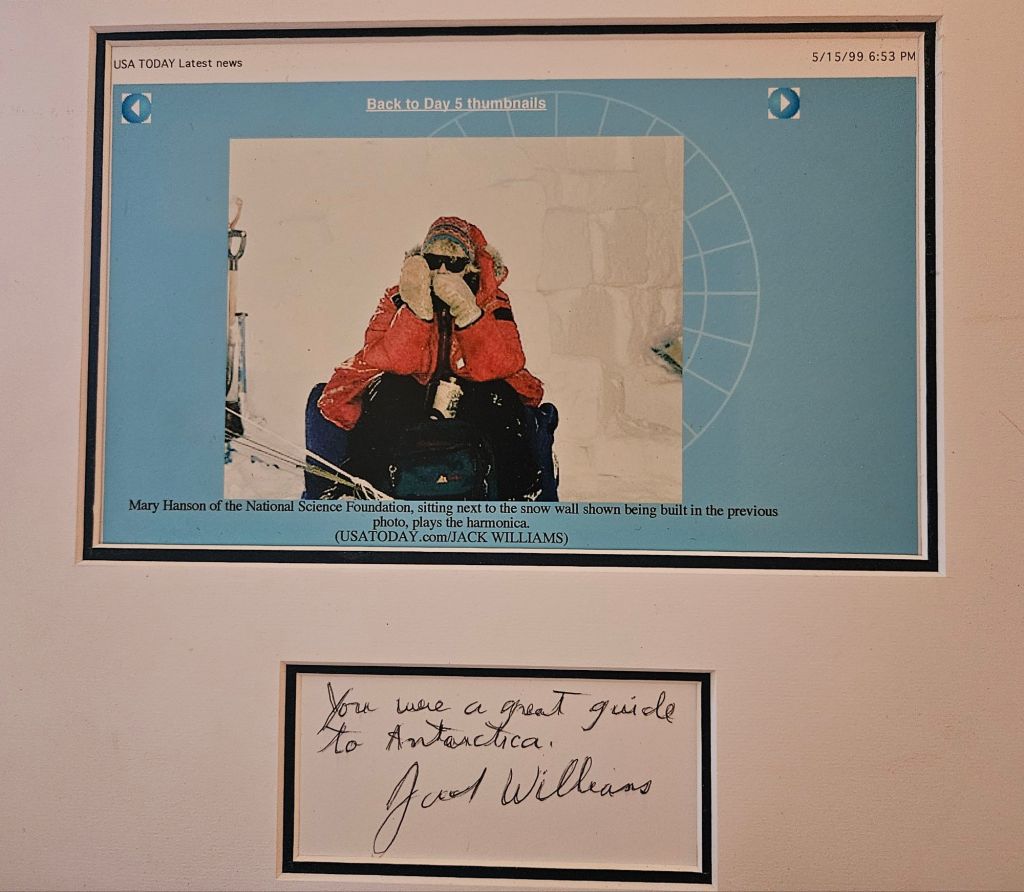
Jack called me his “guide” in this commemorative gift, which captures the role. (The photo on top was included in his stories about Antarctica that were published in USA Today.) My “guide” duties included preparing them to survive in the coldest continent on earth. I’m playing my harmonica here to celebrate our survival of…
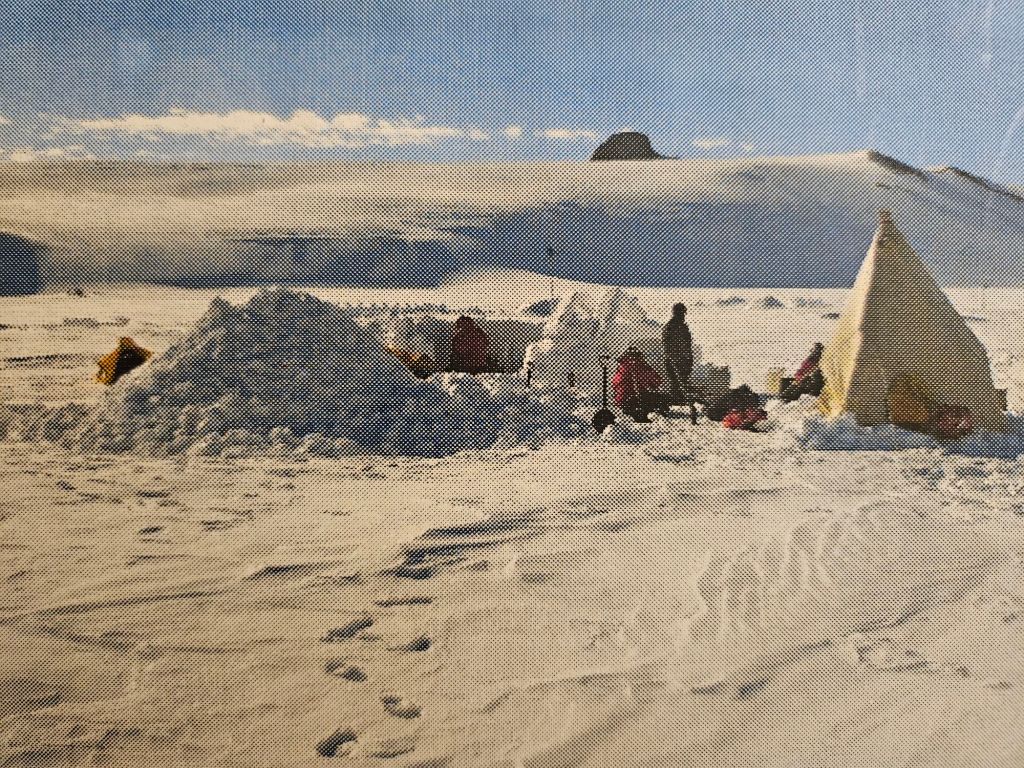
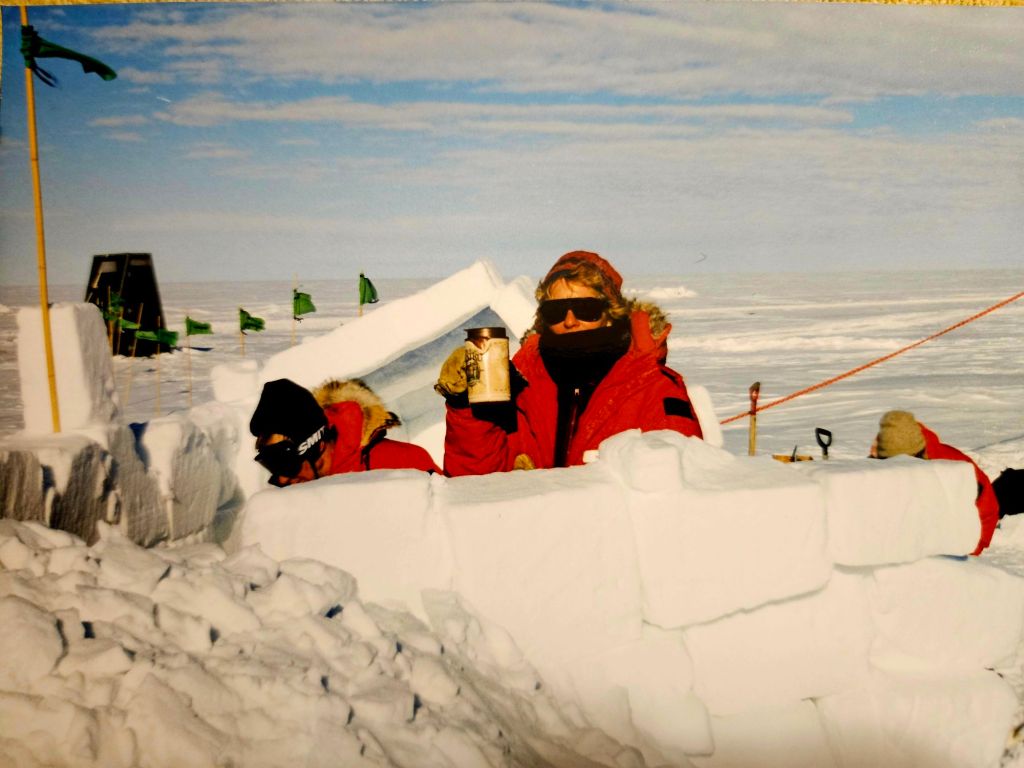
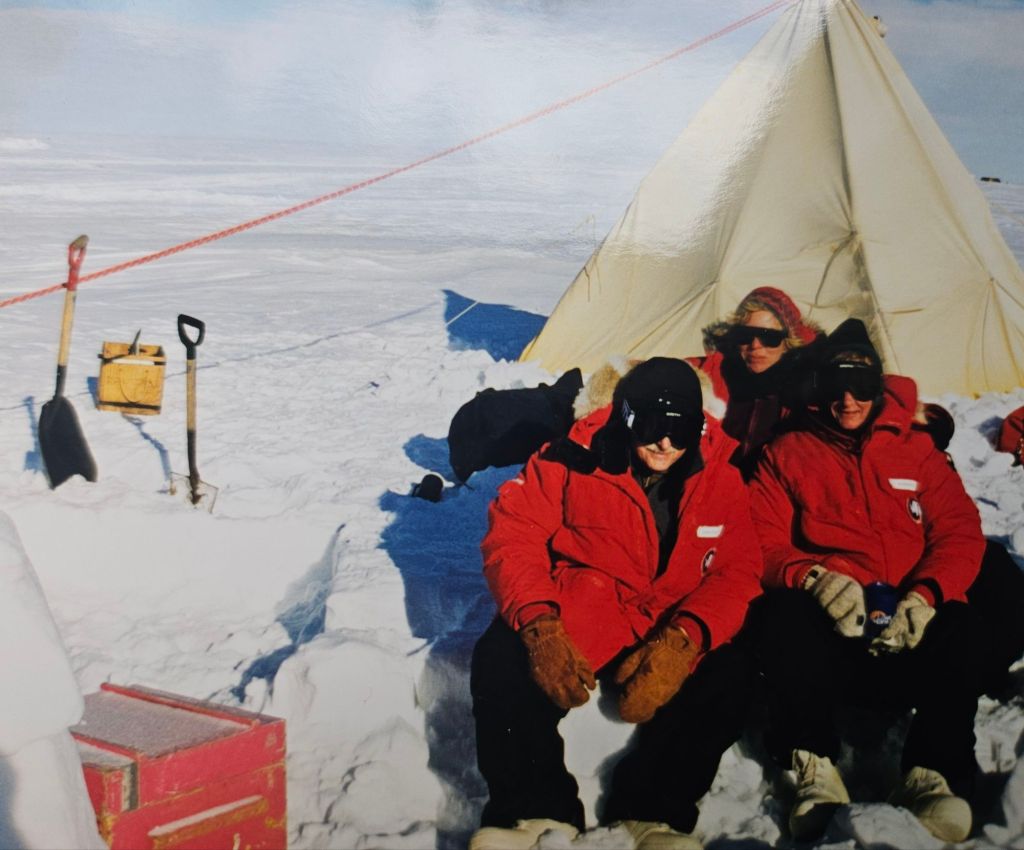
…survival training! It’s mandatory for anyone planning to head inland by helicopter, in case it crashes. So I scheduled it for all of us. We built a snow fort, a cave, and igloos. We all took part in the shoveling and digging and lifting—the reporters, workers who had just arrived, and myself.
It was physically-demanding and we stopped for coffee breaks.
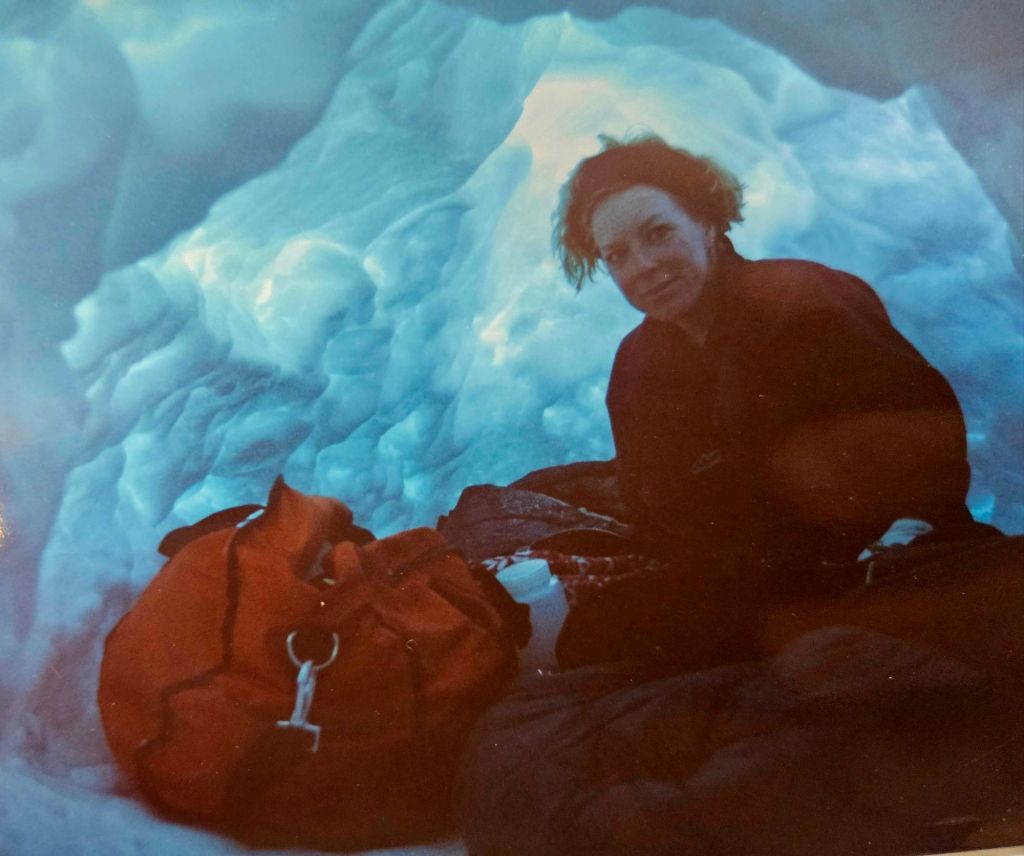
I worried about the older members of my group, even though you must pass a medical exam before traveling to Antarctica with NSF. (Because a medical evacuation is paid for by taxpayers.) Things happen to even supposedly healthy people; more on that later. I needn’t have worried about these guys. They were troopers! But we all enjoyed sitting down at the end. After that physical work, you get to sleep in the ice shelters that you or others have made…
…and I chose an ice cave left by someone else. I’ve done winter tent-camping but this was different. Snow is insulating; ice is just cold. I didn’t sleep well, but wouldn’t have missed it.
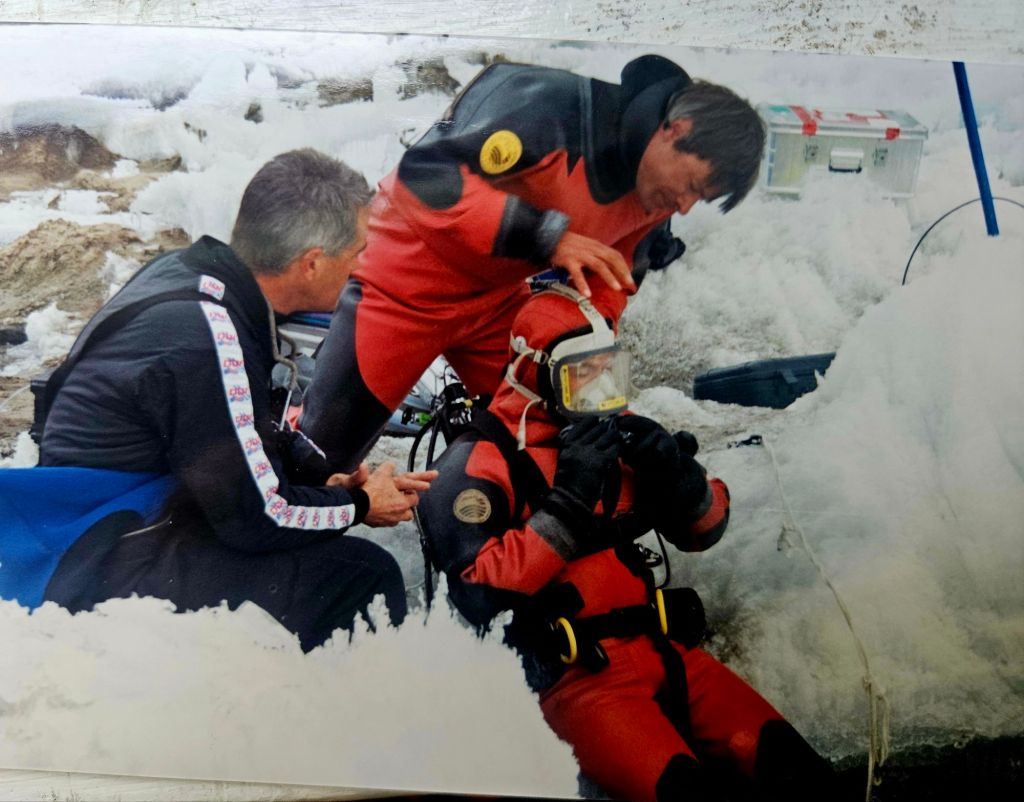
One reason to undergo survival training is to travel to this research site in the Dry Valleys, a short helo ride from McMurdo. Researchers descend under the ice of this inland lake to investigate, among other things, how life survives in extreme environments. (NSF researchers have found evidence of life in the most unlikely places, including volcanoes.) This research tell us about life’s limits, climate change impacts, and planetary habitability. Another site not far from McMurdo Station is related to a different kind of exploration…
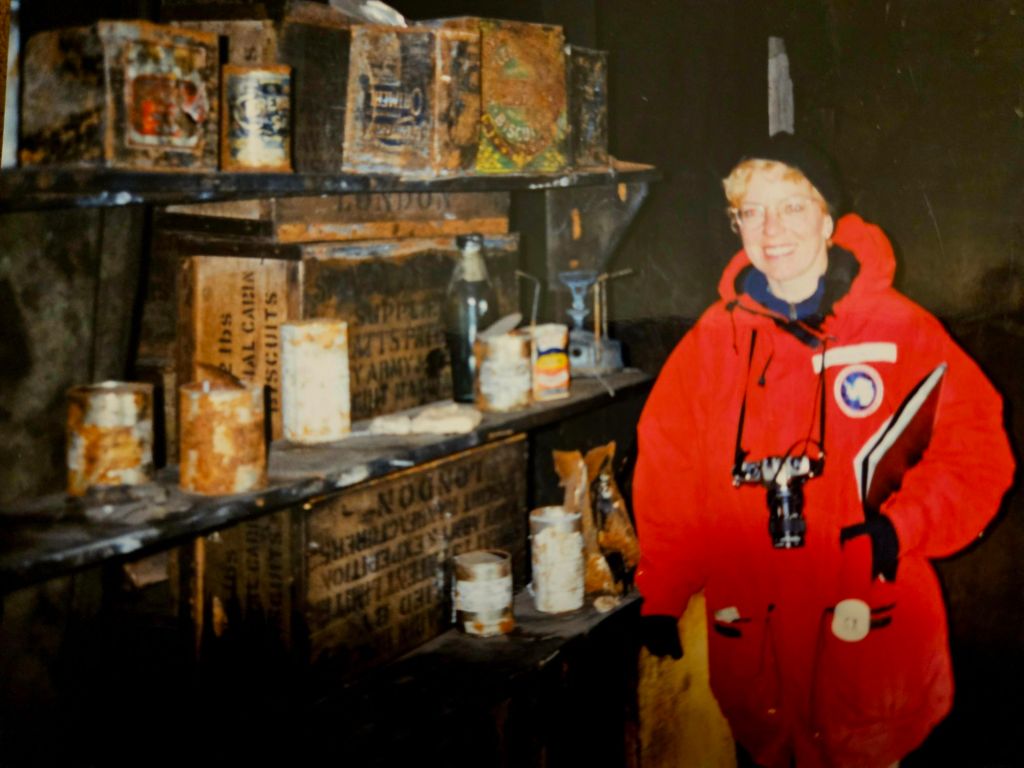
…the brutal physical kind. This is the well-preserved remains of an explorer’s hut, built in the early 1900s not far from today’s McMurdo Station. British explorers Robert Scott and Ernest Shackleton might be the best-known Antarctic explorers, but Norwegian Raold Amundsen was the first to reach the South Pole. Their documented tales of endurance are hard to believe. (I immersed myself in those tales after my first visit to Antarctica.)
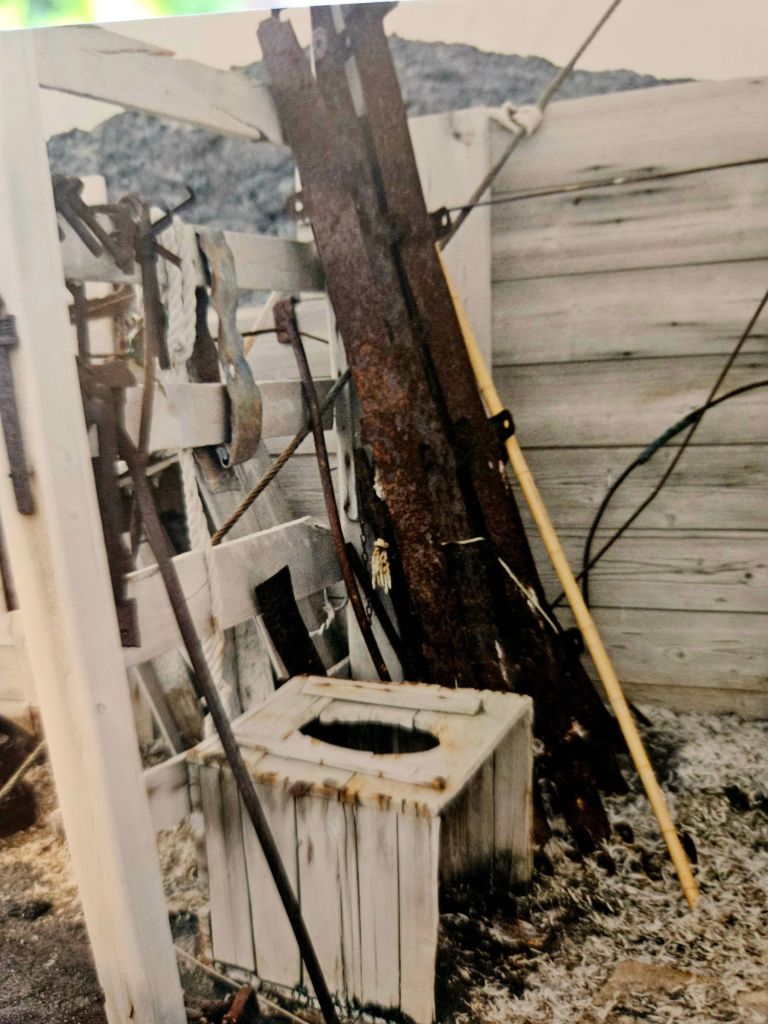
Explorers built these huts to prepare for the long trek – by dogsled and/or skis — to the South Pole, about 1,000 miles away. Through endless snow and ice. Without even a porta-potty like this.
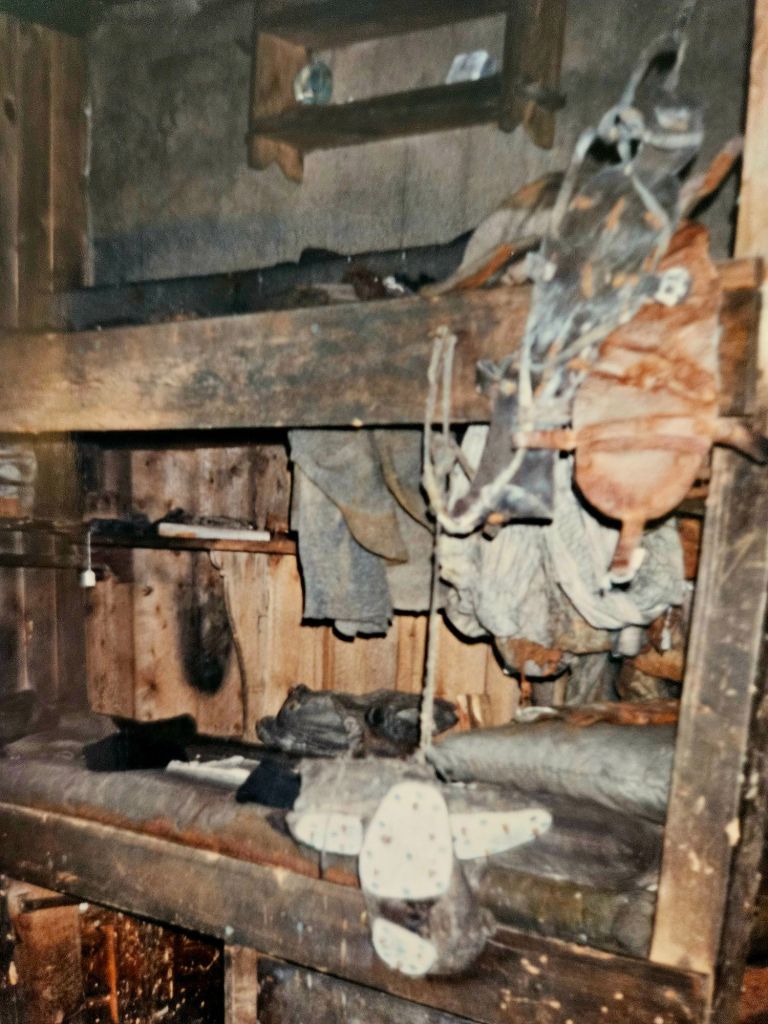
Sleeping on this narrow bunk might have been difficult but it was easier than sleeping in a tent, which they did while traveling. Visiting this hut, preserved just as they left it, was eerie. I thought about those who died while exploring — like Robert Scott — and wondered what pushed them most; the joy of discovery, or the need to be famous? Maybe both. Moving further inland…
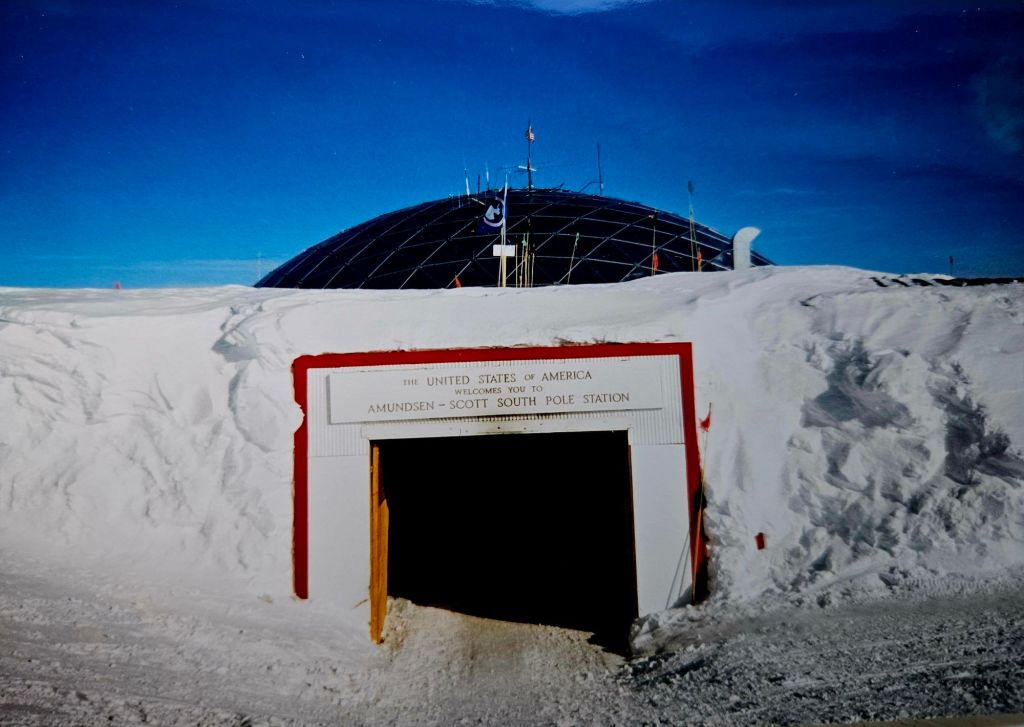
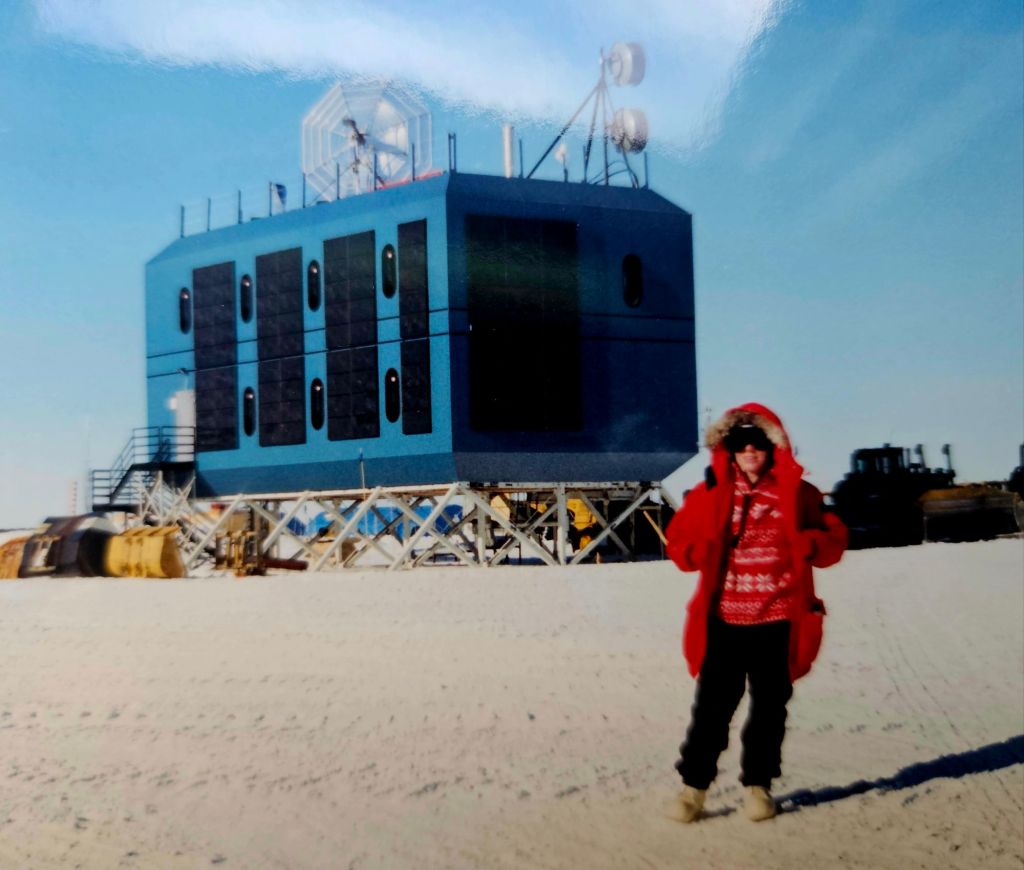
…to Amundsen-Scott South Pole Station. Even while I was here, in the 90s, this geodesic dome (built in 1974) was on its last legs, soon to be replaced by…
..a new station that included this futuristic-looking building. The original S. Pole station was built in the 1950s by U.S. Navy Seabees, which makes this retired Navy officer proud. The Navy led Antarctic logistics for about 40 years under Operation Deep Freeze. My first Navy Chief served there — a voluntary assignment in long darkness which only adventurers would seek.
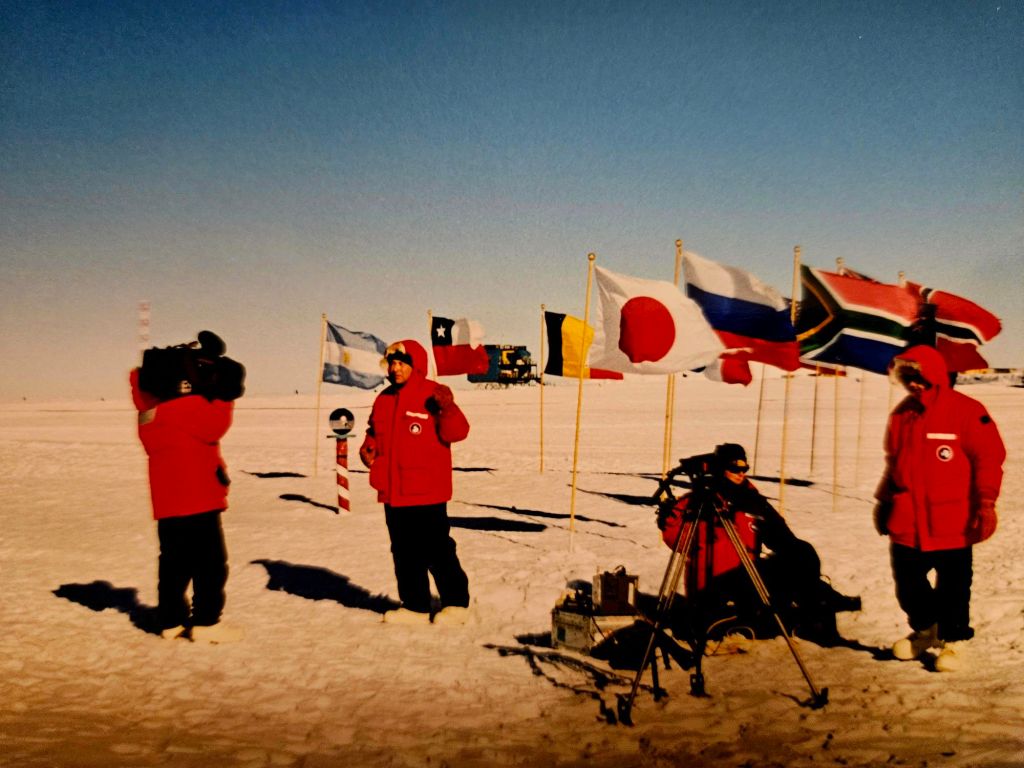
One of the media outlets I escorted to the South Pole was this CBS News crew led by correspondent Jerry Bowen. After his trip ended, Bowen accused me — by letter to my bosses — of censorship. I’m a former reporter myself, steeped in the Constitutional principle of Freedom of the Press, so was horrified to be so accused. I did help arrange his interviews and was present for most. I did help guide the scientists on how to conduct an interview. But I never told them what to say and never had access (nor sought it) to his footage. I never understood that accusation, which fortunately wasn’t taken seriously. He must have simply resented my presence. I reflect on this incident occasionally, given how common the accusation of censorship is today, and wonder if the back-story is similar to mine.
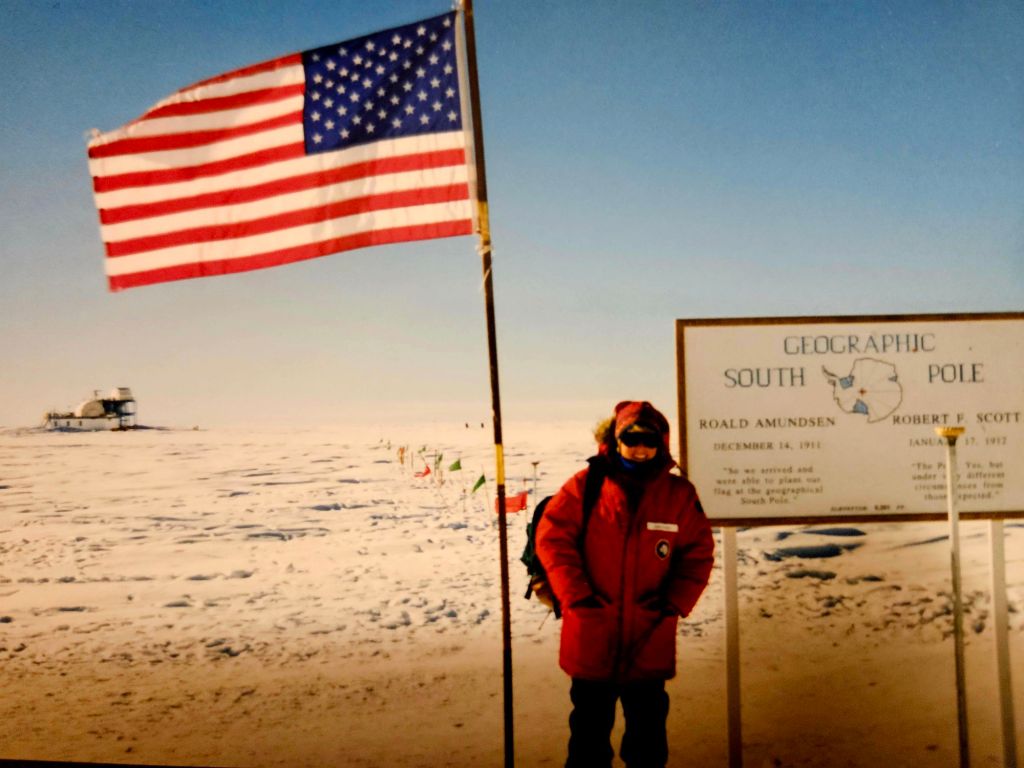
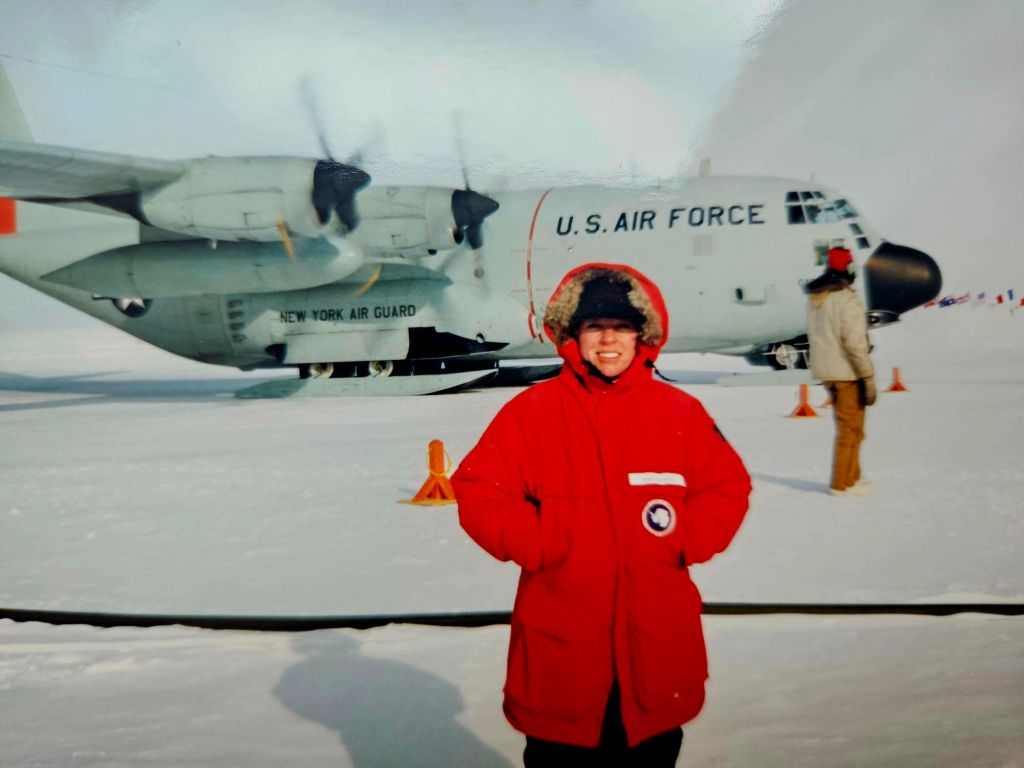
And this is me at the same place. (FYI, the geographic and magnetic poles are not the same.) Even in summer, temperatures here remain well below zero. In winter, they plunge below -50. That’s one reason that fewer than 60 people stay here in winter. In summer, it increases to 200 or so — about the same number who “winter over” at McMurdo.
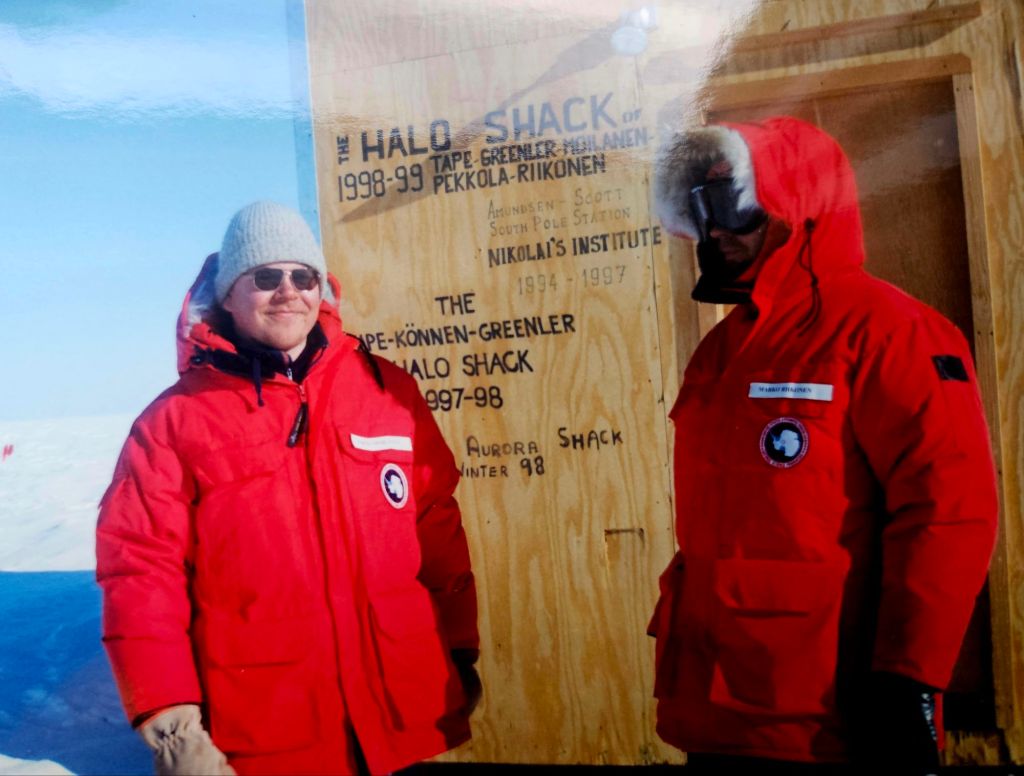
A personal joy while at the South Pole was bumping into these Finnish researchers investigating sun haloes, caused by refraction and reflection of ice crystals. (My genetic DNA is 100% Finnish, and science is international, so this represented the intersection of science and ancestry for me.)
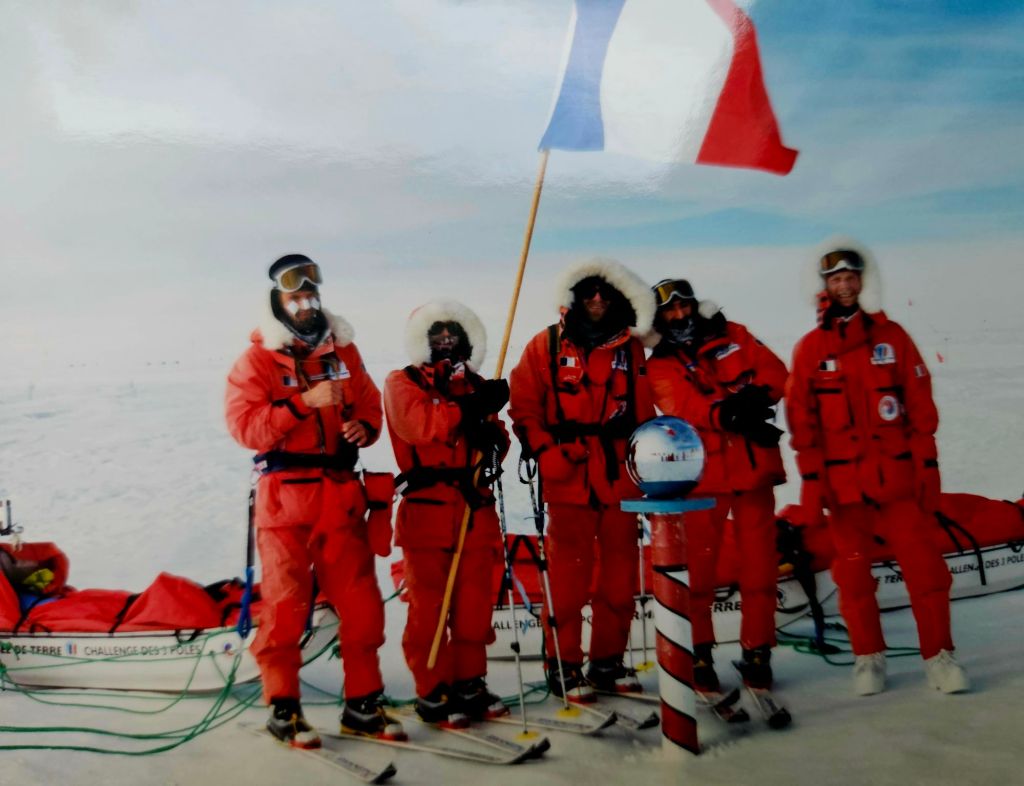
Also while I was there, this group of skiers from France arrived after skiing from the coast. Why? Because they can. Many private citizens have done so, taking one or two months to make the journey. The first female solo skier completed the journey in January 2026.
The journalists and I got there the “modern” way — by U.S. Air Force C-130, equipped with skis. The Air Force formally assumed Antarctic logistics support from the U.S. Navy in 1999. I was present for the Navy’s low-key “it’s-over” event at McMurdo; after 43 years, it was a bittersweet ending.
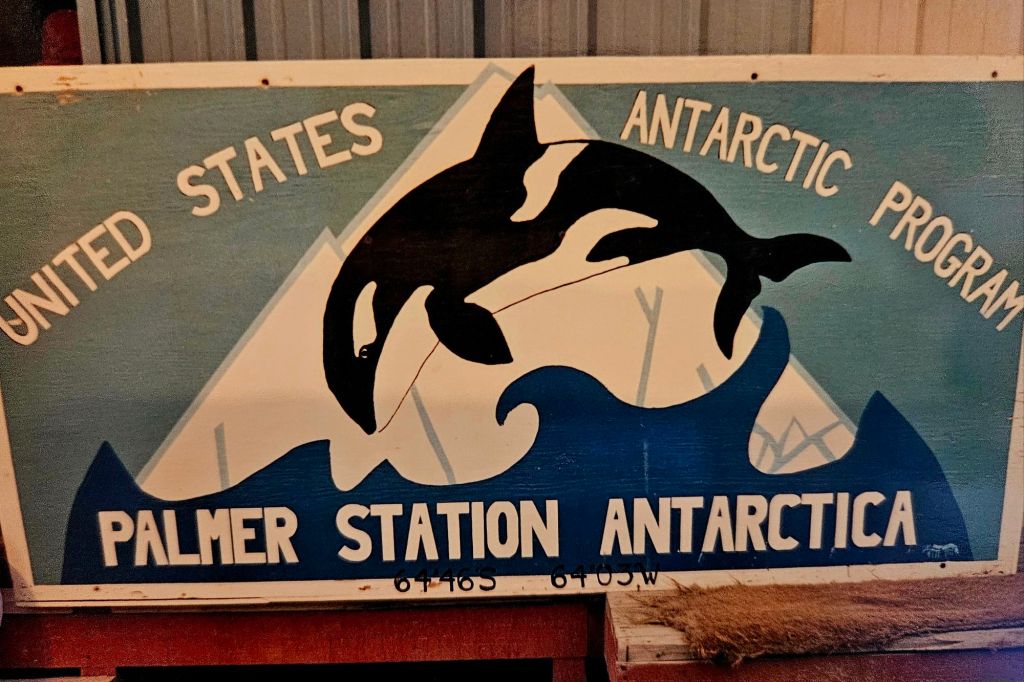
Moving on to the third and smallest U.S. research station in Antarctica, Palmer Station, located on the opposite side of the continent from McMurdo. Getting there is half the fun, because…
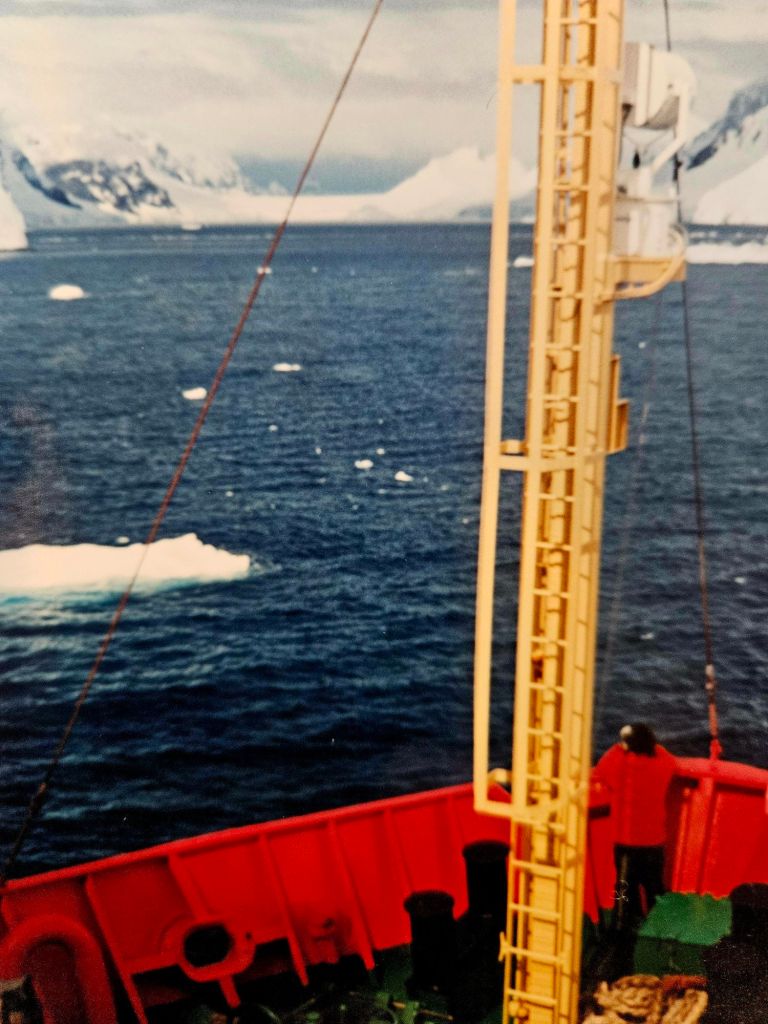
…the trip is by ice-breaker, leaving from southern Chile and crossing the exciting Drake Passage. (The ship’s buffet always offered dramamine alongside food 😉 )
It was the most memorable “under-way” of my life — which is saying something, after 30 years in the Navy and an eight-month personal boat trip!
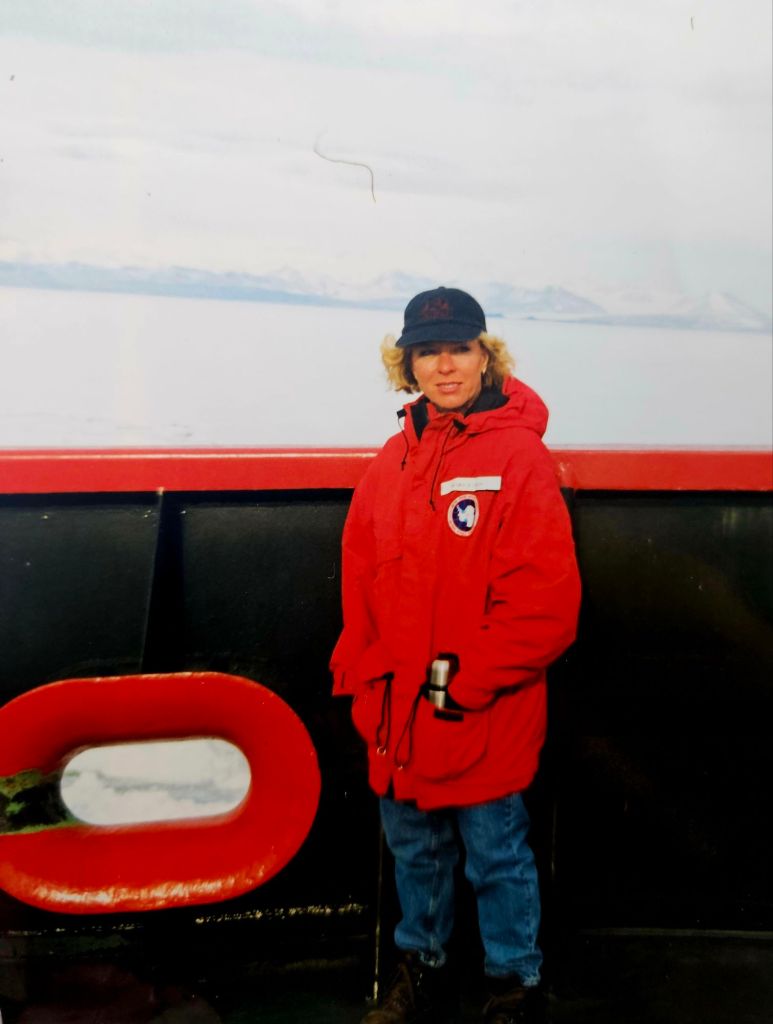
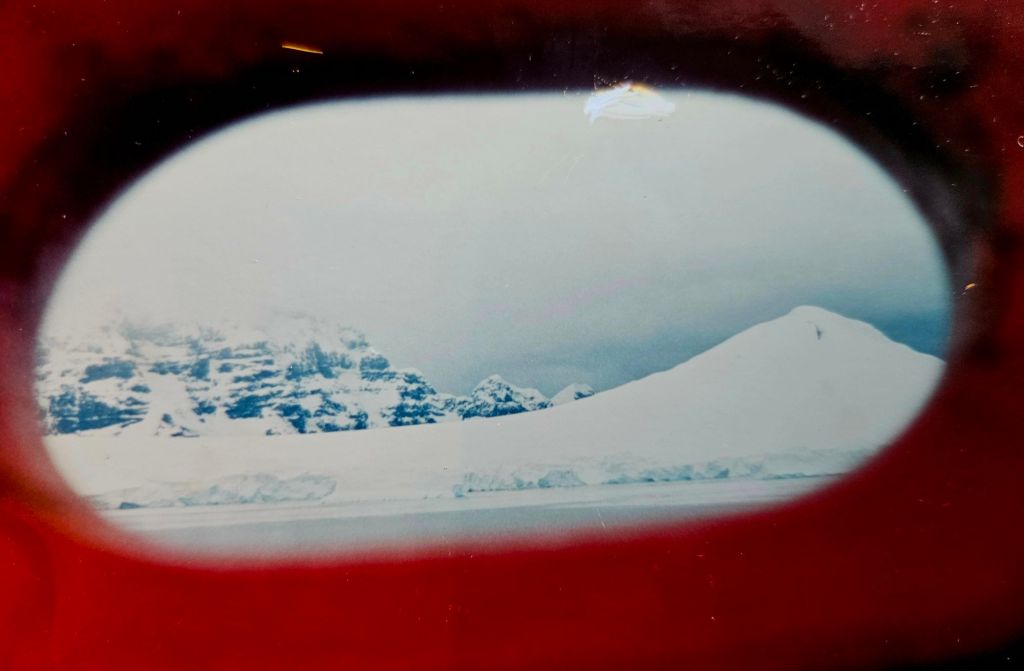
I couldn’t get enough of the views, even through the portholes of the USCG ice breaker Polar Sea. (It might have been Polar Star. Both served Antarctica.)
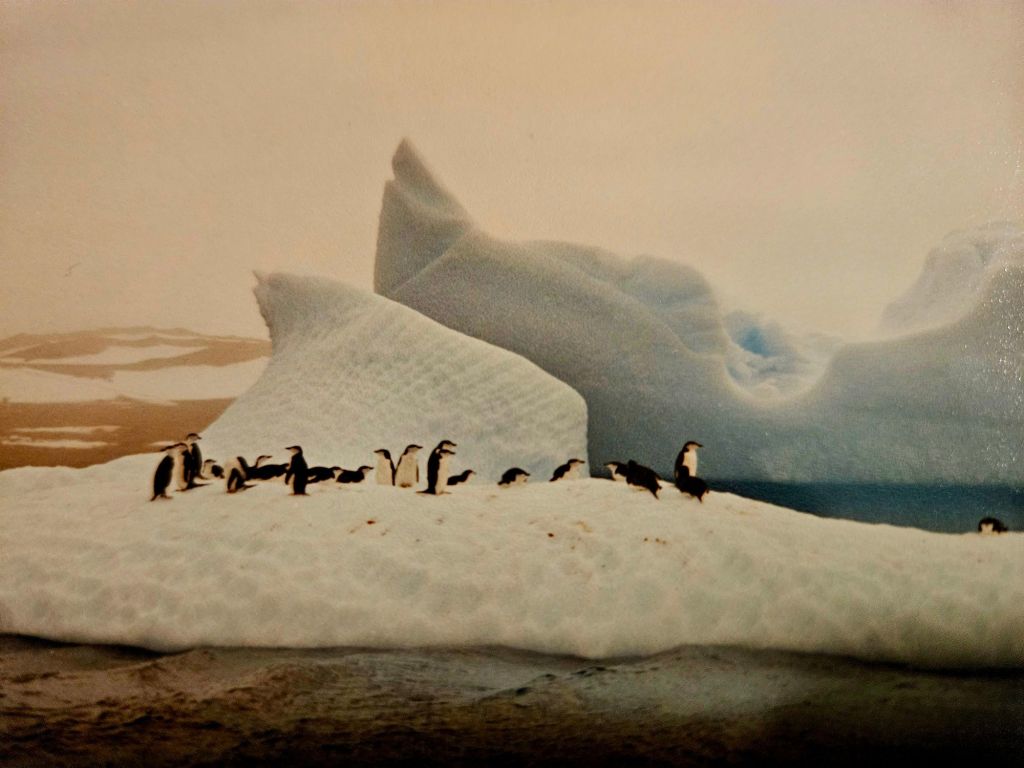
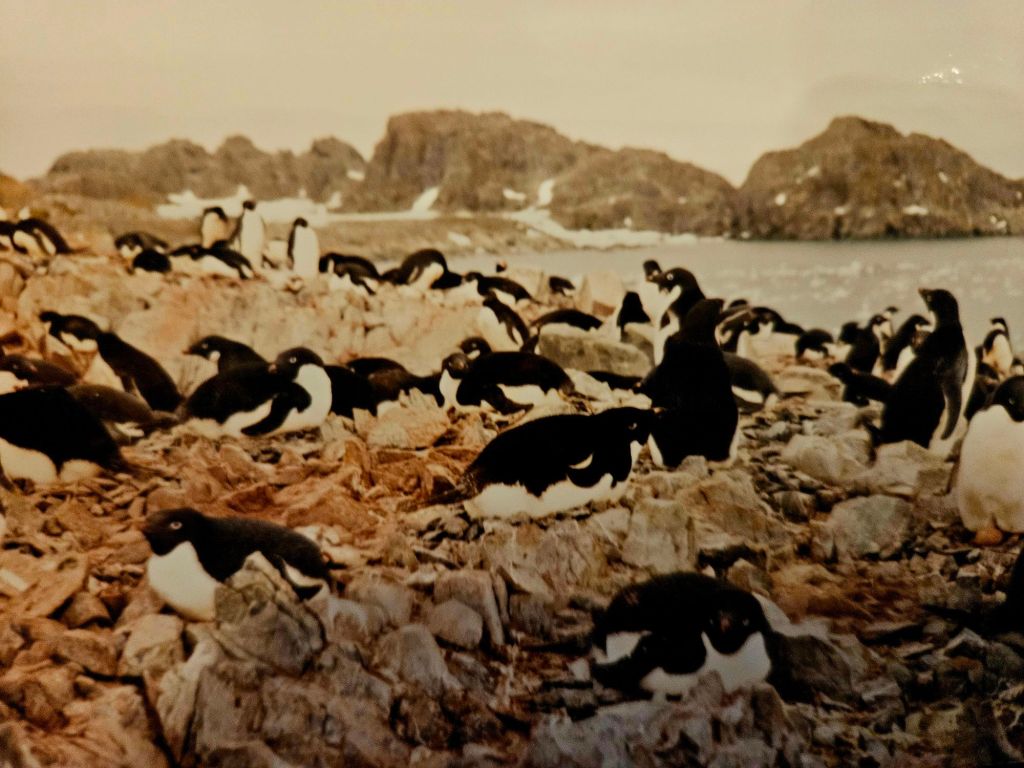
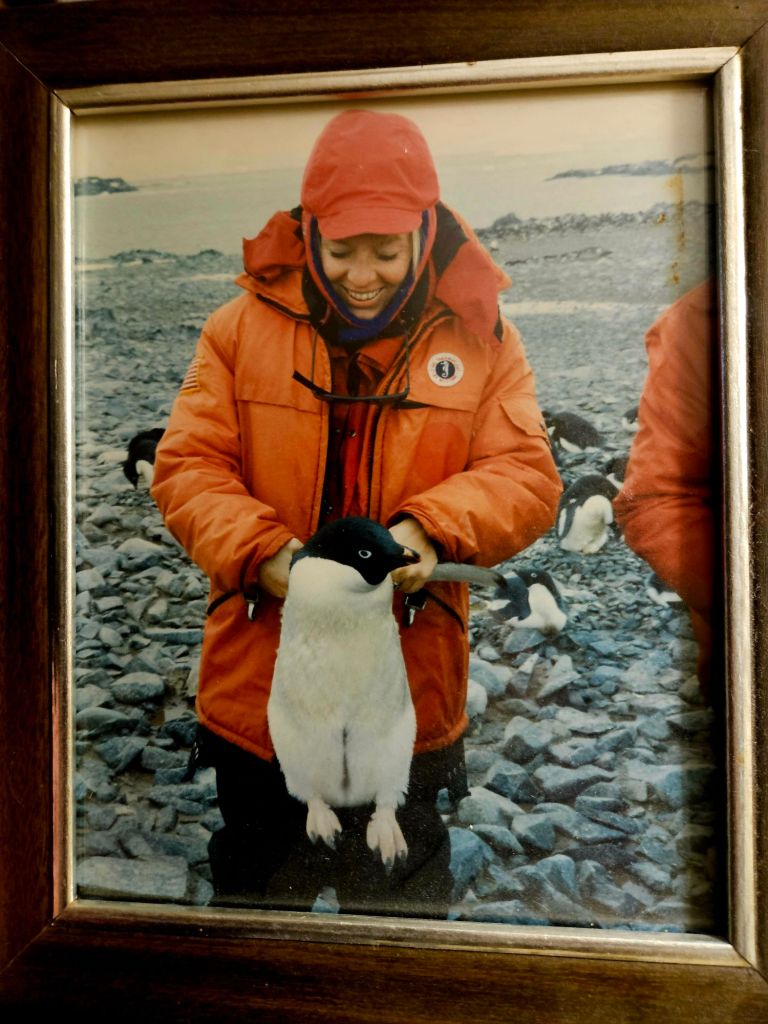
Palmer Station has abundant wildlife, which is more apparent the closer you get. Who doesn’t love penguins! These smaller ones are called Adelies. (There are 18 species of penguins.)
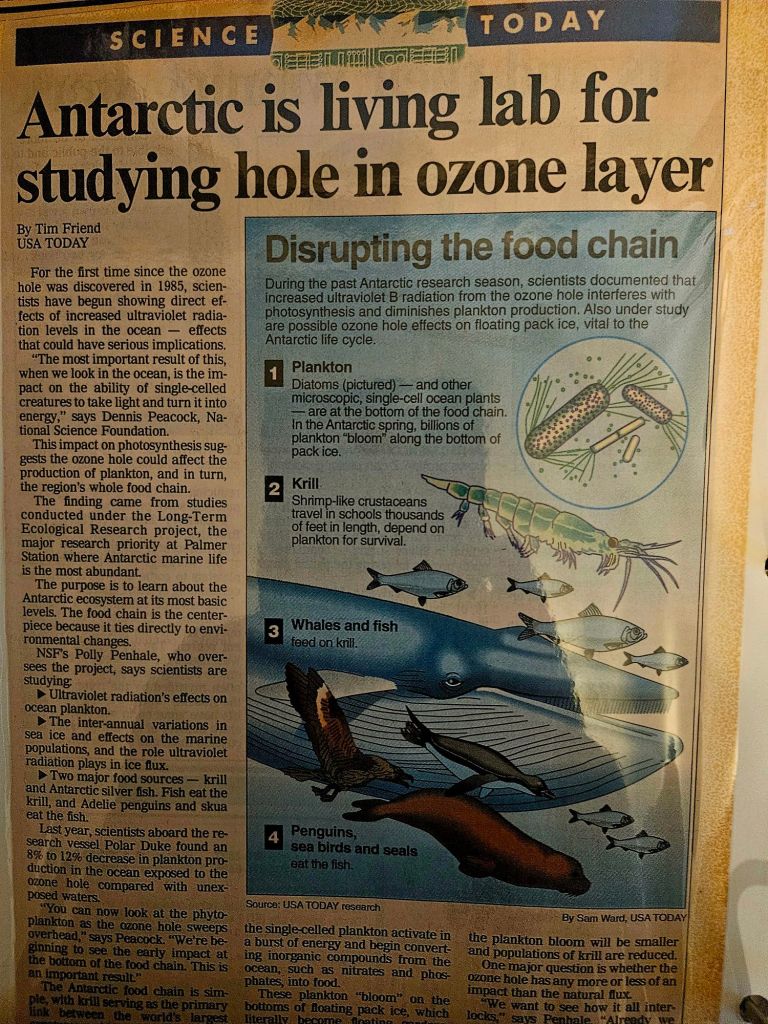
Penguin colonies are stinky and noisy. Scientists study them because they give indicators of ocean health and climate change impacts. Penguins eat fish and fish eat krill (tiny crustaceans). Warming oceans means less krill, so fewer fish, so fewer penguins.
Tim Friend from USA Today (who I escorted to Palmer Station) explained the process in this piece. Every link in the food chain matters, even the ones we can’t see with the naked eye.
So penguins are harbingers of planet health. And cute! But if you visit Antarctica as a tourist, don’t do this. It wasn’t my idea…a scientist handed this penguin to me to demonstrate the strength of its wings. (Shockingly tough.) I hung this on my office wall until someone told me it’s a bad idea to display it. Since 30 years have passed, I think it’s ok to share now.
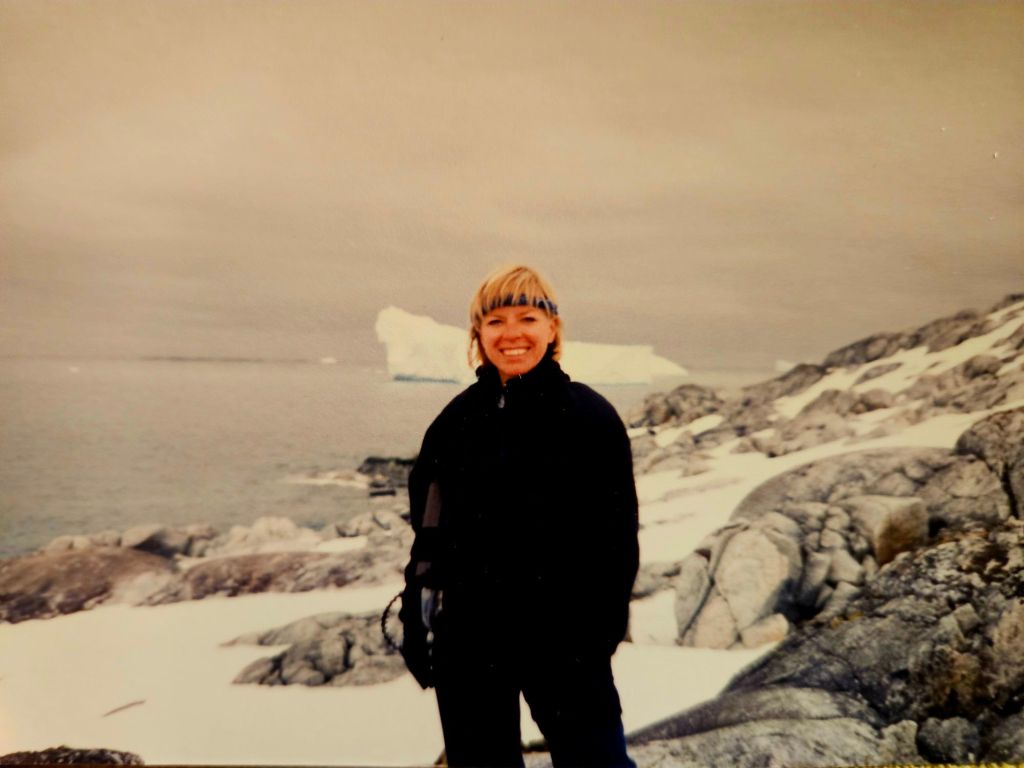
At Palmer Station, you don’t need the heavy red coat during much of the year. Temperatures in coastal Antarctica in summer are quite mild, often in the 30s–much like my home in Michigan’s Upper Peninsula in the winter.
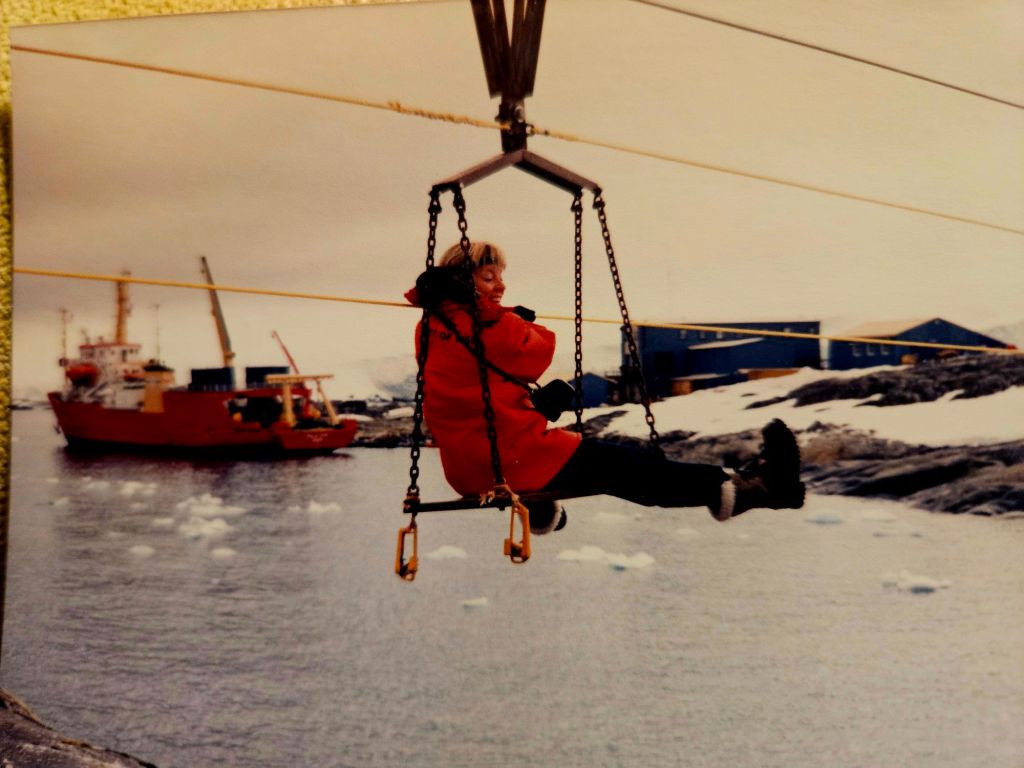
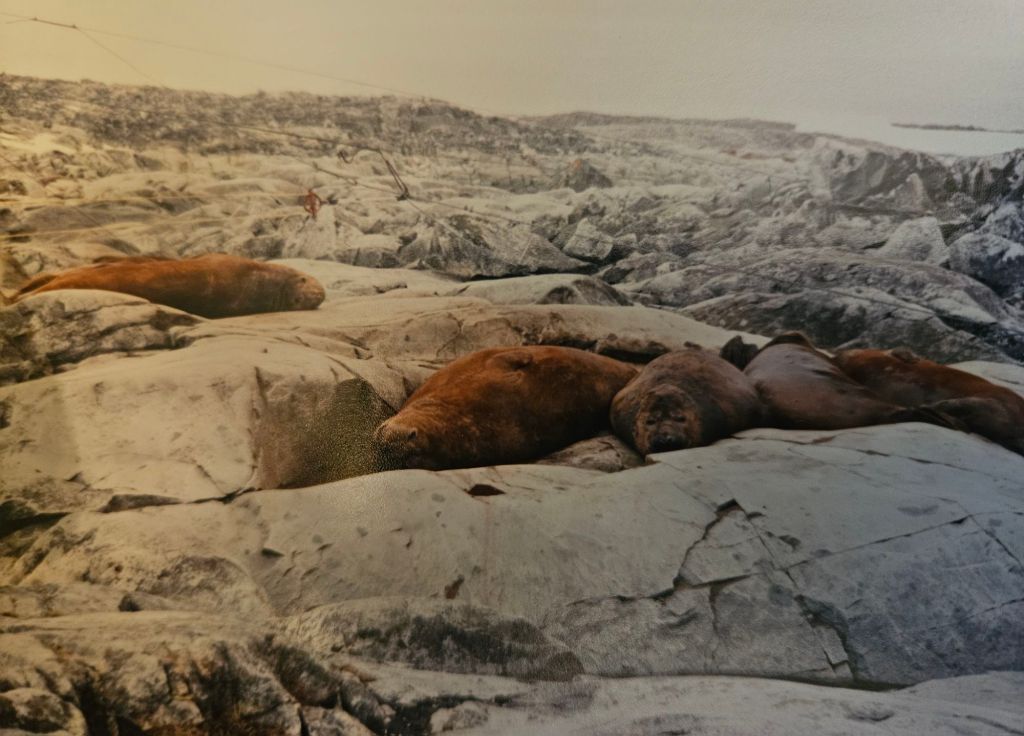
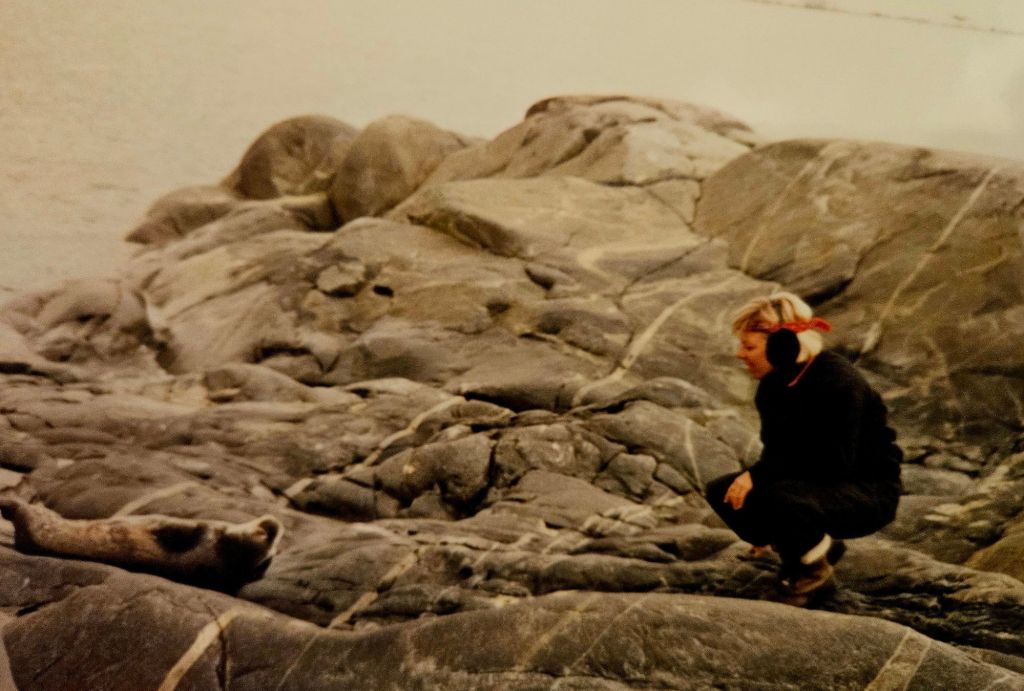
Another species of wildlife at Palmer Station is the elephant seal. To reach them, you used this pully-chair to cross from the main part of the research station to the seal hang-out. You radioed your departure and arrival, even though it’s a short trip. If you fall into this frigid water, you don’t last long!
Elephant seals kinda weird, especially when moving. Like a huge slug.
This guy greeted me with a characteristic low bellow. If I heard that sound in the woods, I’d be unnerved.
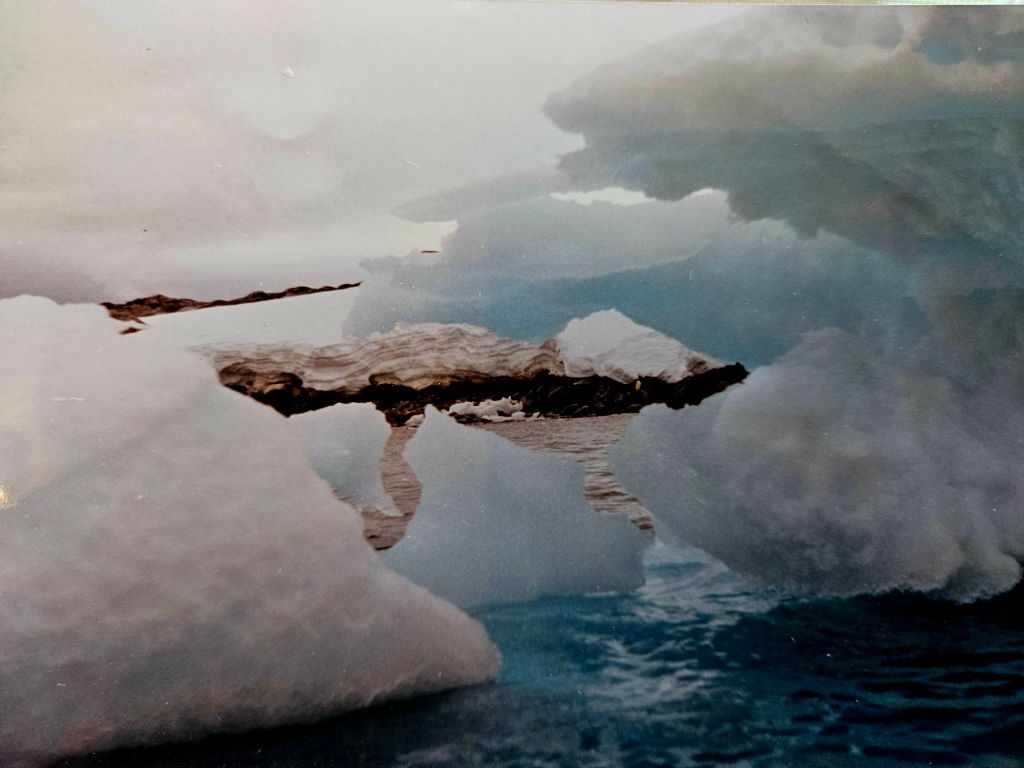
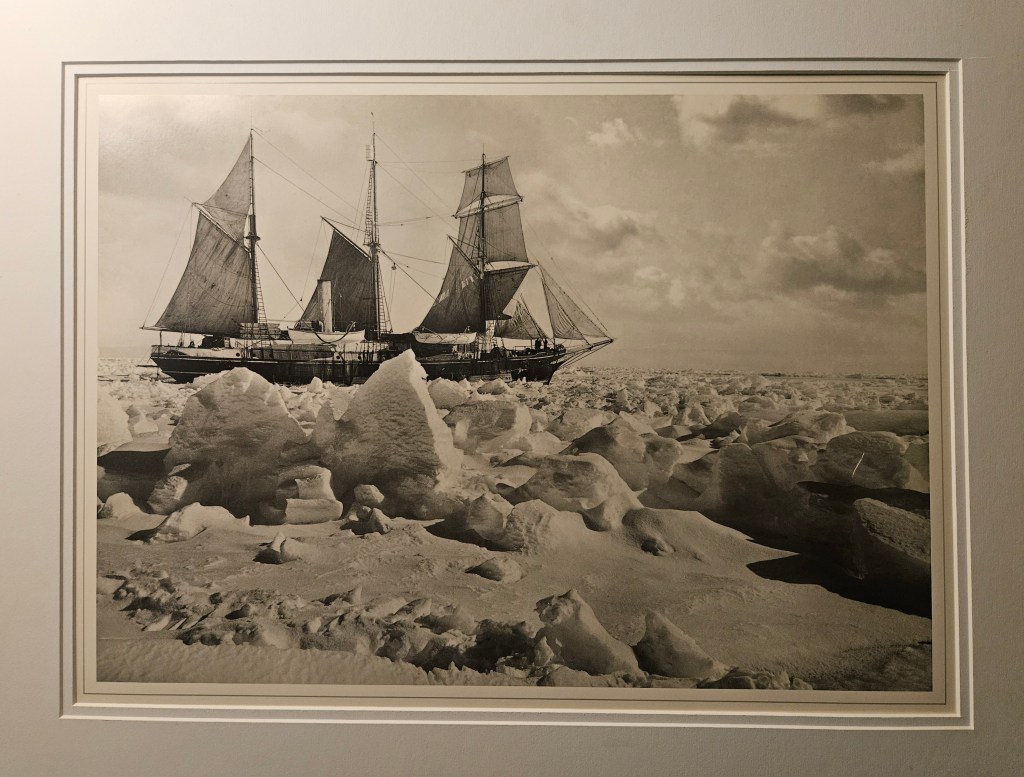
The animals were captivating but my favorite part of Antarctica was the scenery–both distant and close-up. I watch the ice a lot at my waterfront camp in the remote north, but there’s something about Antarctic ice. Consider what it did to Ernest Shackleton’s ship, Endurance…
…which was stuck in Antarctic ice for 10 months in 1915. The human story after the ship sank is even more astounding. I was so inspired by this real-life tale of leadership and survival that I bought, framed and hung this enlarged photo to remind myself that perseverance works. Even today, spending winter on The Ice can be risky, as the South Pole doctor who developed breast cancer in 1999 can attest. I became directly involved when her mid-winter evacuation (itself a risky venture) drew international media attention, and even held a rare press conference at NSF HQ with the media-shy NSF Director. (One of the many resulting news articles, quoting me as NSF spokeswoman, is posted here.) At the time of her evacuation, the doctor asked for privacy so I acted as her gate-keeper. After her treatment…
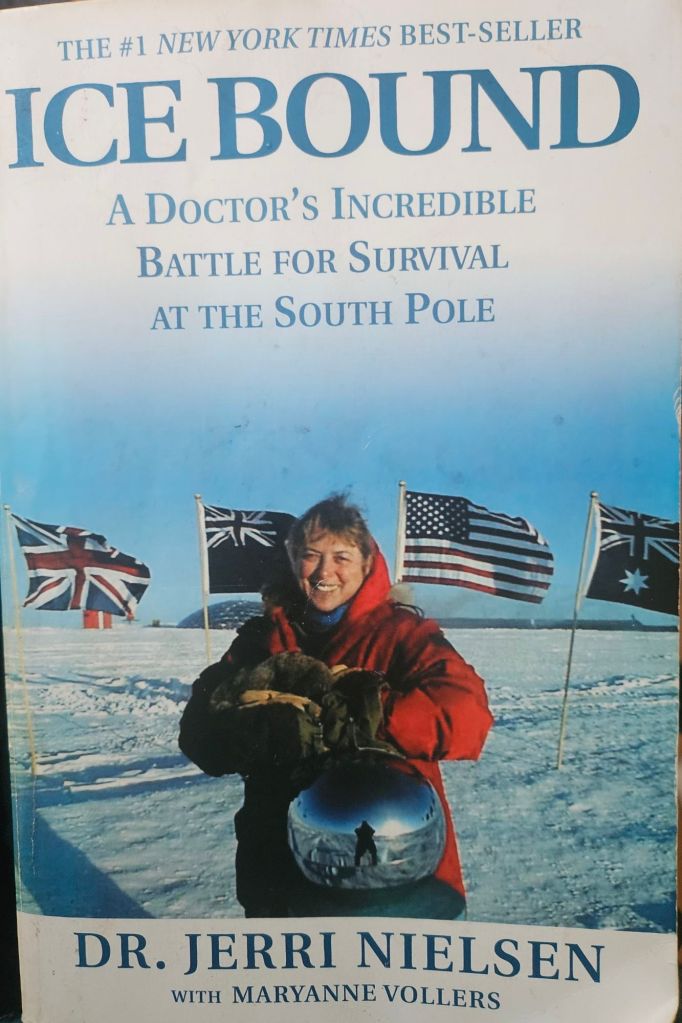
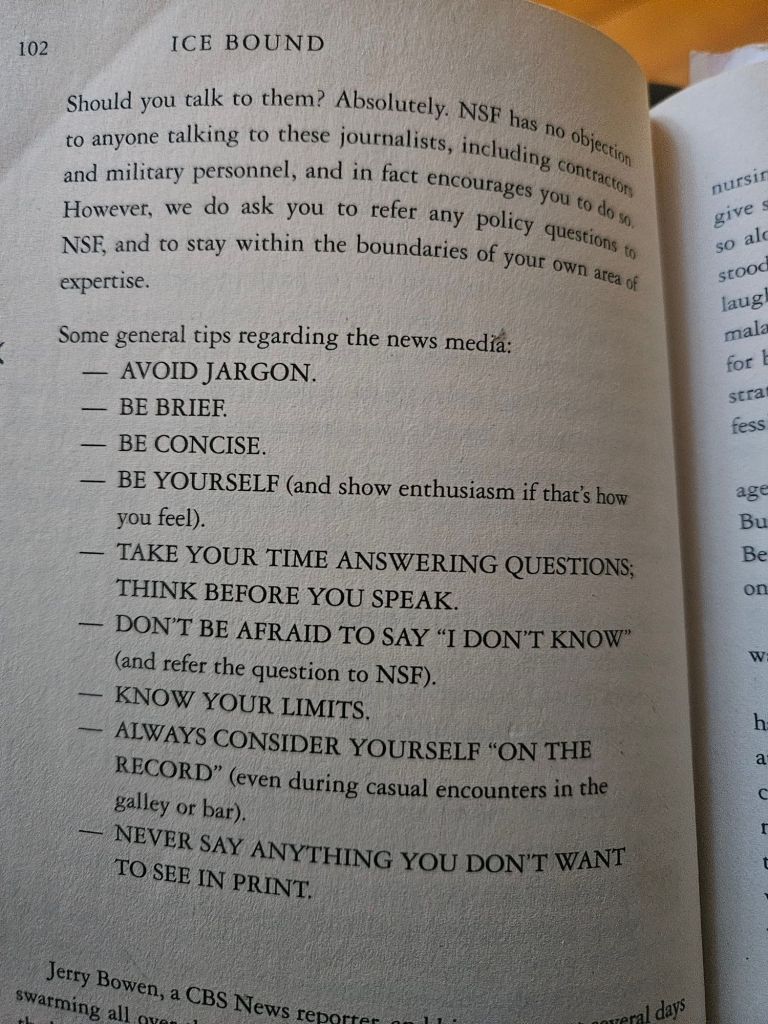
…she wrote this book, and included (to my astonishment) my own media guidance, which was distributed to all NSF staff but which I thought few people read.
She doesn’t credit me, but these are my words, summarizing how to “survive” a media interview. I wrote this for NSF scientists as part of the media training I developed and held quarterly. NSF is federally-funded, so giving taxpayers accurate information through the media was a patriotic obligation, I said. This is my version of standard guidance that all public affairs officers in the Navy and federal government gave to their staffs. (I wonder if that’s still true, since disinformation is so routinely distributed these days by military and federal leaders, and many taxpayers can’t tell the difference between information and propaganda.) I never said their words must be pre-approved or edited by me, so I’ll never understand CBS’ accusation of censorship.
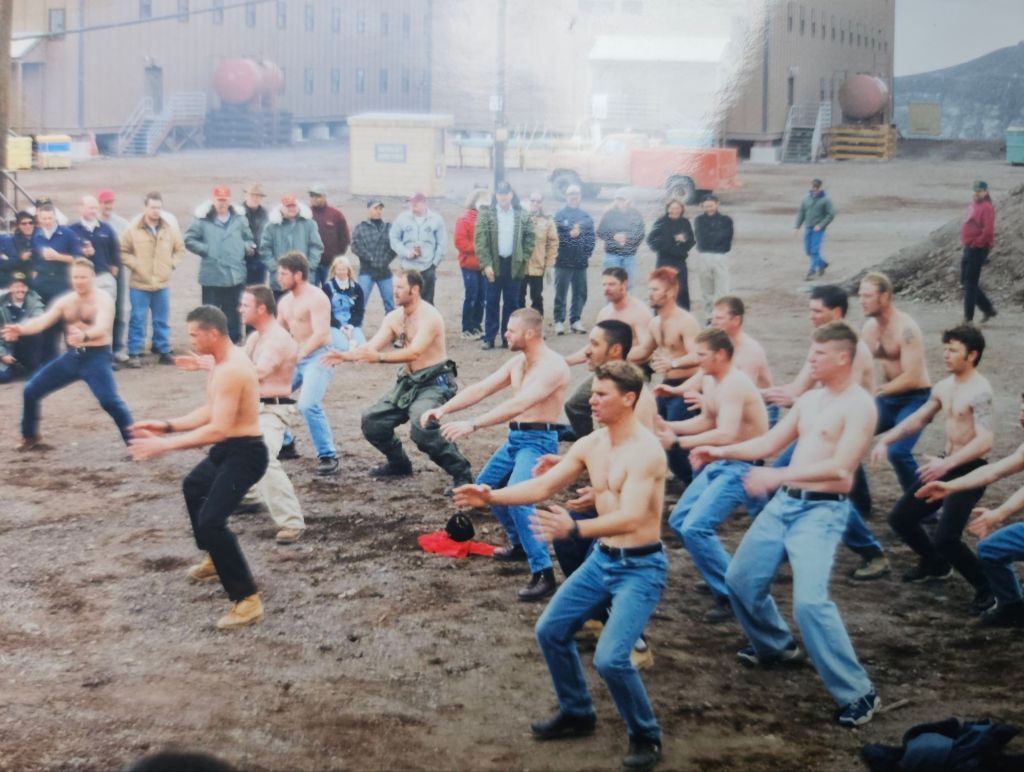
Duty in Antarctica can be rigorous, even without an unexpected cancer diagnosis. But the staff at McMurdo found ways to entertain — in this case, performing the New Zealand Haka Dance. They also did foot races, and I joined them for the Hut-to-Hut 10K to nearby explorer huts. When you leave McMurdo Station to return to the U.S. via New Zealand, other entertainments await…
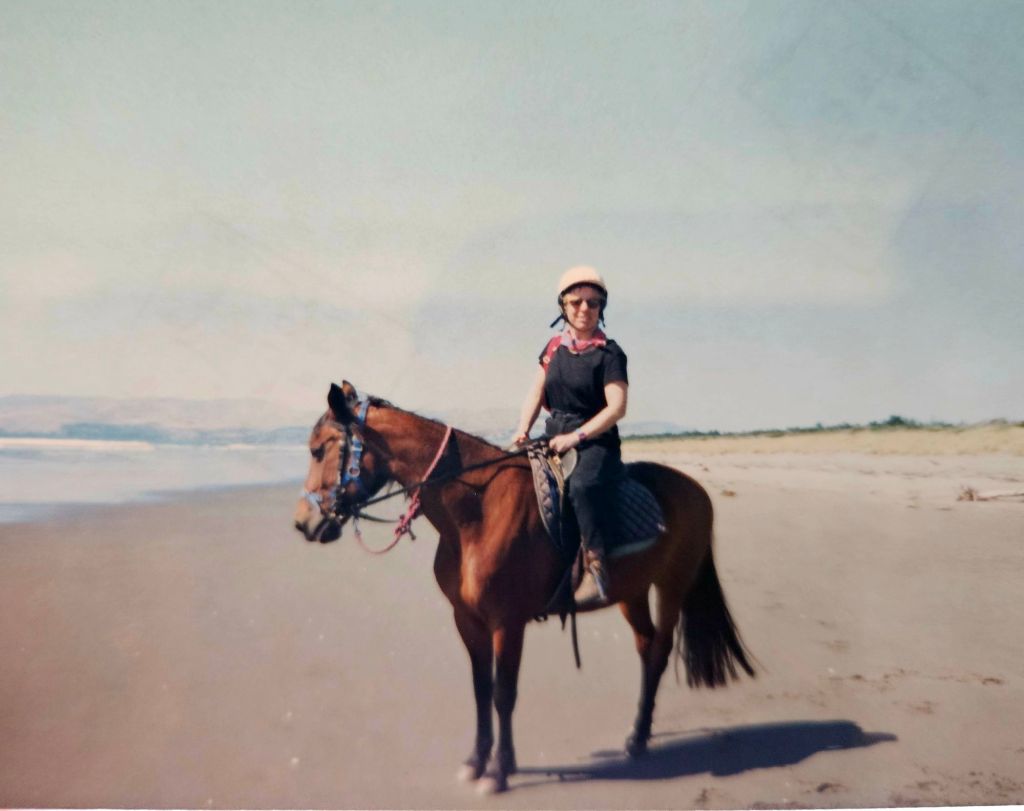
…like a horseback ride on the beach. I took a few days to explore NZ and wish I had taken longer. I’ll need to go back one day. That’s what travel does for people like me. Each trip is unique and memorable — especially this one — but no matter how many you do, there’s always another calling to you. I doubt I’ll ever return to Antarctica, but it’s part of my history and personal development. My only moments of true awe came in solitary moments on The Ice, contemplating the vast whiteness. But that’s for another writing project.