I’m North American, but my DNA is nearly 100% Finnish. It explains a lot about me and my family, and I learn more each year. I learned a lot more in my hometown last month.
All of my grandparents were immigrants. There’s a strong politically-generated passion in the U.S. right now about immigrants, both legal and illegal. (The two are often confused.) Newcomers have always been suspect, especially if they speak a different language. I’m sure my grandparents experienced some of that in their day. I’ll not take on that argument here. This post shows how the descendants of one immigrant group, Finnish-Americans, are publicly claiming their heritage without denying their nationality. I doubt we’ll ever equal Irish-Americans with St. Paddy’s Day or Mexican-Americans with Cinco de Mayo, both widely recognized as reasons “to party.” Finns are too stoic for boisterous parties anyway. Our cultural event last month was mainly educational — just what I love. But there was plenty of fun, too.
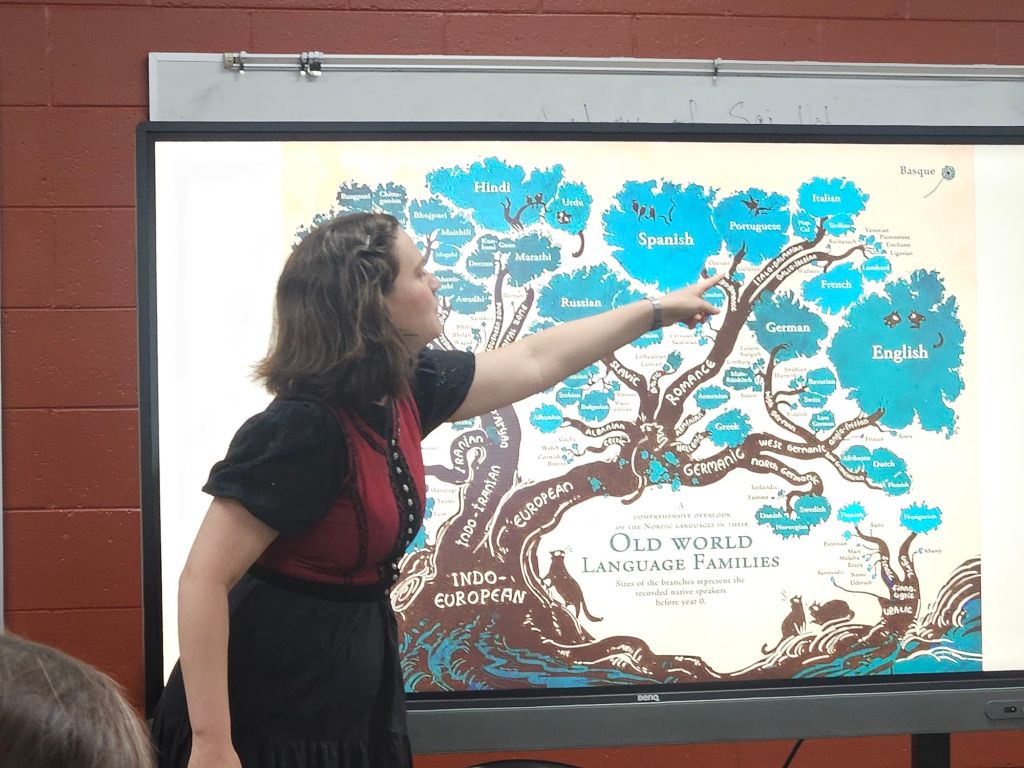
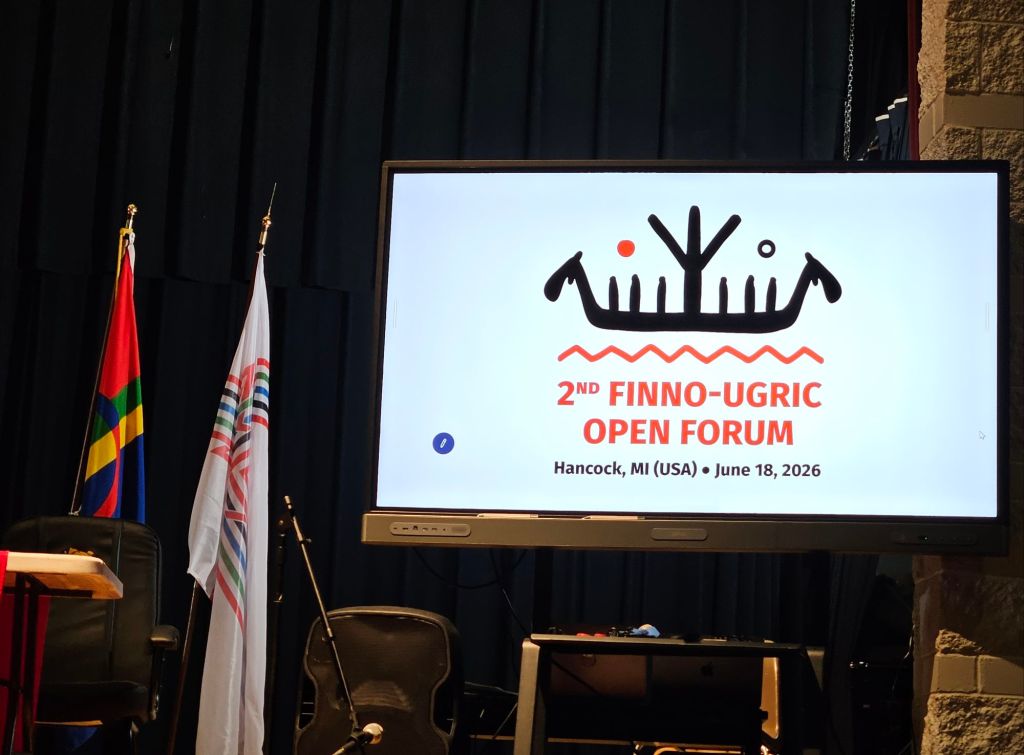
My hometown of Hancock, Michigan–in the far-north, on the shores of Lake Superior–was named the Finno-Ugric Capitol of Culture for 2026. It emphasizes the linguistic and cultural connections between Finland and other countries such as Estonia and Hungary. The celebration in June featured two days of seminars, including one that explained the language links.
The Finnish, Hungarian, Estonian and Sami languages belong to the same roots of the linguistic tree. (And are some of the hardest languages to learn.) If you’ve visited the Nordic countries, you’ve noticed that the Finnish language differs from those around it – because it has different roots. If you’ve studied a foreign language, you also know that how you speak can directly impact how you think and even how you see the world. Language matters!
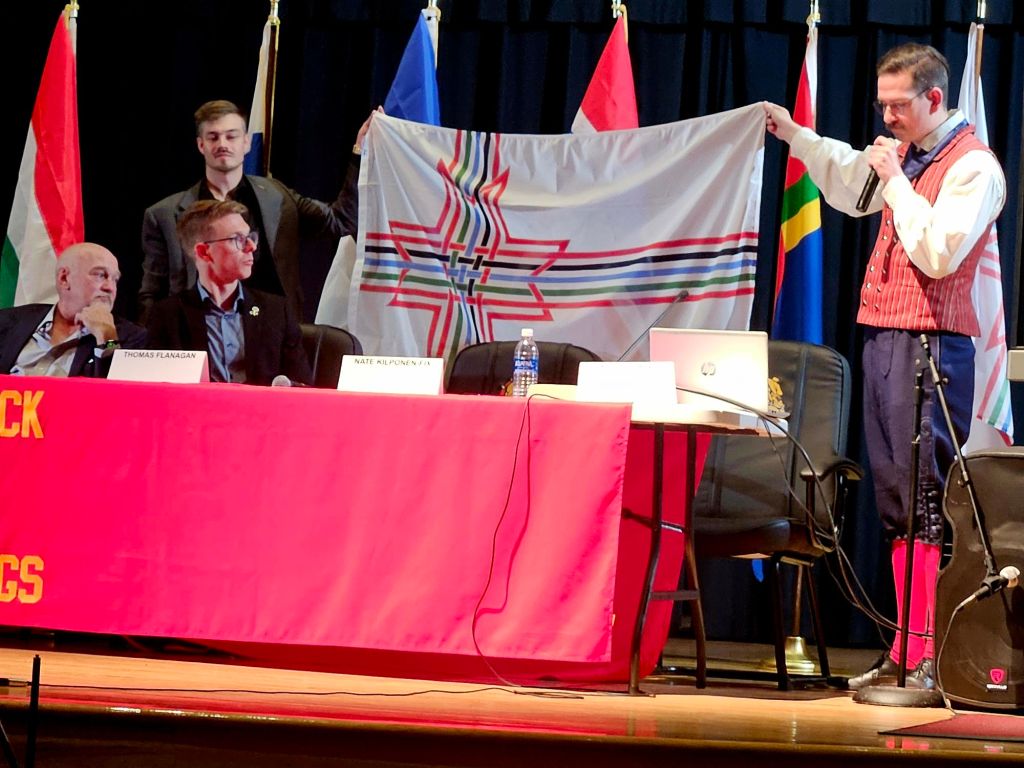
The Finno-Ugric flag was unveiled on stage. Ambassadors from Finland and Estonia attended the events, plus a senior diplomat from Hungary. My hometown is tiny, so this was amazing!
While 12 cities in the world have been named the “Finno-Ugric capitol,” this was just the 2nd open forum, meant to build trans-Atlantic bridges. (The first was held in Estonia.) At a time when political and diplomatic bridges with our Atlantic allies are severely tested, we could use more bridges!It wasn’t all serious stuff. The “dance” around the midsummer pole was light-hearted fun.
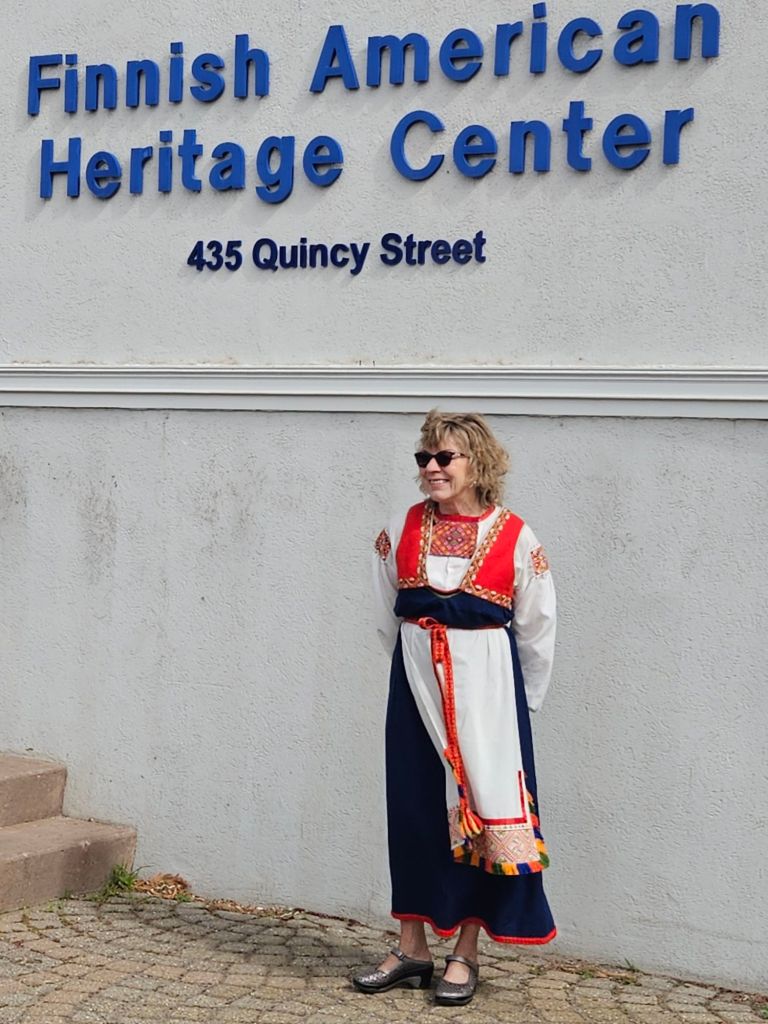
I joined in pole-decorating before it was raised, and wore a traditional costume for the festivities. That’s my old high school in the background. I’ll soon be celebrating my 50th class reunion–more recent history, but just as important!
Someone stuck the Norwegian flag in my hand for the procession. That was appropriate because my Dad’s parents were Finns living in Norway, or Kvens. They were immigrants (and “minorities”) there, too, even before coming to the U.S.
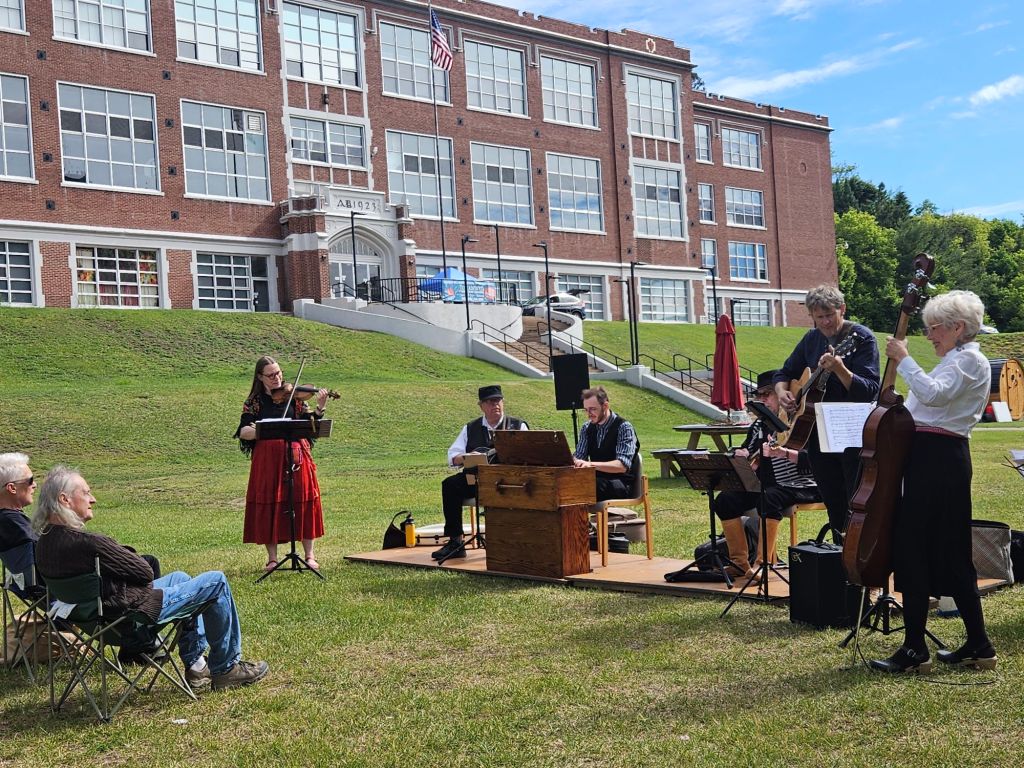
The festival included music, often with the traditional instrument called the kantele…
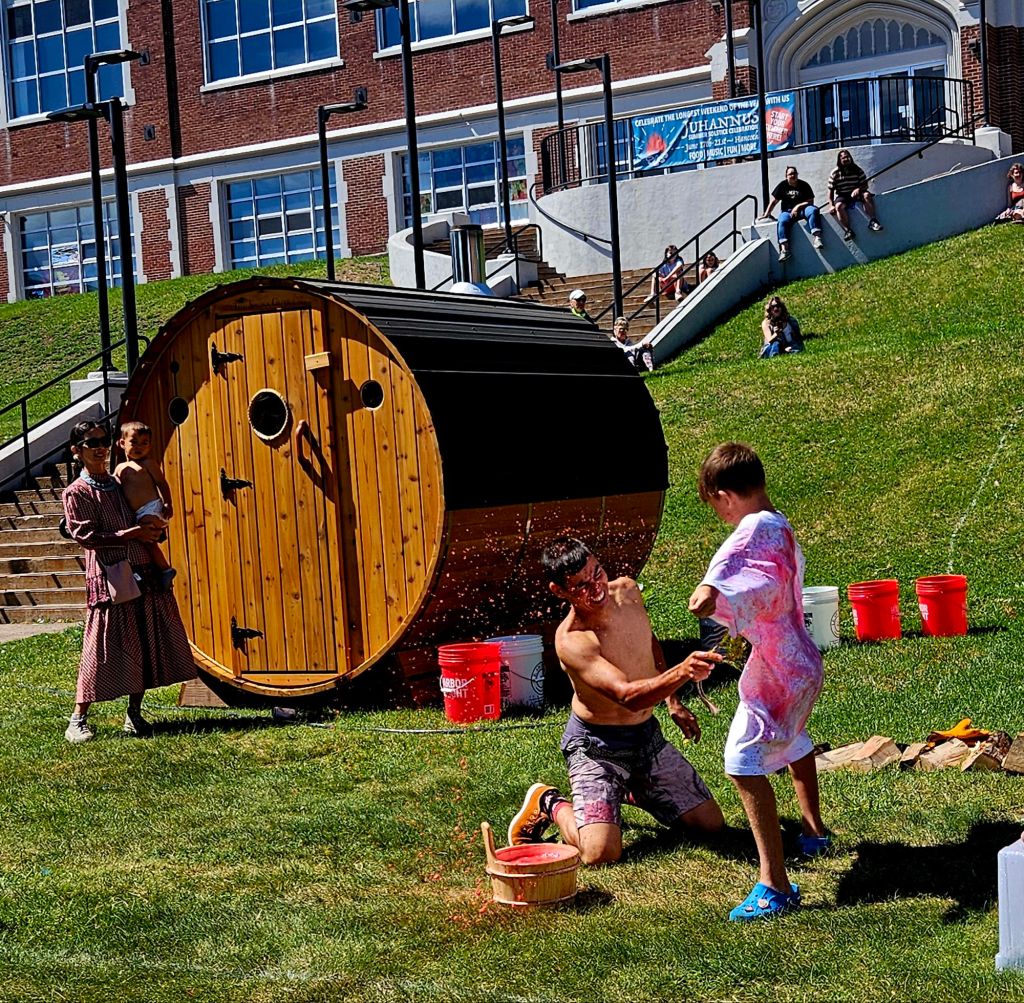
…and hilarious sauna games. These competitors were originally from Russia, home to several small Finno-Ugric groups. (Russian participation in the seminar was limited to Zoom attendance.)
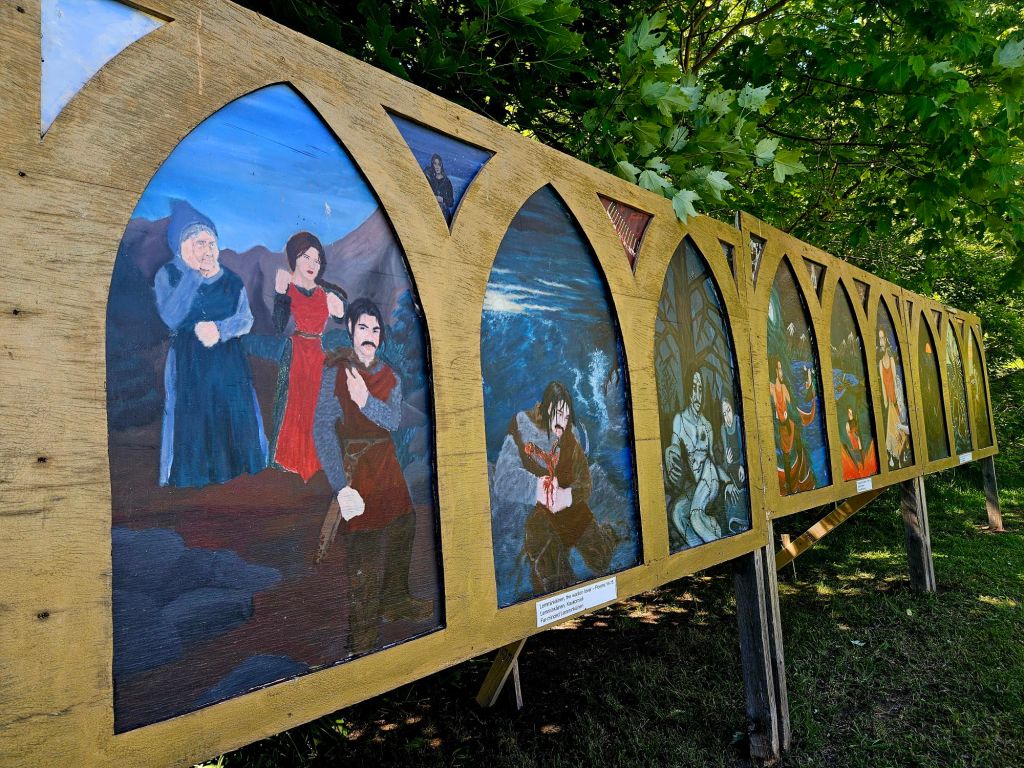
This display on the grounds of my old high school honors the epic poem “Kalevala.” Its rhythm apparently inspired Longfellow’s Song of Hiawatha, which is about this region of the far-north, especially the Native American presence here.
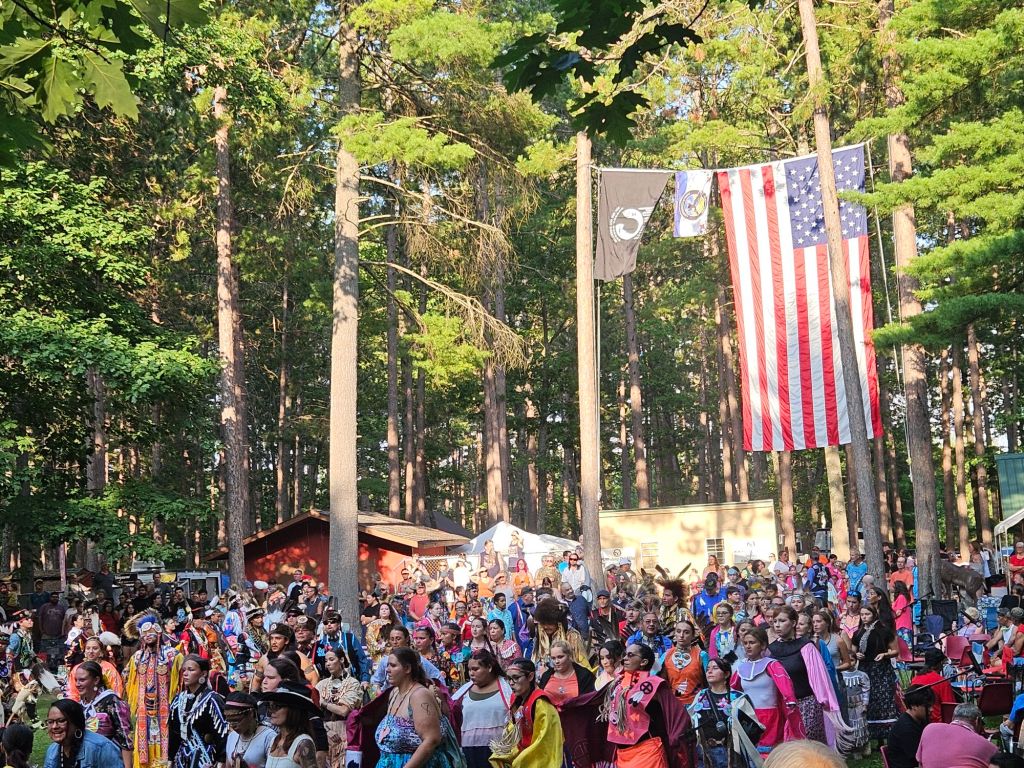
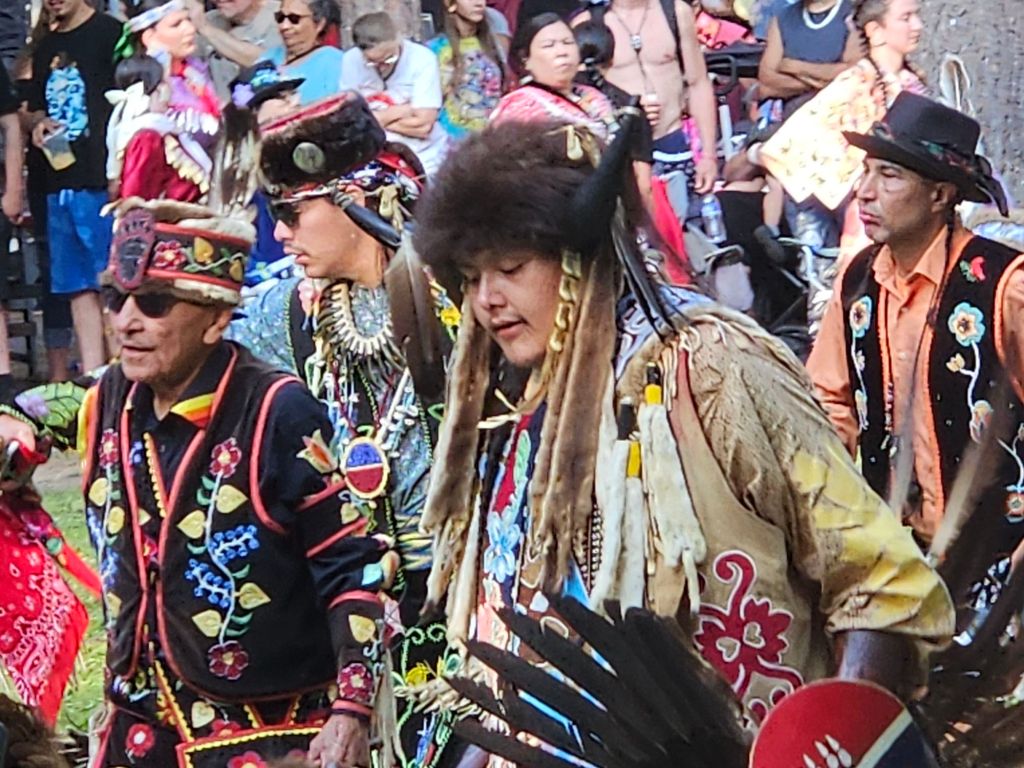
Speaking of that, I recently attended the annual Pow-Wow (Maawanji’iding) not far from my camp. The Ojibwa tribe– called Chippewa elsewhere, and calling themselves Anishinaabe (“original people”) — is prominent in this area and puts on a festive and welcoming event.
These are about the only people that can rightly say they are not descended from immigrants. (Think about it.) They celebrate their heritage just as much as other groups…and do it memorably!
My grandparents’ records are housed in this building in downtown Hancock. (I helped bring them there.) Who knows which descendant will wonder about their heritage decades from now? The records will be ready for their perusal. Heritage matters because it helps explain where we came from and why we act (and think) the way we do. I reach back only two generations to end up in a different country; some of my friends must go back much farther. No matter the timeframe, we all carry some habits or language that harken back to our ancestors, even if we don’t know it. Heritage matters. Plus, it’s fun! Kiitos!
PS: To help keep my own link to my own ancestors, I’m doing brief daily lessons in Finnish on DuoLingo. Just five minutes a day helps me feel connected to my past — and my parents. Recommend!
It’s a pleasure to learn about your family heritage and traditions. Celebrating what unites and brings joy is what we all need more of. Thank you for this colorful blog.





Very interesting. Thank you Mary
LikeLike
It’s a pleasure to learn about your family heritage and traditions. Celebrating what unites and brings joy is what we all need more of. Thank you for this colorful blog.
LikeLike
And thank you for being a dedicated reader. 🙂
LikeLike