Ireland’s a popular destination for Americans seeking castles and cliffs, uually via tour.
It’s worth doing that way, but I did it differently — via farm and family. (Cliffs included.)
There’s no Irish in my family DNA; it’s all Finnish. But my niece married an Irishman. Her mother — my oldest sister — visits them often, to help with the kids. And the farm.
This was a truly Irish visit, living with an Irish family and donning wellies to visit sheep and cows.
And it was a delightful visit, especially after my pre-trip immersion in Irish history. Geesh, that small island country has been through a lot! (It’s actually two countries sharing an island. That’s one result of its turbulent history.) If you look under the tourist-y surface, you can still sense that turbulent past. And if you’ve studied that past, you wonder how it can be such a beautiful and welcoming country today.
Here, in photos and captions, my brief immersion in Ireland in mid-September with my big sis.
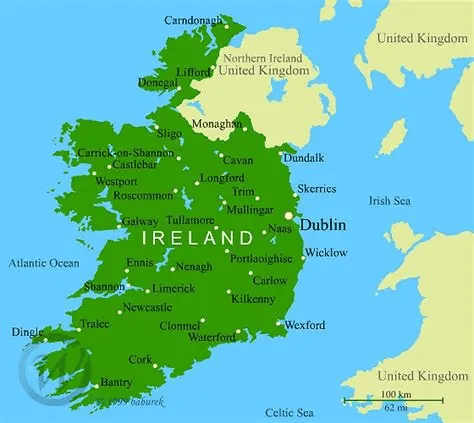
This map shows Dublin on the east coast and Galway on the west (above the “I”). Ireland is roughly the size of South Carolina. Notice Northern Ireland in the north.
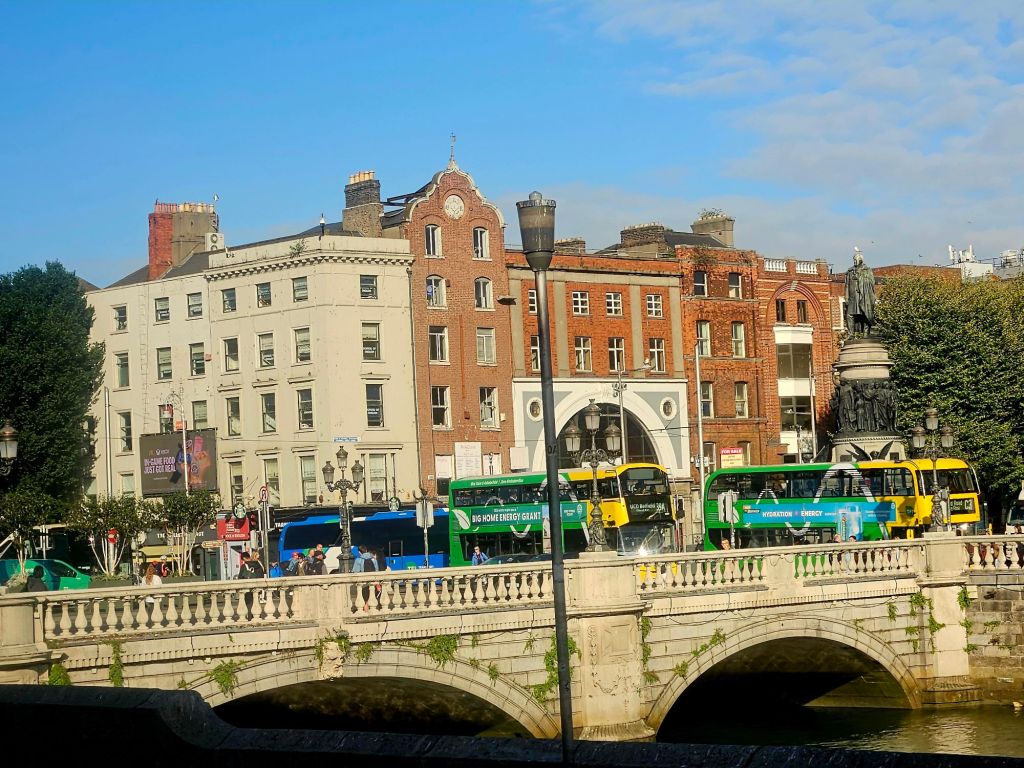
We arrived in Dublin (capital of the Republic of Ireland) via overnight flight from Washington D.C. and took a bus to Galway, near my niece’s farm. In addition to its history, Dublin is known for its picturesque bridges, which we passed on the bus.
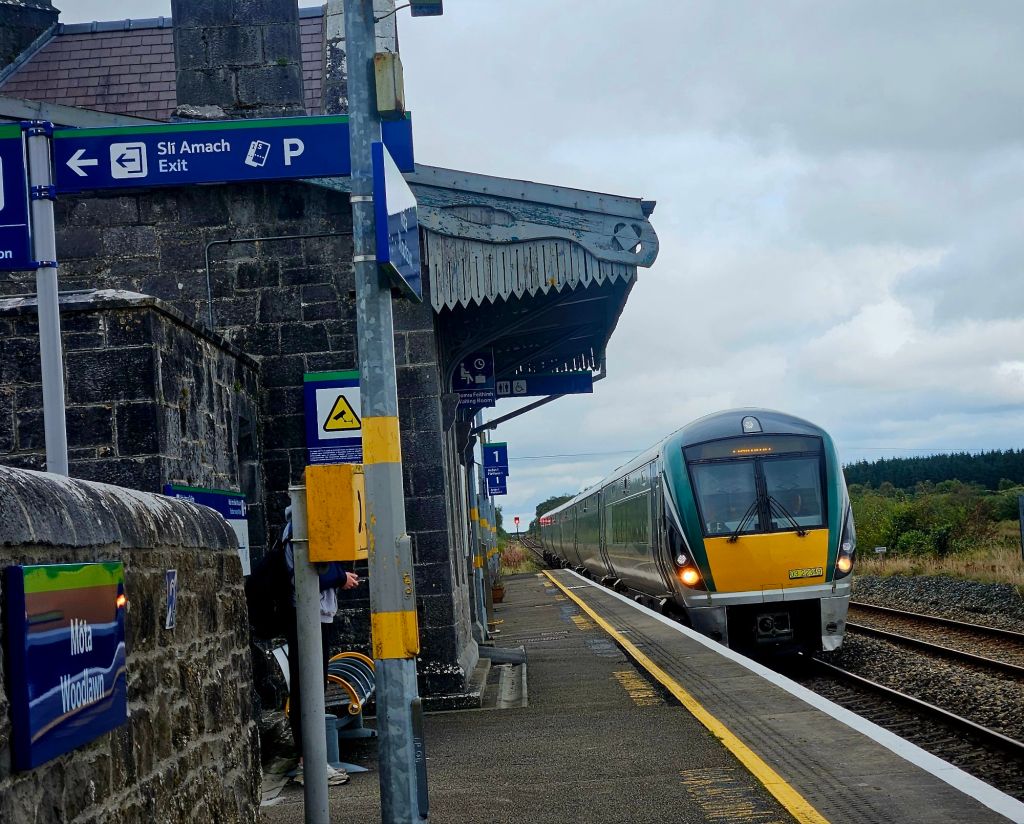
We also took the train a lot…at least I did. This station is just a mile or so from my niece’s home…
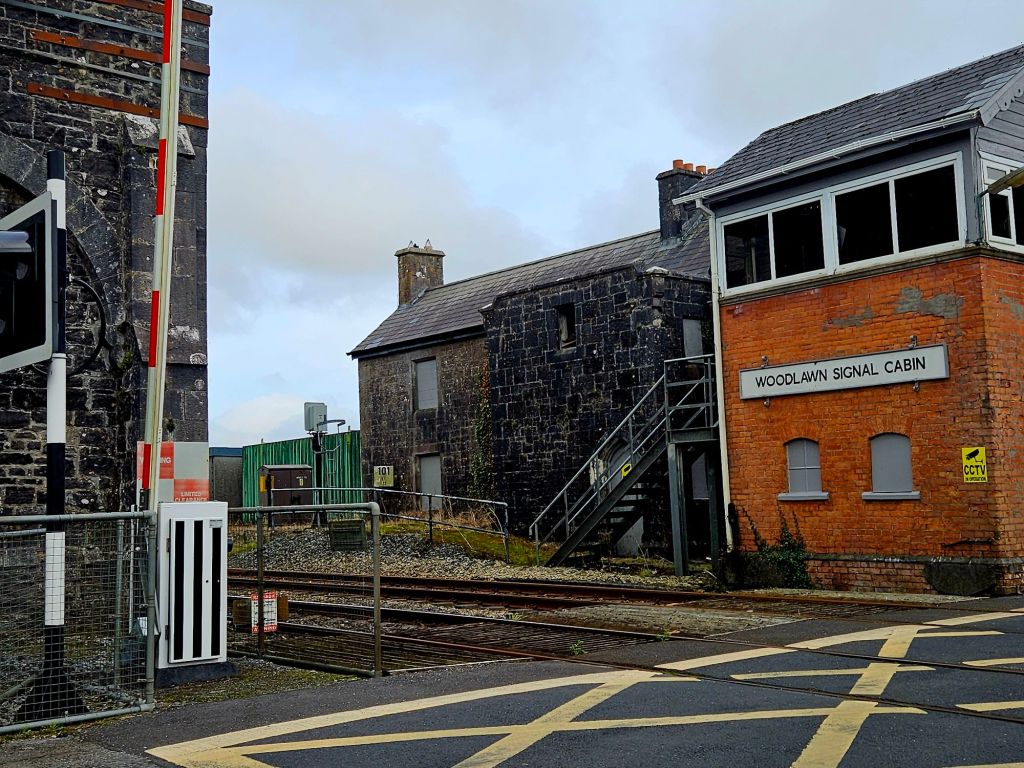
…and I went here twice to catch a train into Galway, a 35-minute ride away. My niece’s family is too busy to run Aunt Mary around, and my sister was there to support them, so this was my way to sight-see. I considered renting a car, but that business of driving on the left, and getting through busy Dublin while trying to adjust to that without crashing…um, nope. I chose the train.
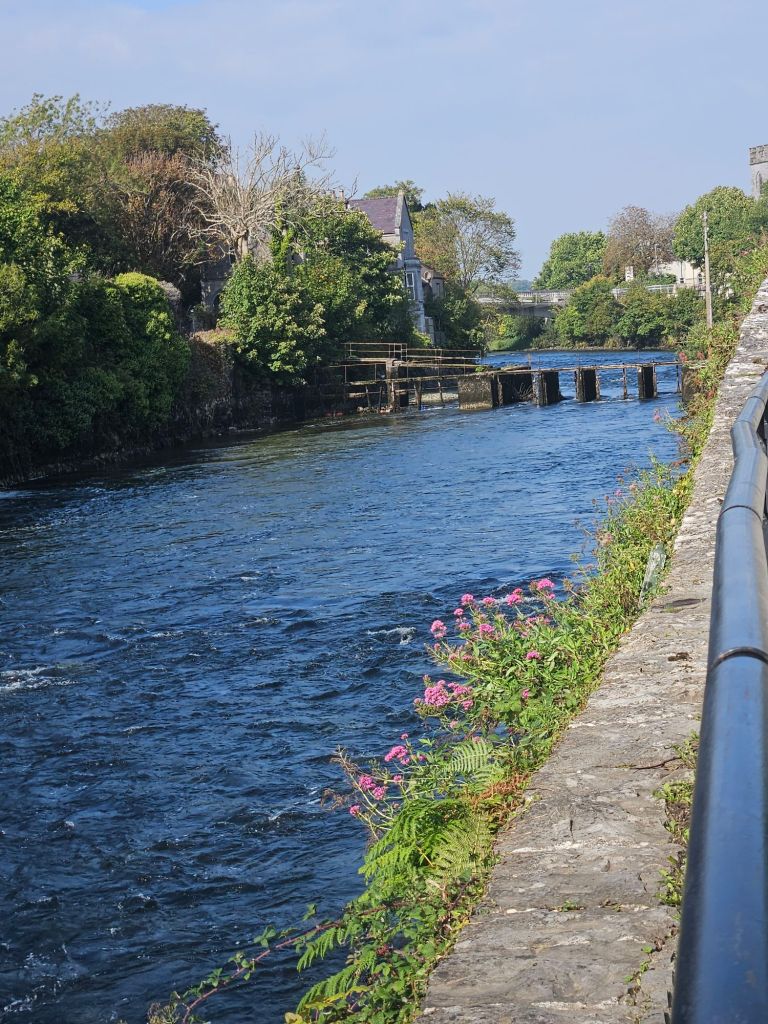
Galway is the 5th largest city in Ireland but has a small-city feel, including the River Corrib.
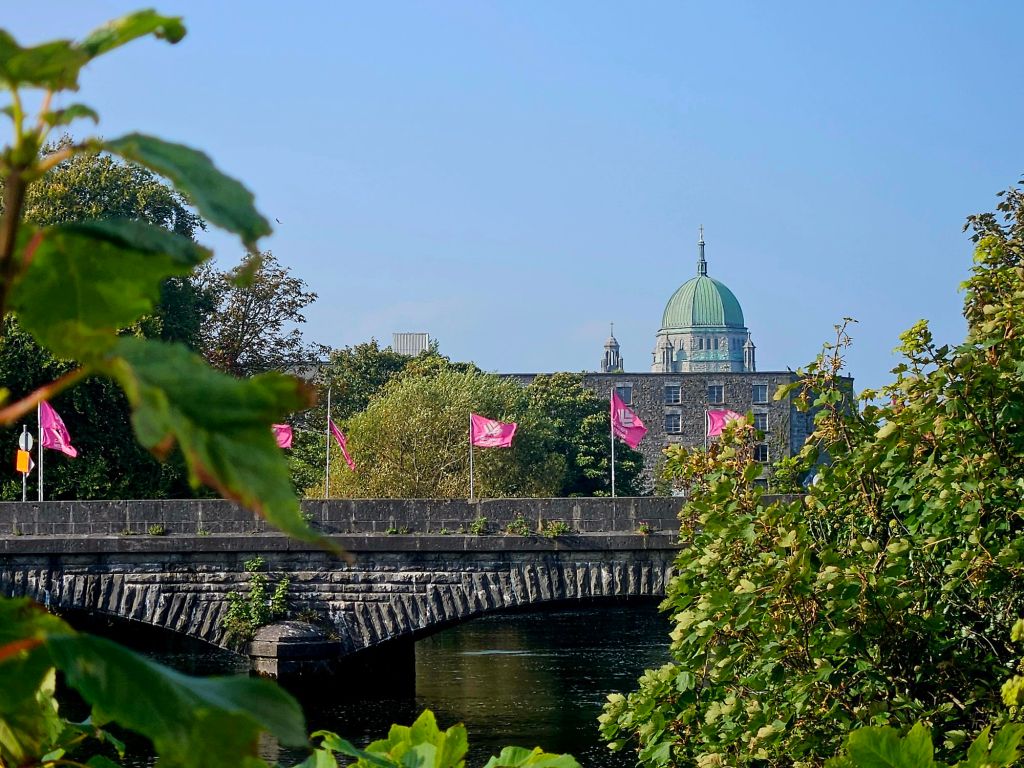
Galway Cathedral is the youngest “great stone cathedral” in Europe. President Kennedy visited here a few months before he was assassinated; the city erected a memorial to him. (The Kennedys were of Irish descent.) When traveling overseas, it’s always interesting to see how our presidents have impacted other countries — through both visits and policy.
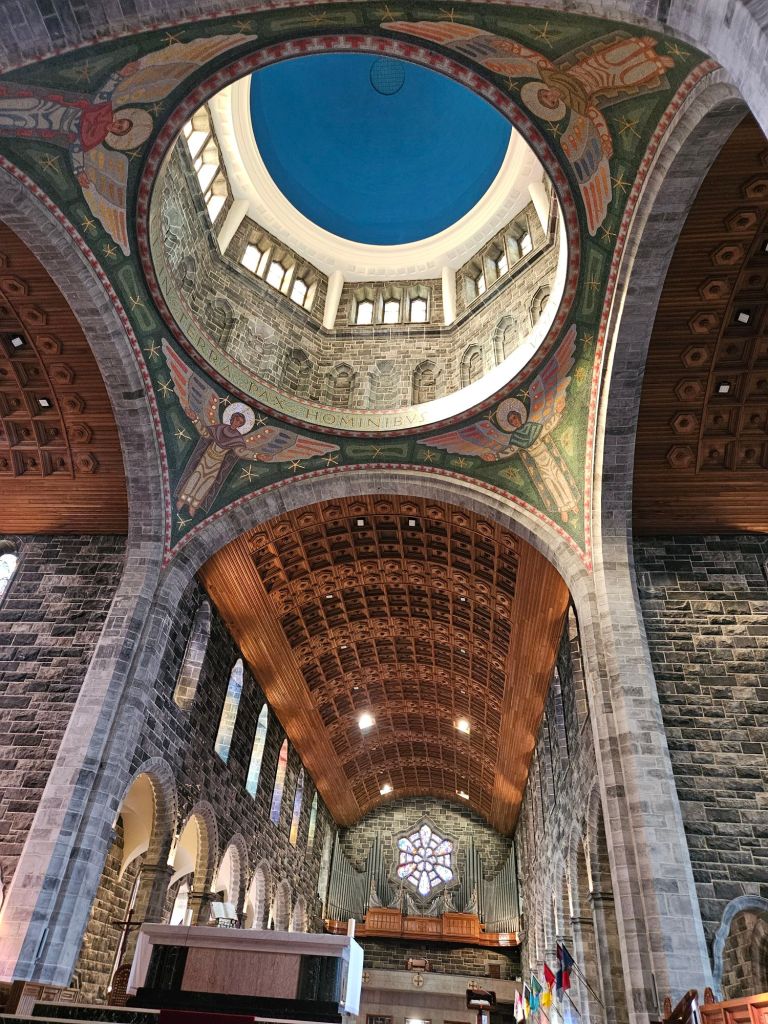
The inside of the cathedral was unusually beautiful because of the mix of cool stone and warm wood. The ceiling is made of western red cedar from the American Pacific Coast.
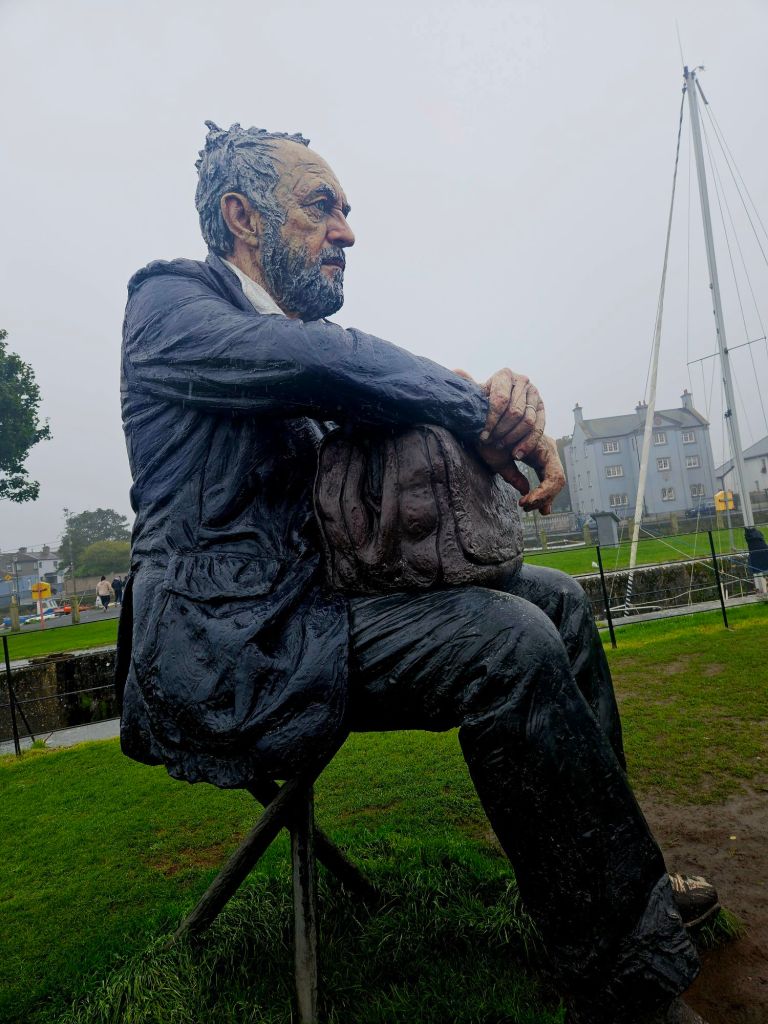
This larger-than-life statue on the Galway waterfront is called “Seated Figure.” Is he waiting for a ship? Contemplating complex Irish politics? It seemed appropriate to visit him during a typical Irish rain. Mist or rain is predictable nearly every day here, and I was ready for it with rain jacket, umbrella, and poncho. (All three got soaked on this day of exploring by foot.)
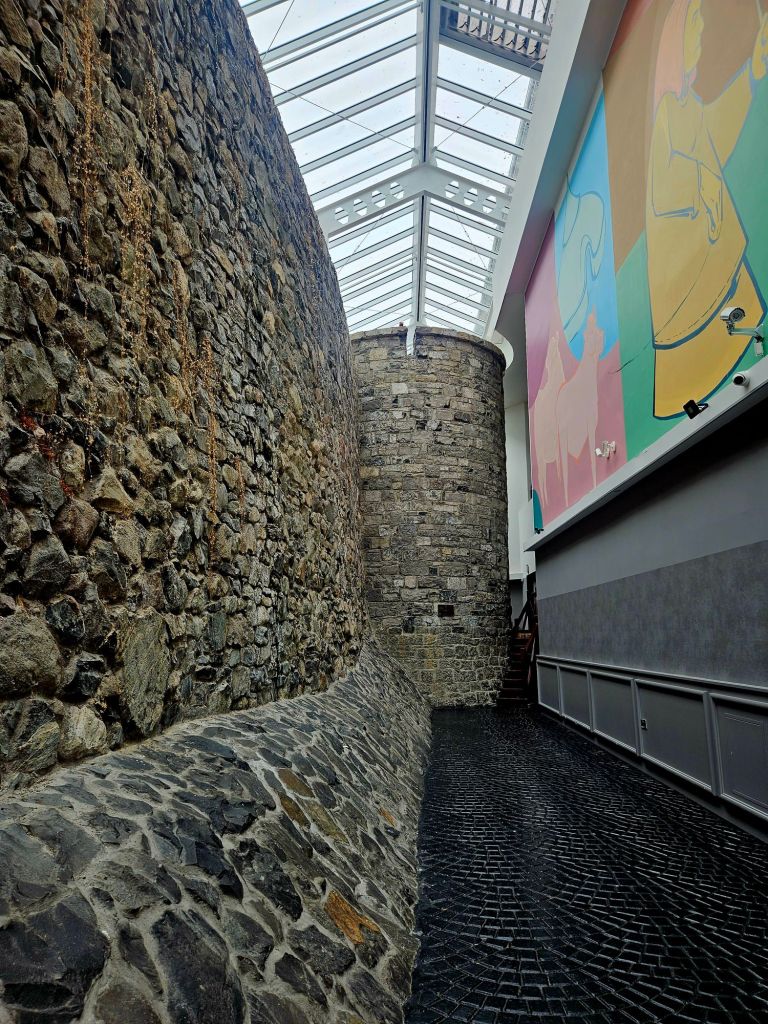
Inside a downtown shopping center, I came across this piece of the past — the way-back past. These Medieval walls go back to the 1200s. Galway often had trade links to Spain and France. Both were often enemies of England. Thus, the need for protective walls, sometimes against England. (The tension between Ireland and England goes way back, with many causes. I’m not an historian and am simplifying, so read up on it to learn more.) It was fun to stumble upon this while I was somewhat lost. It’s somehow more satisfying than being “shown” it on a tour.
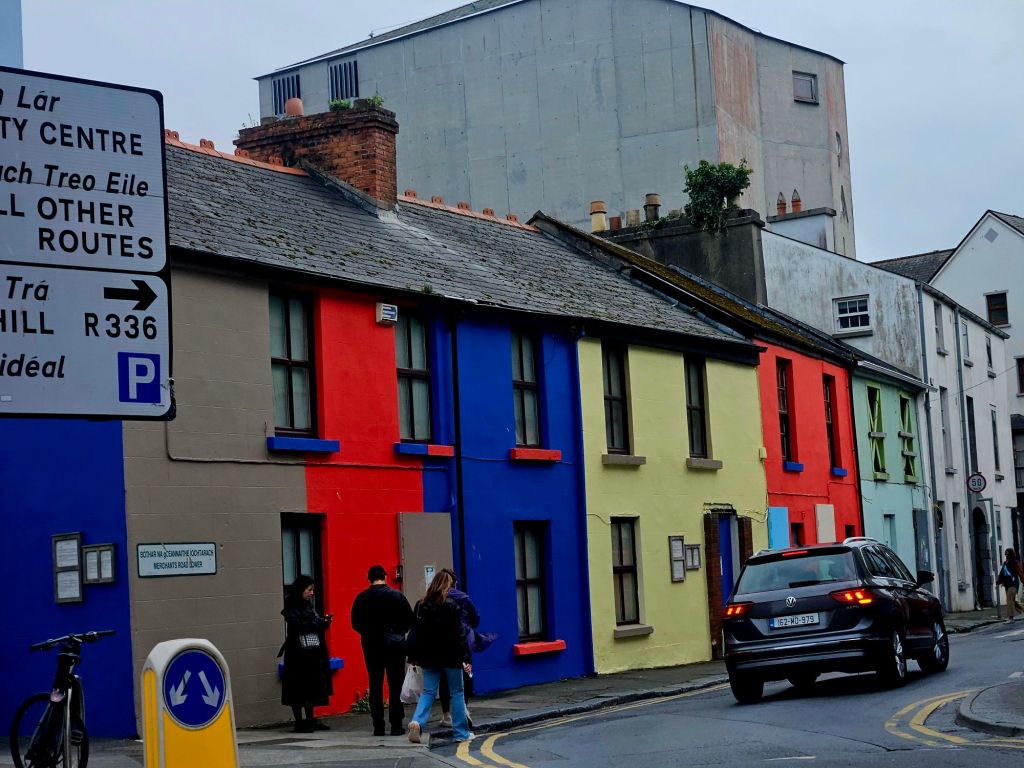
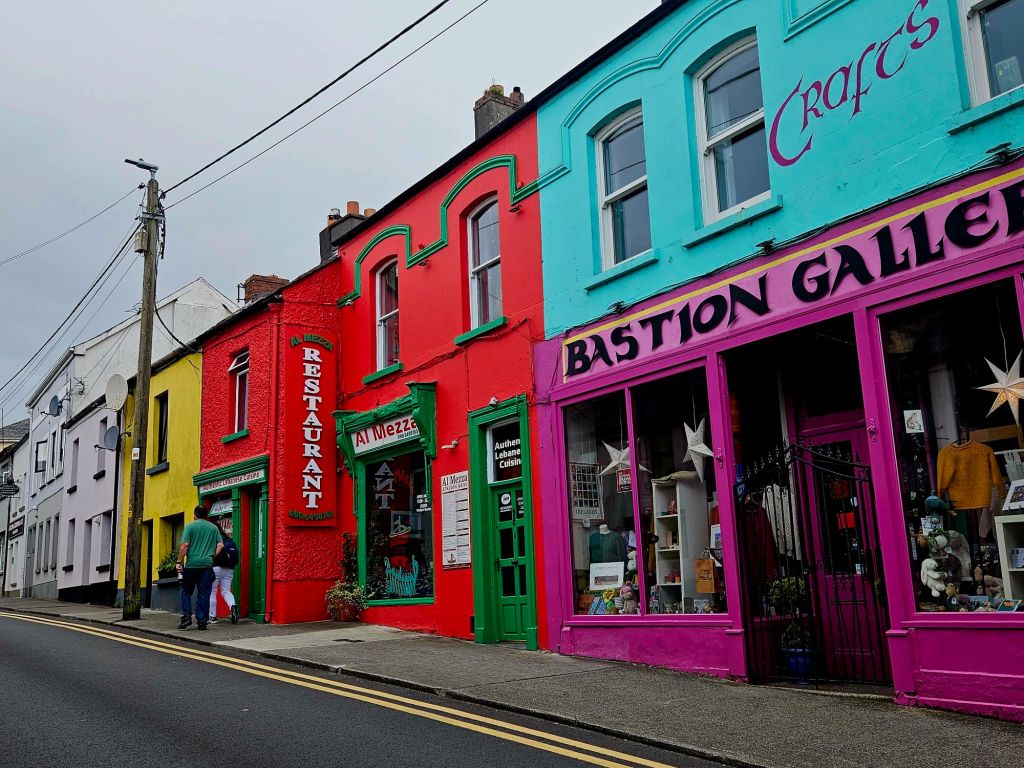
Did I mention the gray skies? No wonder some people choose vibrant color for their houses!
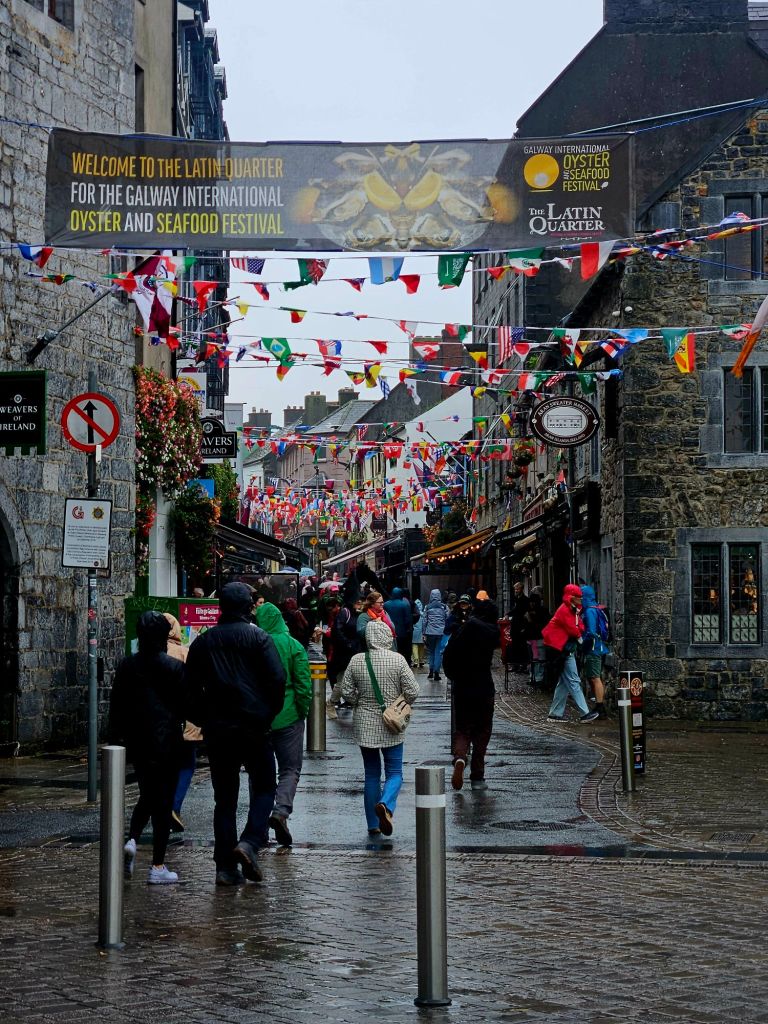
The Latin Quarter is Galway’s most vibrant pedestrian street, even in the rain.
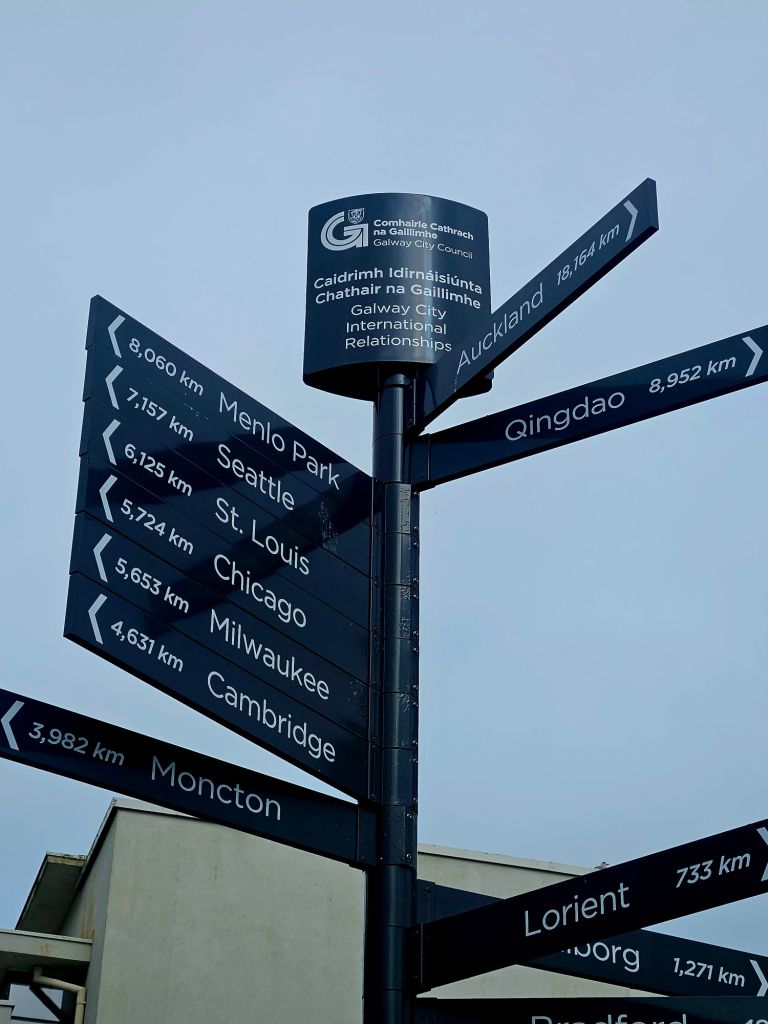
You see these kinds of signs all over the world, but not many include Australia and China on the same post. The fact that six of these cities are in the U.S. highlights our strong ties. At least six million Irish have emigrated to the U.S. since 1820. They’re integrated into our society now, but struggled like all immigrants groups and originally settled into their own enclaves. After my solitary trips into Galway, it was time to explore the farm where I was staying…
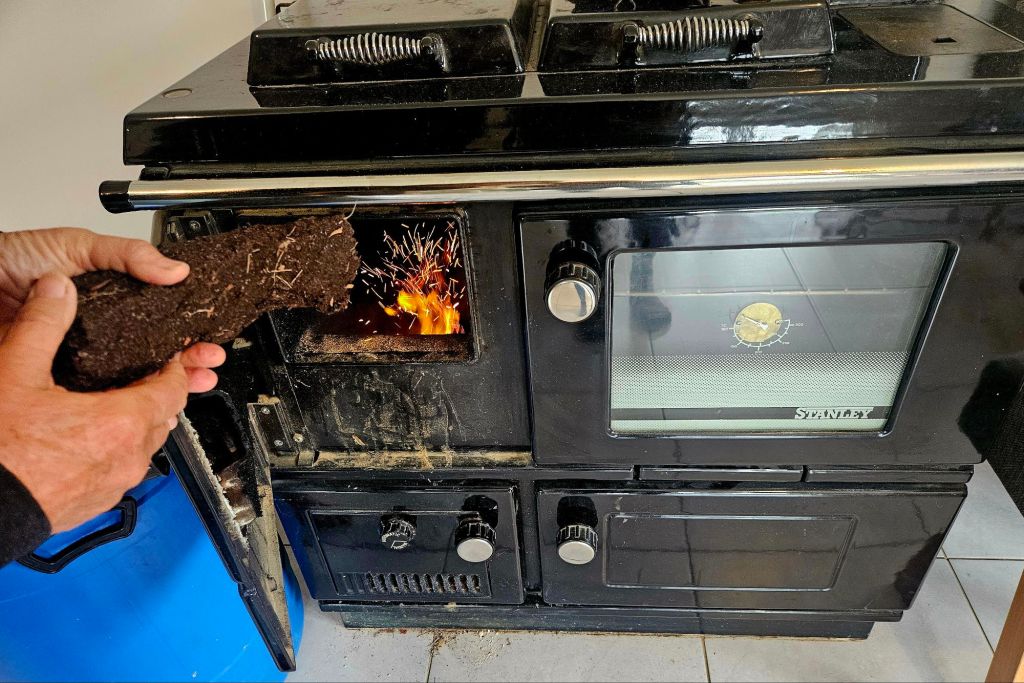
…which boasts a turf-burning range. Turf is dried peat harvested (through a rather complex process) from bogs. It burns hot and fast compared to wood or coal. This is not the same as the peat I’ve used in compost toilets. I loved this authentic piece of “Irish farm,” but the real attraction was outdoors….
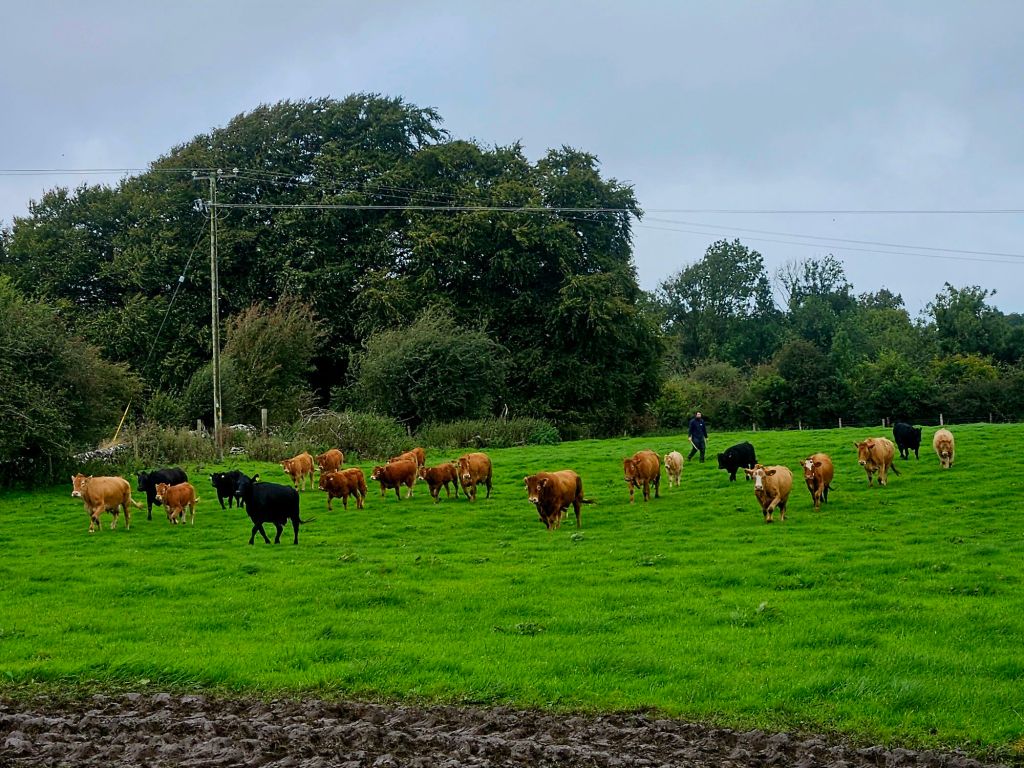
…the livestock! Both cows and sheep. Here, Eoin (pronounced “Owen”) herds the cows toward us.
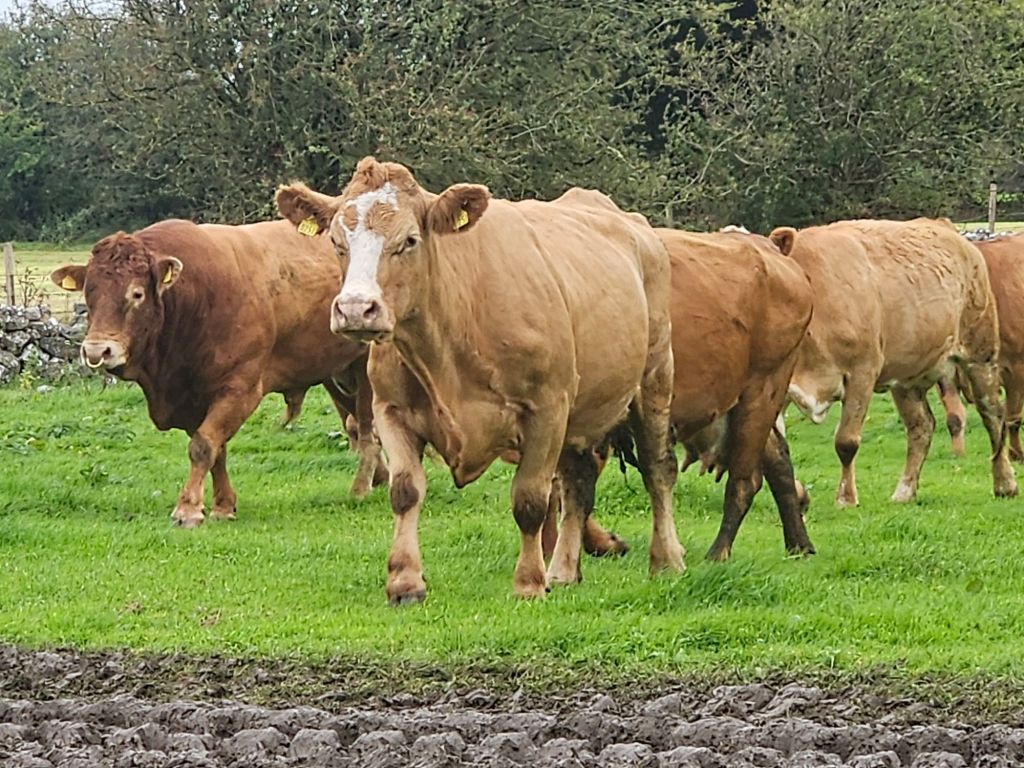
They can move briskly when motivated, in spite of their size.
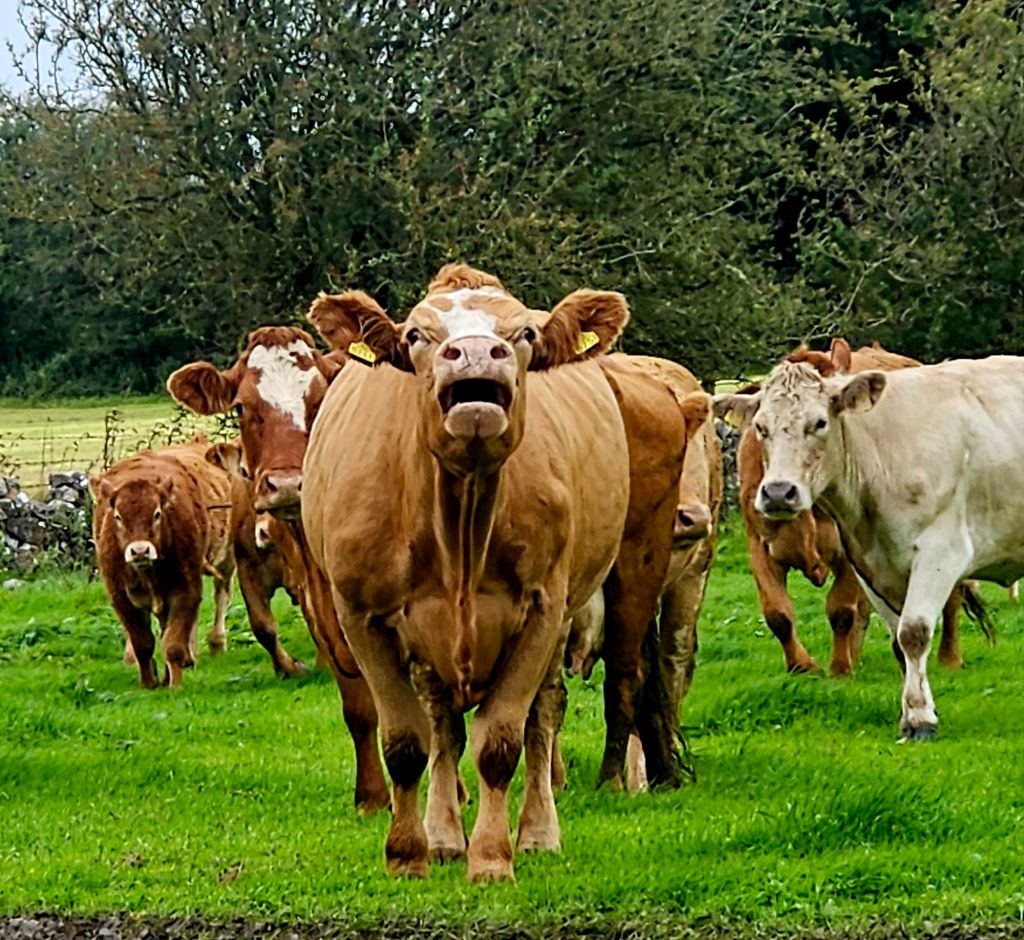
They can bellow, too! She (?) doesn’t seem too happy that I approached so closely. Cows are cool, but on this farm, the real stars are seemingly the sheep….
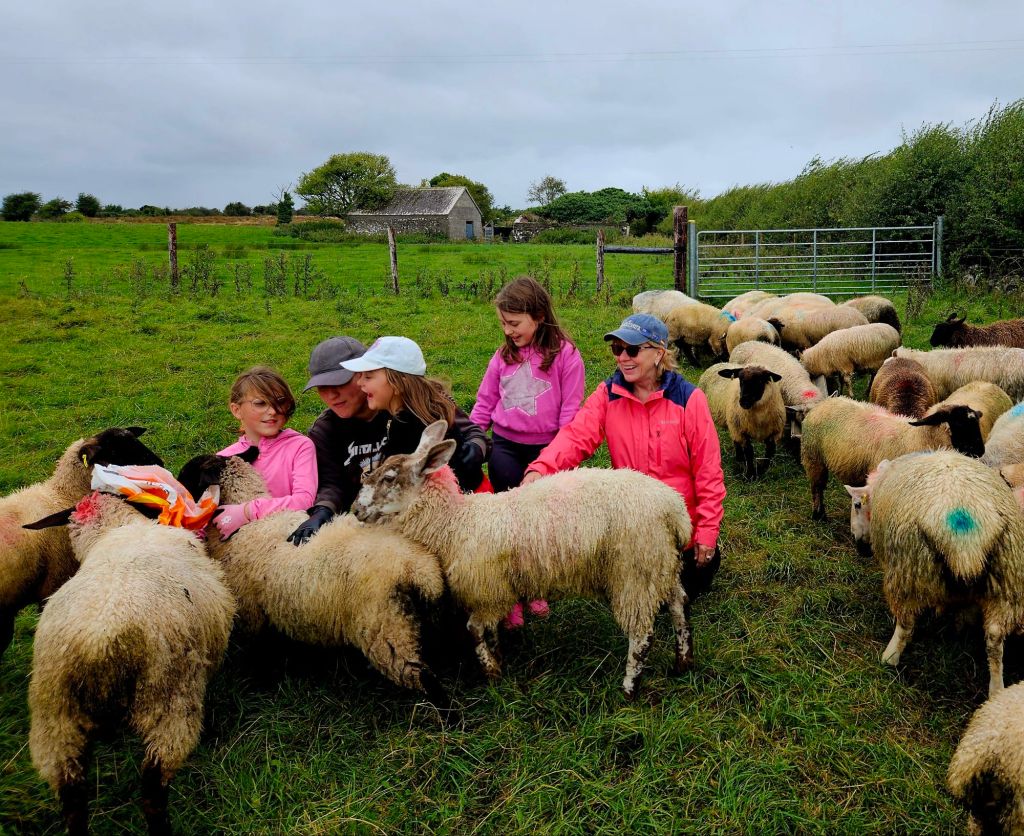
…partly because the girls (ages 6, 8 and 10) have “adopted” lambs who were orphaned or rejected. They have about 100 sheep and get at least that many lambs each year; many are sold, but some become pets. The youngest girl actually rides her pet lamb, named Bob. I have hilarious pictures of that but am not posting them here to protect her privacy. Believe me, it’s cute.
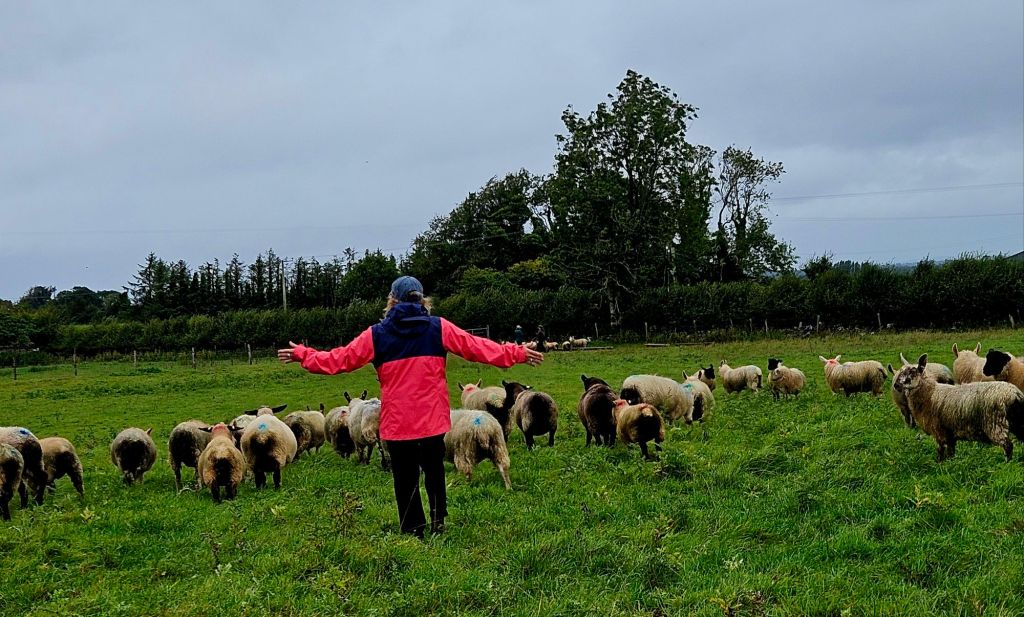
I took a stab at herding. I wasn’t a natural. 😉
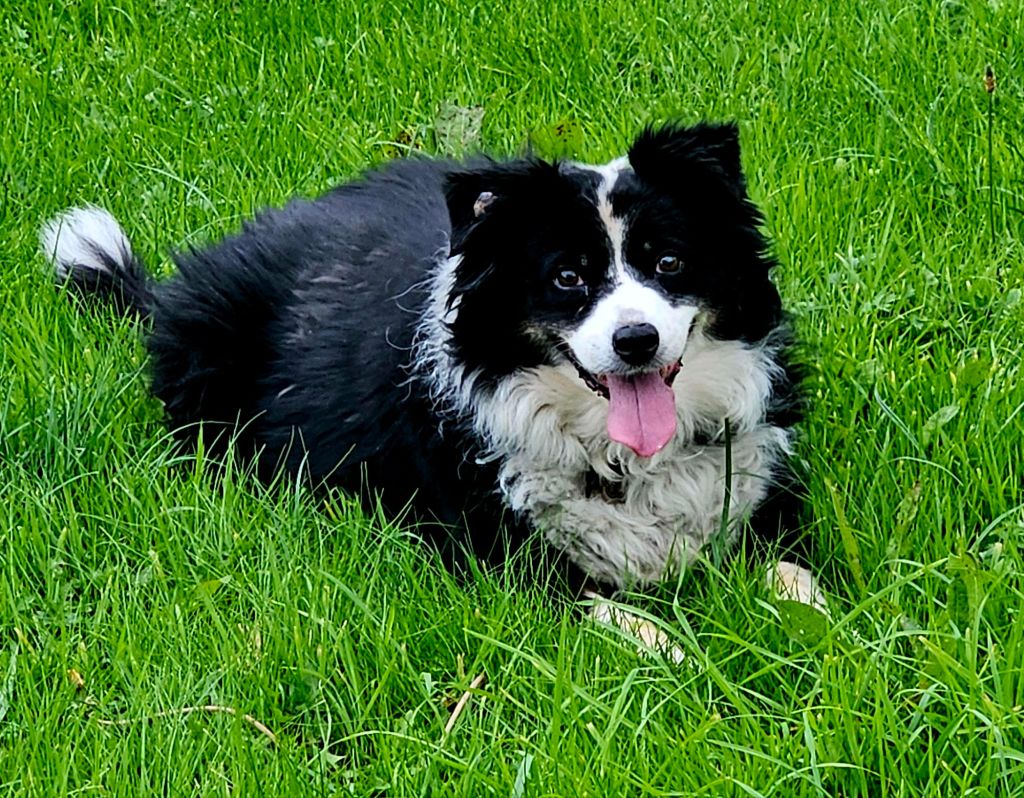
And let’s not forget the border collie, an essential herding partner on a farm. This girl has aged into retirement but still sparky enough to play catch with me for as long as I was willing! After “farm day,” we took a family tour by car into the Midlands and to the Atlantic, passing….
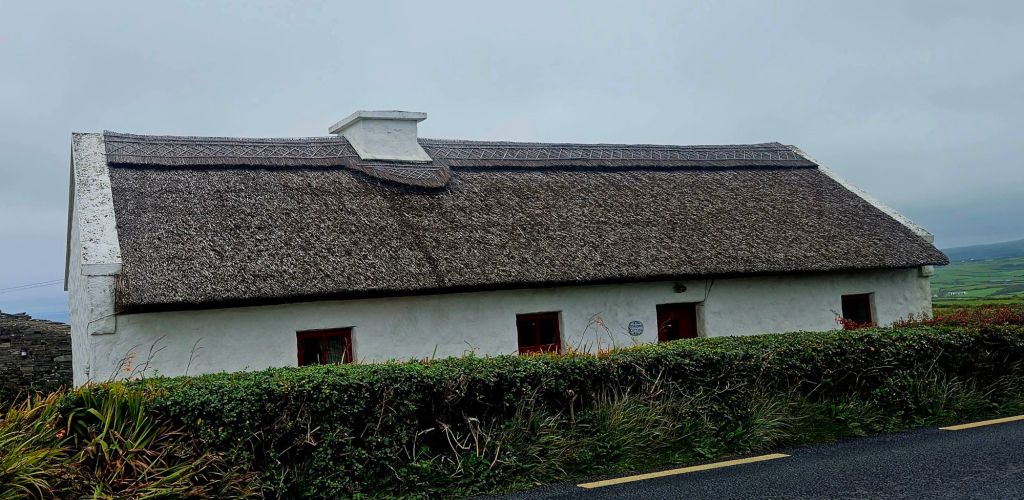
…thatched roofs…
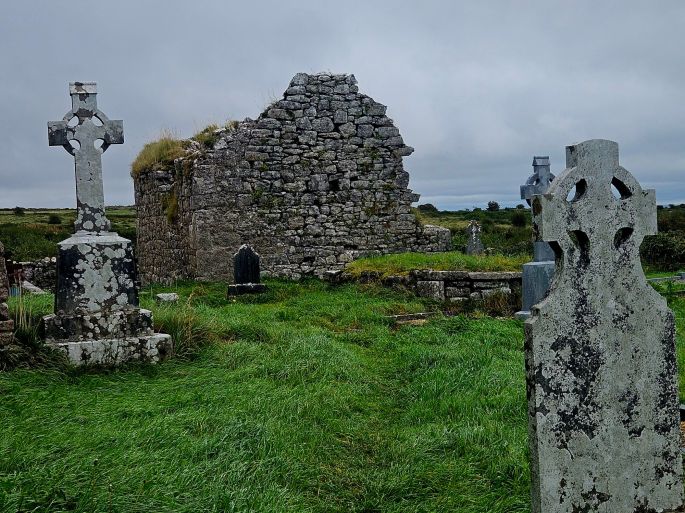
…and old cemeteries with Celtic crosses…
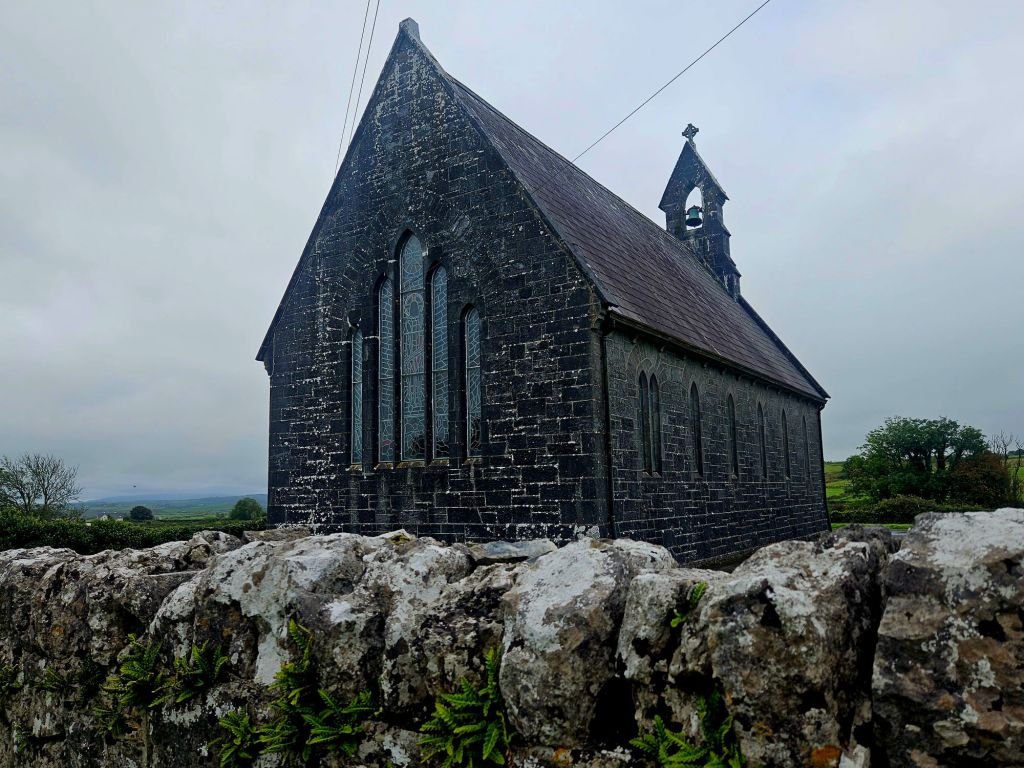
…and stone churches…
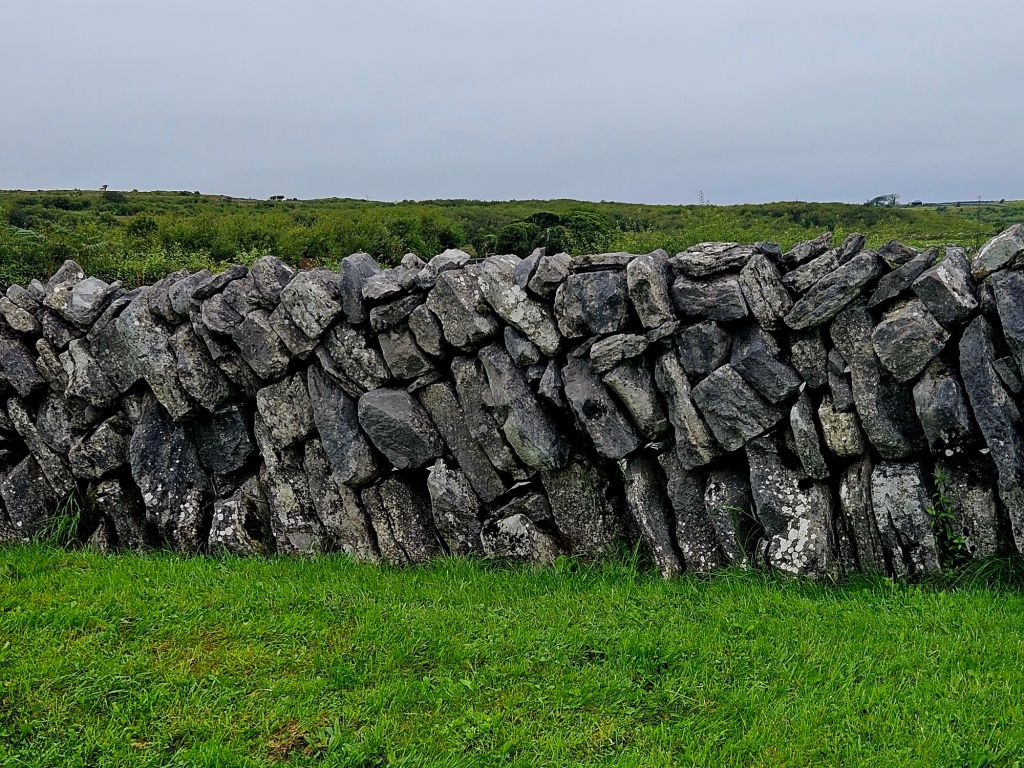
…and stone walls. So many. They seem to criss-cross the island, dividing one grazing pasture from the next and keeping herds from mixing with each other. I never saw so many uses of stone–removed to clear the pastures, then used to create barriers and buildings. Finally, we got to…
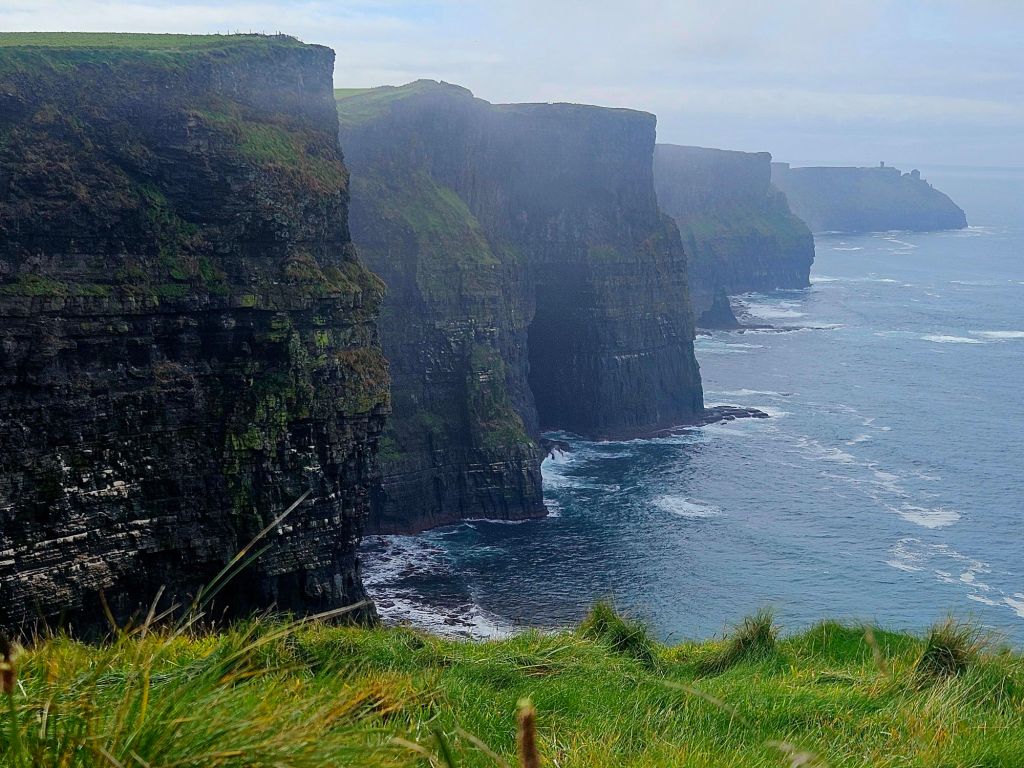
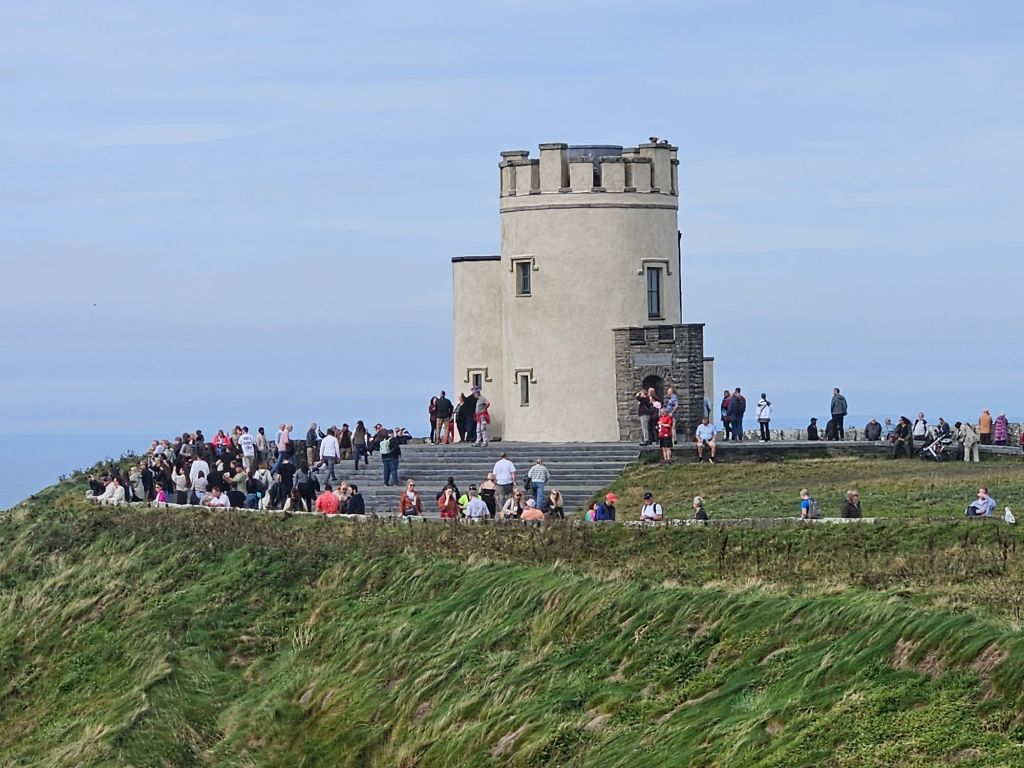
…one of Ireland’s top attractions, the Cliffs of Moher, rising about 700 feet above the Atlantic Ocean. Sadly, the walkway along the cliff-top was closed when we visited.
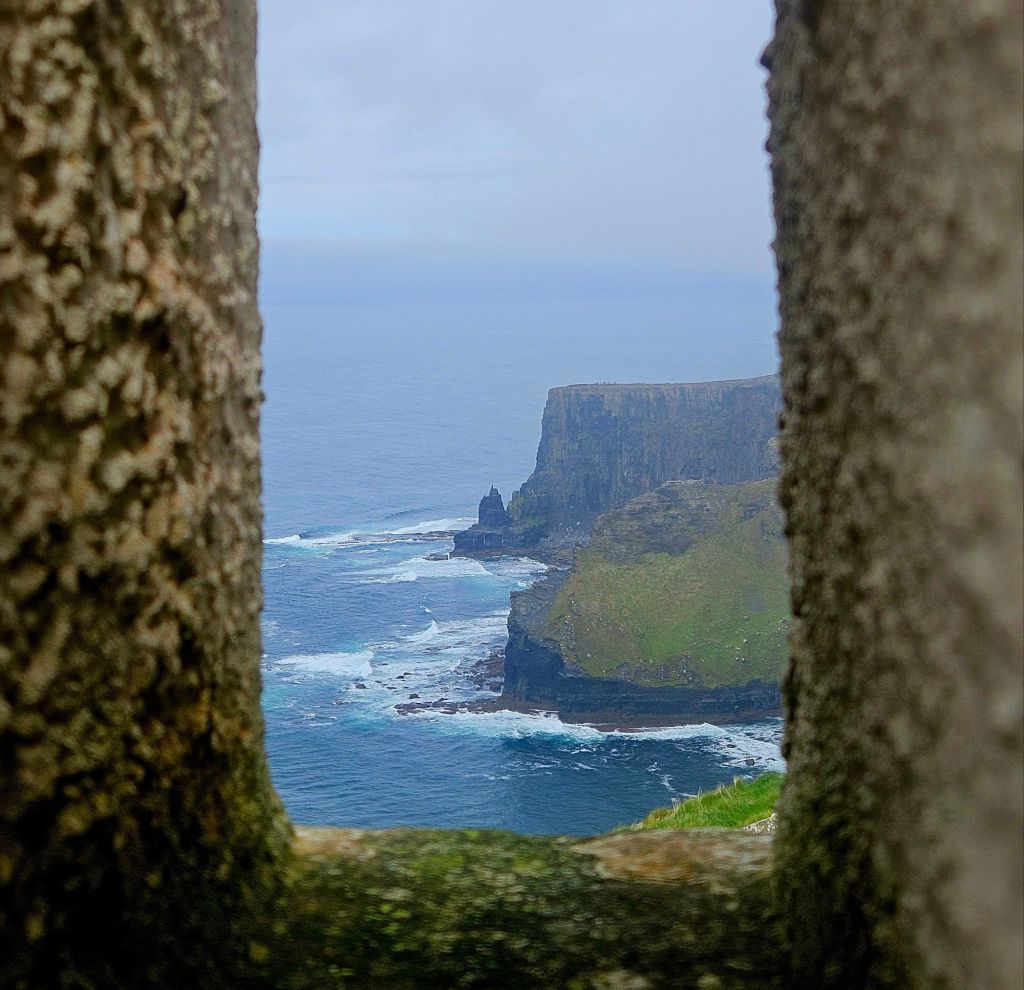
I took this picture of the shorter cliffs…
…from a window of O’Brien’s tower, built in the 1800s by the local landlord as an observation spot. On the drive back home from the cliffs, we stopped at a more ancient spot…
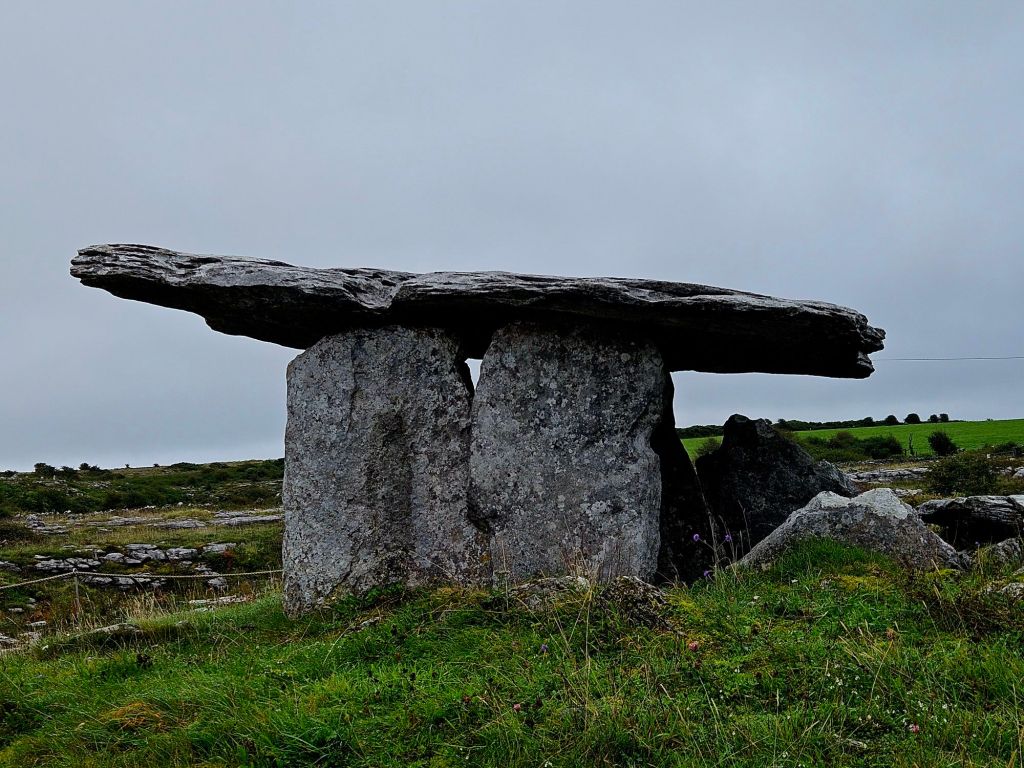
…the Portal Tomb of Poulnabrone, dating to 3,000 BC or so. (Roughly 5,000 years ago!) It made me think of Stonehenge and its mysteries. An excavation here in the 1980s discovered 33 human remains. You stand here and wonder, what was their life like? The land surrounding it…
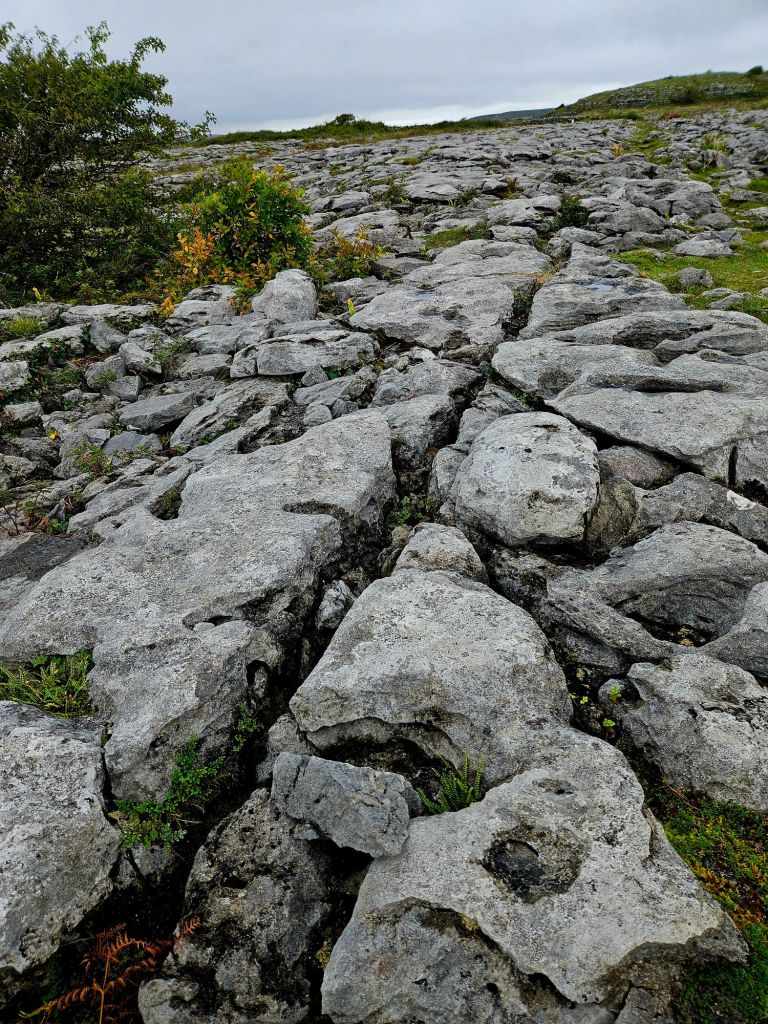
…also raised questions. Why all these flat rocks, creating a kind of rock plateau? Sometimes I wish I had a geologist along. As we got close to home, we stopped at….
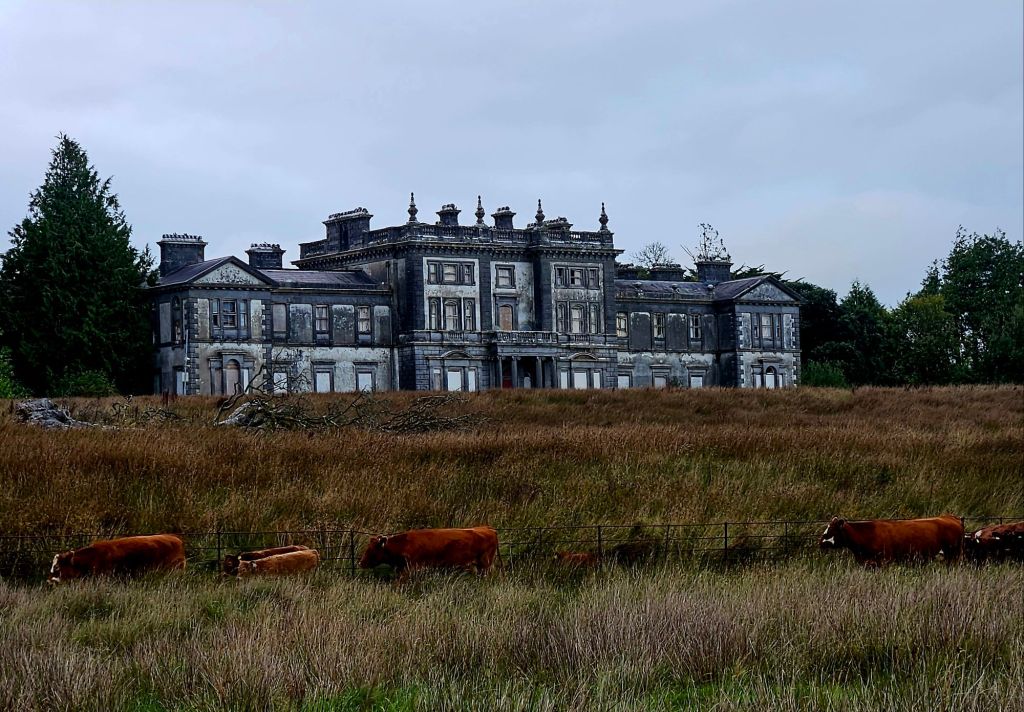
…this abandoned mansion just a mile or so from “home,” originally built in the 1700s and once part of a huge estate called Woodlawn. Previously owned by an English lord, much of the estate is now under renovation or protection. On this day, only cows were here.
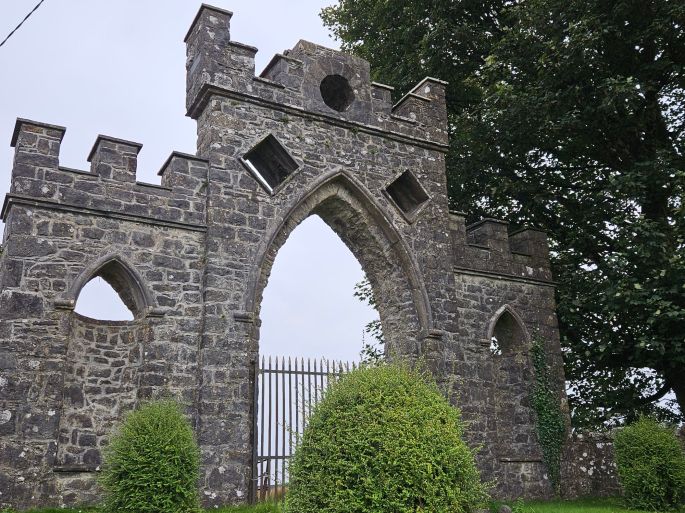
I passed this estate gate during my daily walks. It brought to mind the time when land was confiscated from (mostly Catholic) Irish farmers and distributed to (mostly Protestant) English lords, which contributed to that turbulent history I mentioned. People say “don’t discuss religion.” But if you’re interested in history, how can you not? It’s embedded in our stories. (The Republic of Ireland remains mostly Catholic today and Northern Ireland was, until recently, mostly Protestant.)
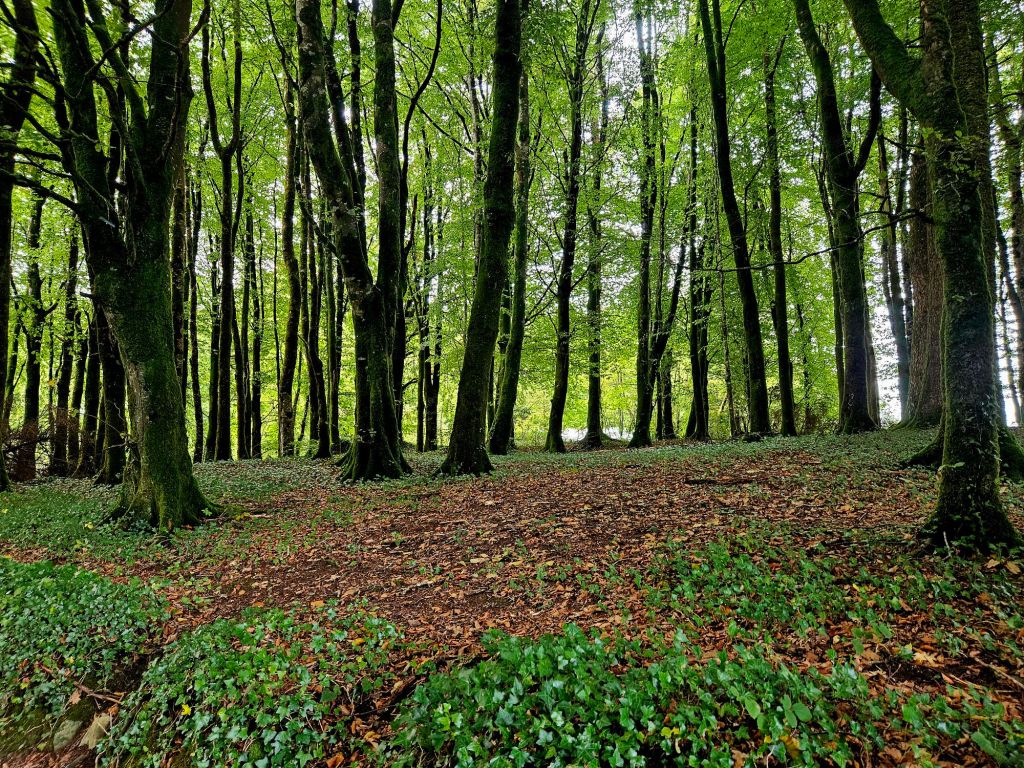
Those daily walks sometimes took me into this woodland, also part of that former estate, now open to the public. I’m grateful to visionaries everywhere who open up land for public use. I had only six days in Ireland, and on the last day, took a train with my sis to…
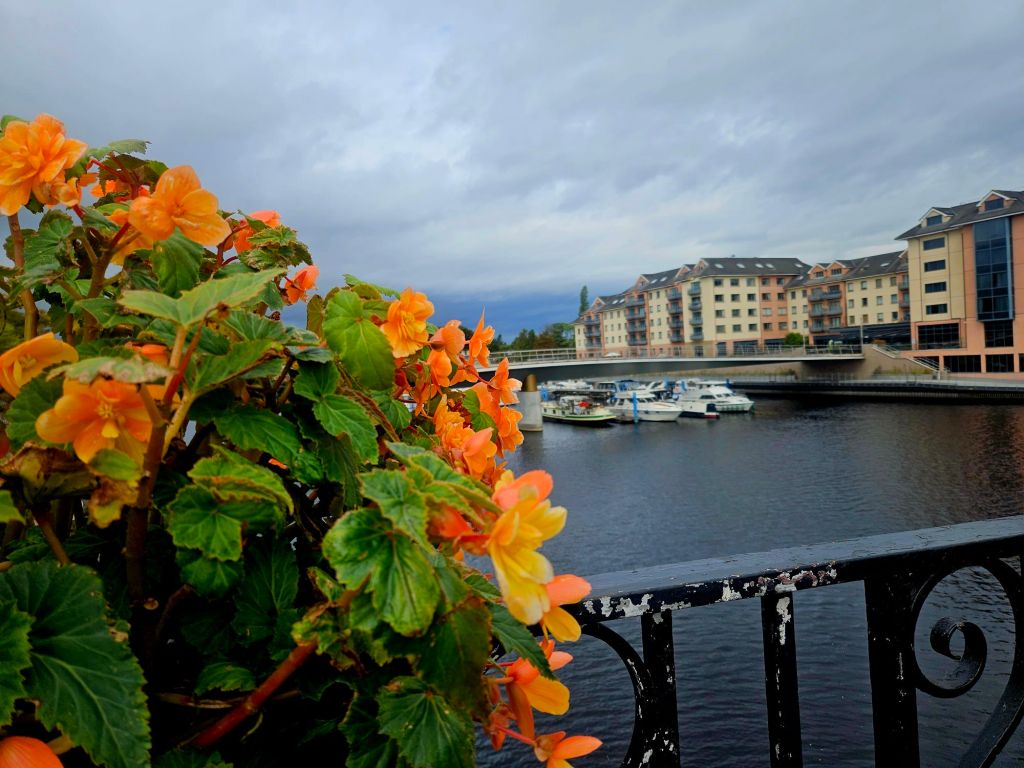
…the town of Athlone on the Shannon River. It was another gray day…
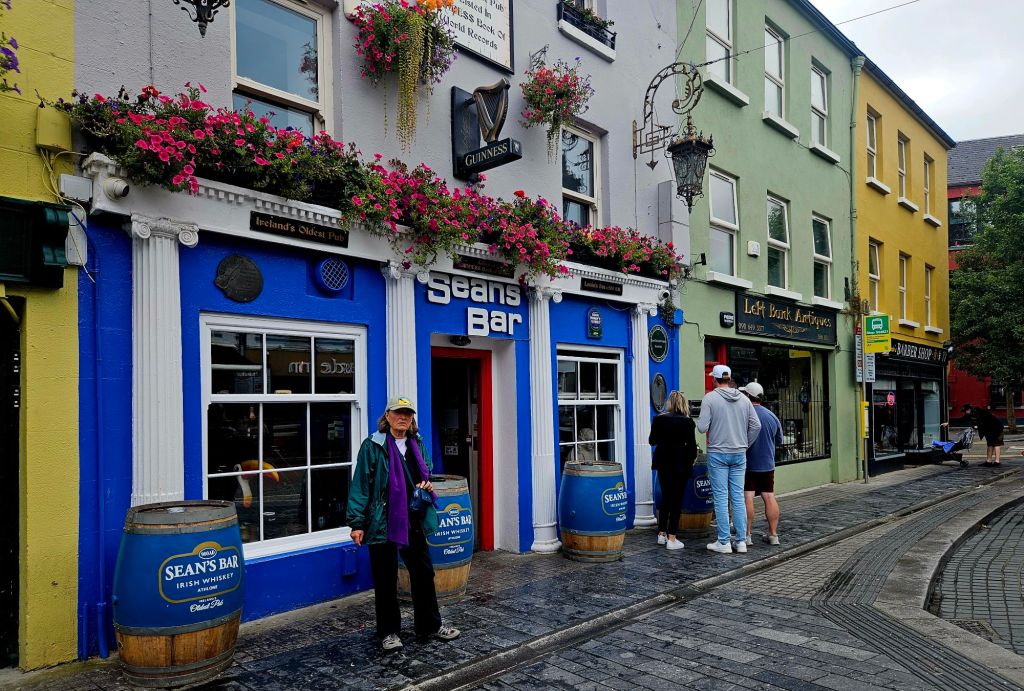
…and we were reminded again why so many shop owners (and homeowners) use bold colors.
We stopped in the oldest pub in Ireland for “a pint” – because how can you visit Ireland without visiting a pub? For many Americans, “Irish” means “pub,” if only on St. Patty’s Day. 😉
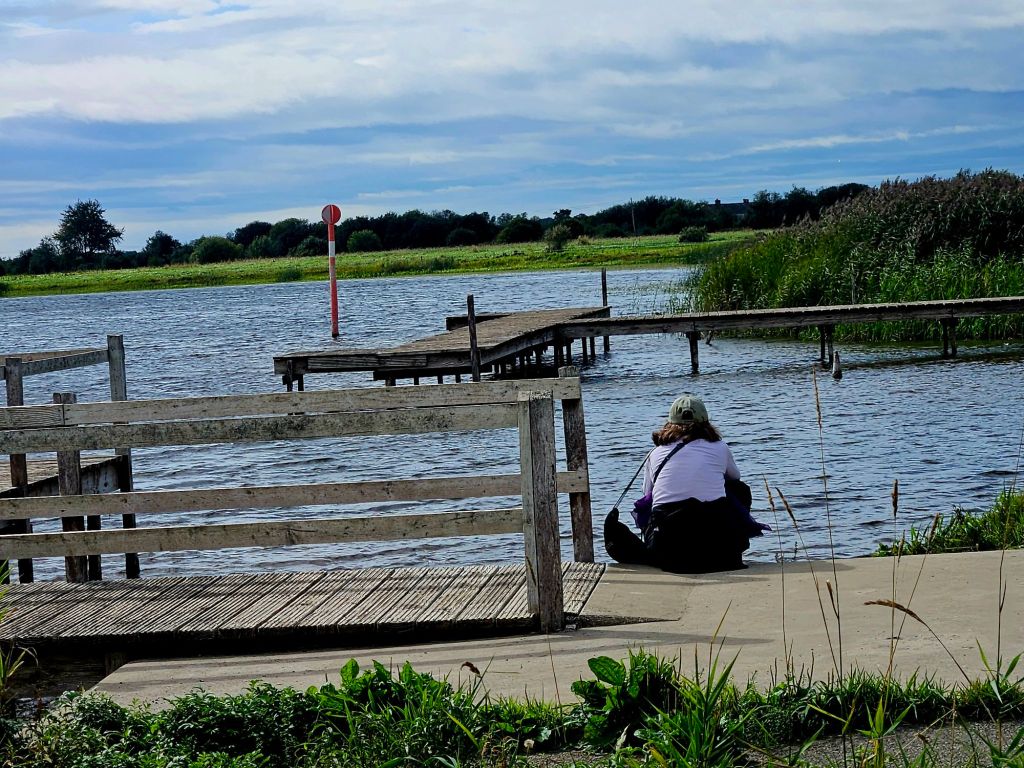
We found a quiet path along the river and enjoyed the walk and solitude. I’m sure Ginny enjoyed the break from “grandma duties.” 🙂
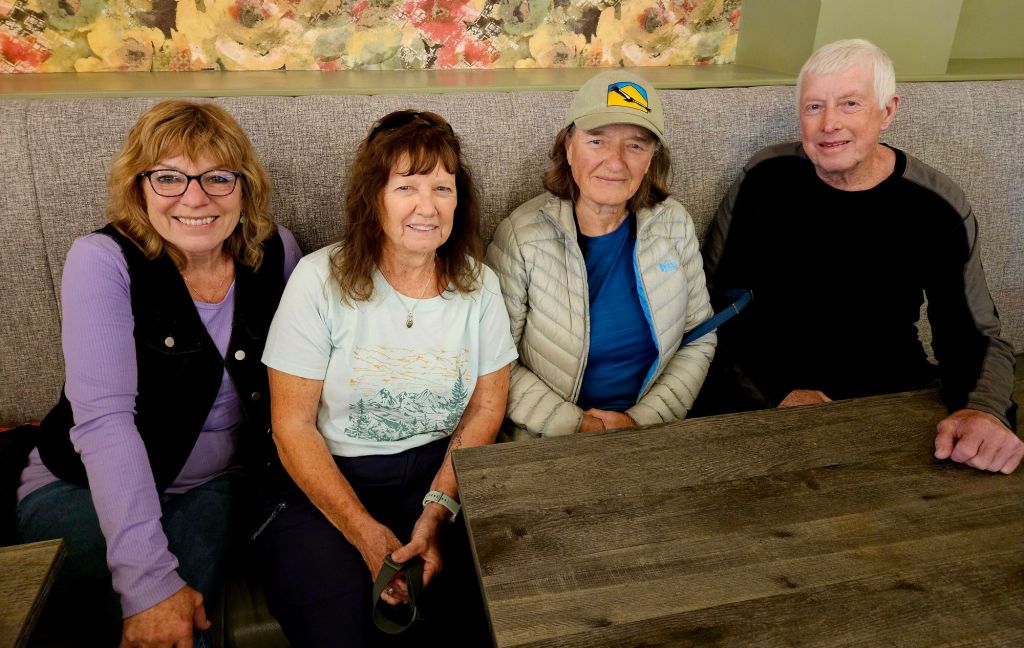
Between excursions, we found time for an improbable meet-up with rellies from the U.S. Cousin Marty and his wife built the cabin next to me in Michigan. They sold it years ago to live full-time in Montana, and I haven’t seen them since. I’m glad we coordinated schedules, even if we had to cross an ocean to make it happen!
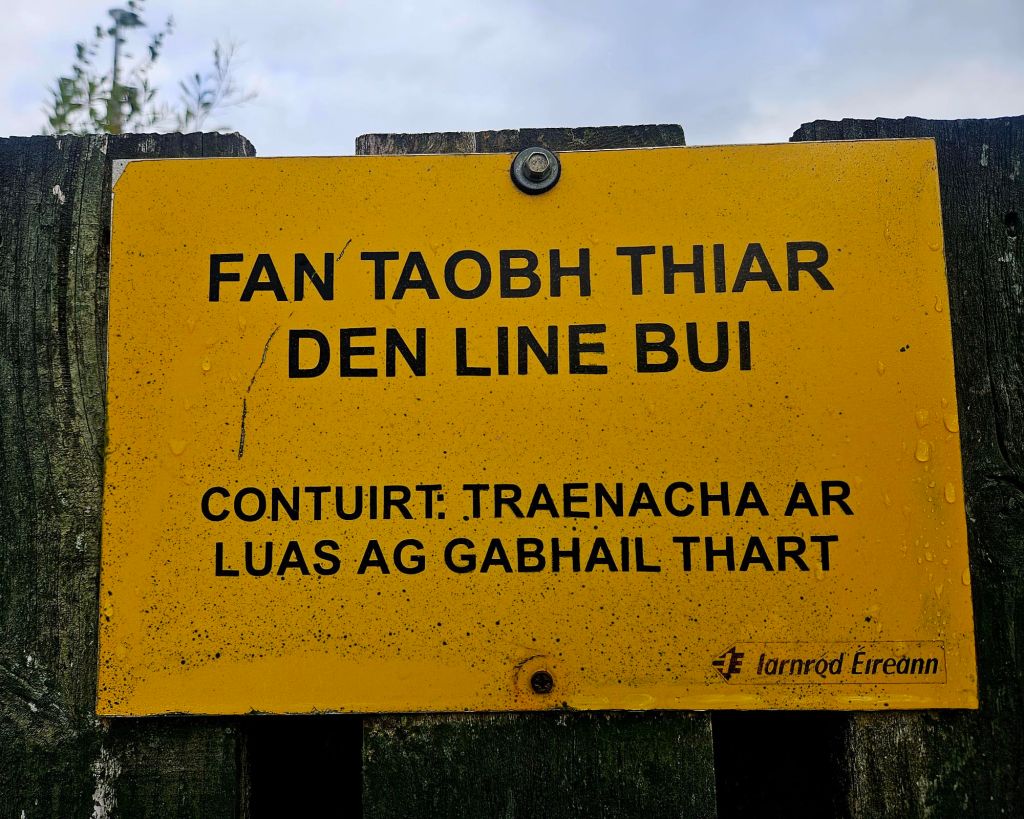
I leave you with a bit of the Irish/Gaelic language. I have no idea what this means. I like languages, and tried to pick up a bit…even a little…but, nope. A movement is underway in Ireland to revive the Irish language, and many signs are posted in both English and Irish. It reminds me of my hometown, where street signs are in both Finnish and English. Is that resulting in more Finnish spoken? Not really. But it’s a nice reminder of our roots. And who knows…some day, it might matter more.
Editor’s Note: All photos are mine. I do not use AI. I do research as I write, and include hot-links to sources. But I’m sure I make mistakes, and welcome reader corrections or additions.
Hi Mary I tried to comment on your newsletter but it wouldn’t accept my password and when I tried to use their password reset, they kept insisting on a different one from what I proposed. I didn’t want to do that!
So thank you again for a lovely trip that I will never take on my own!
Blessings and much love,
Chaplain Terry Nicholetti Producer, It’s OK to Change Your Mind – Stories of Hope from Women Leaving MAGA
*”Why wouldn’t I stand up for everybody, for all people? … We’re supposed to love one another. We’re supposed to accept and love one another.” **Dolly Parton, Dallas Voice, 2014*


Once again you’ve taken me on a journey I will never make myself, I love the commentary as well as the photos. Thank you! Erin go Bragh!
LikeLiked by 1 person
Hi Mary I tried to comment on your newsletter but it wouldn’t accept my password and when I tried to use their password reset, they kept insisting on a different one from what I proposed. I didn’t want to do that!
So thank you again for a lovely trip that I will never take on my own!
Blessings and much love,
Chaplain Terry Nicholetti Producer, It’s OK to Change Your Mind – Stories of Hope from Women Leaving MAGA
*”Why wouldn’t I stand up for everybody, for all people? … We’re supposed to love one another. We’re supposed to accept and love one another.” **Dolly Parton, Dallas Voice, 2014*
LikeLiked by 1 person