Cement-pour day is always exciting. The huge truck churns and grunts. Out comes this sloppy mess. The guys spread it around, working quickly as a team. Hours later, it’s a foundation. (And a floor.)
My first-ever garage floor, for my first-ever garage.
It’s actually concrete, not cement. Cement is the the binder that, when mixed with sand and gravel (aggregate), becomes concrete. (The things I’ve learned during all this building!) But we used to call them “cement trucks,” not “concrete trucks.” Maybe it’s because the verb form of that word is so familiar. To cement something is to make it firm. Permanent. It’s a bit scary. You have to get it right the first time.
And it’s not our first time. In 2023, we poured the foundation for the house. Then, it was all volunteers–neighbors, relatives, friends. Now, I’m using a contractor. It’s still exciting.
Here’s the process, in photos and captions, as Camp Many Moons on Huron Bay continues to evolve.
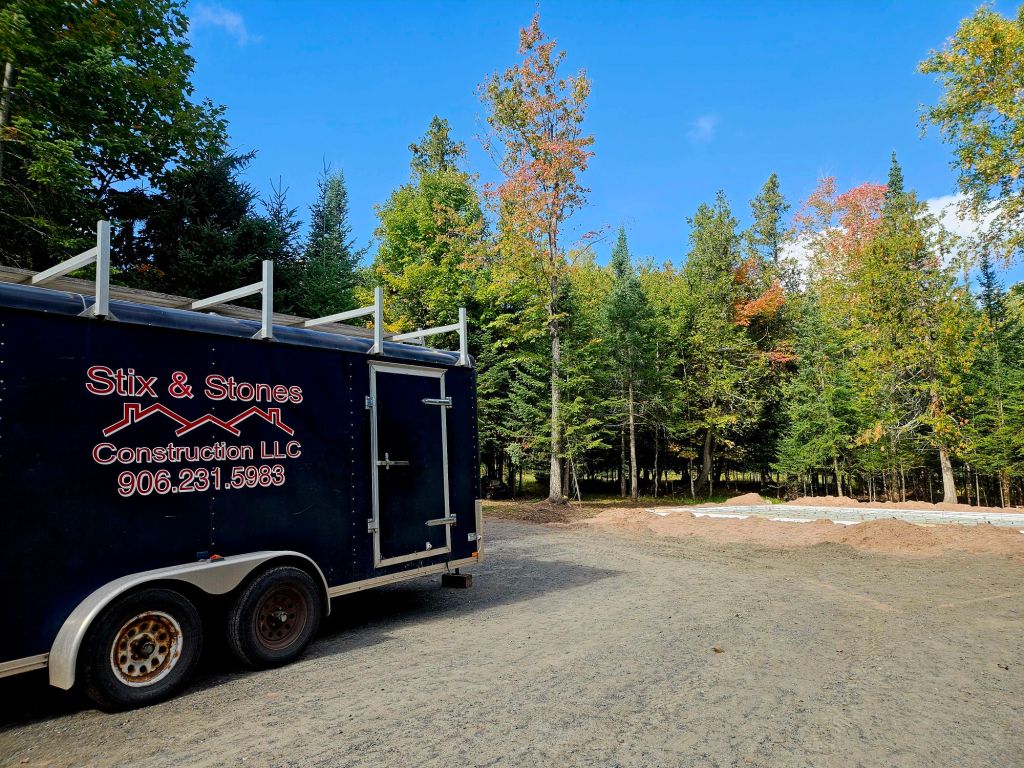
When the contractor delivers the tool trailer, you know it’s going to happen.
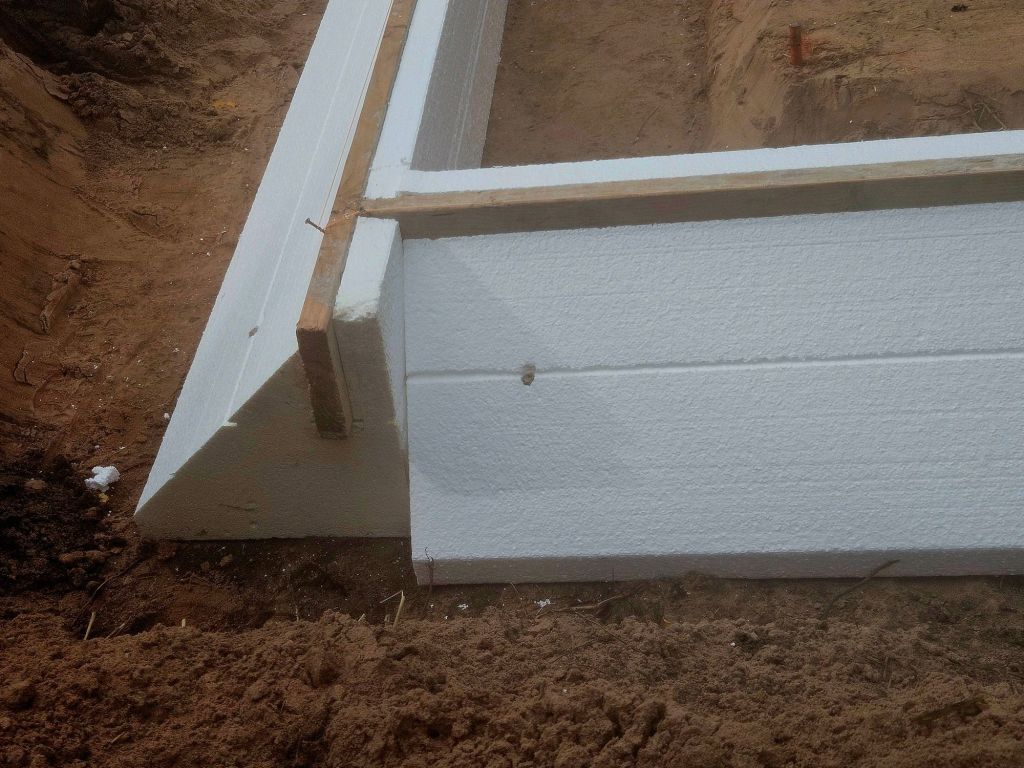
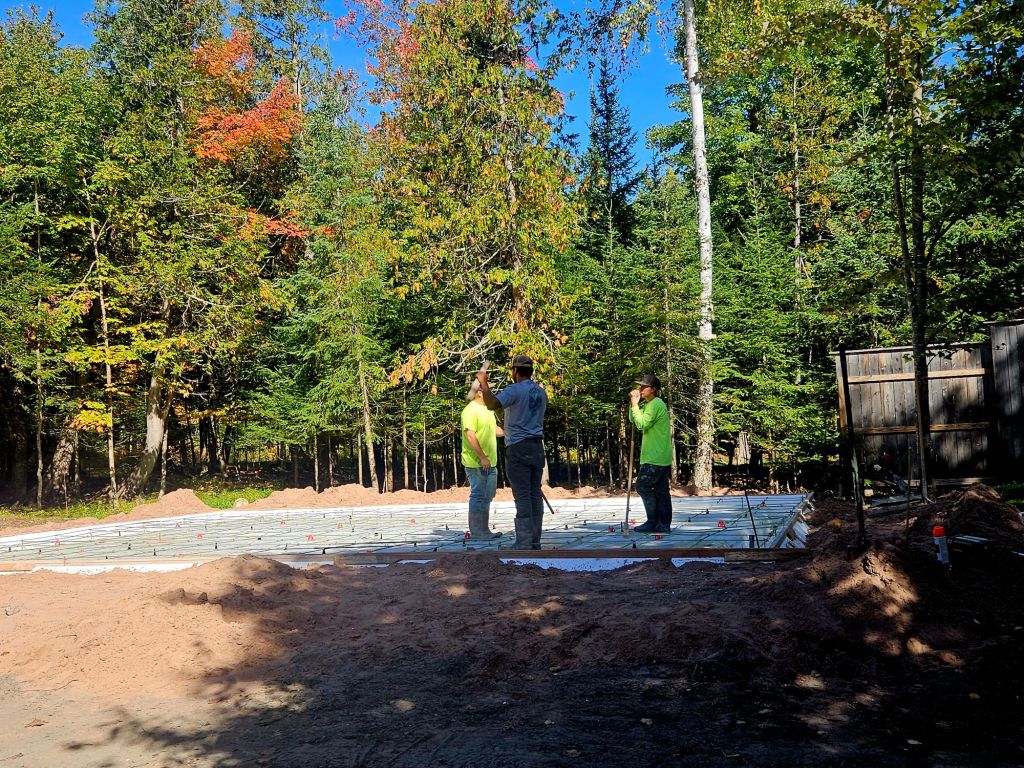
First, the styrofoam forms that create the border for the foundation. (Which is also the floor.)
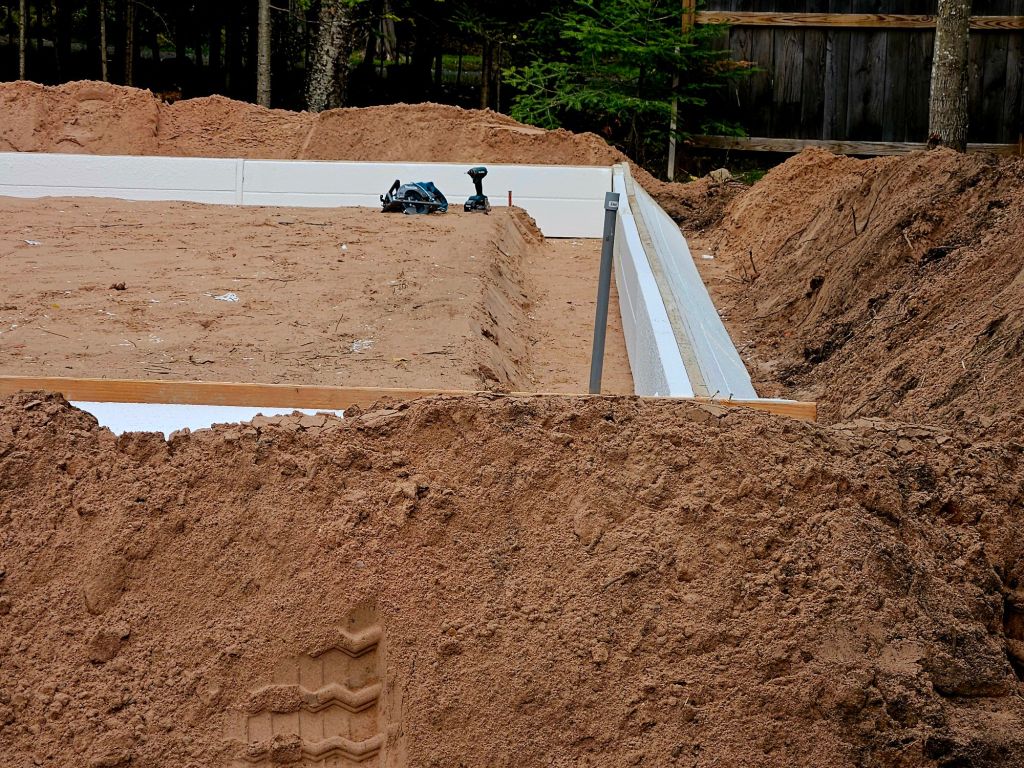
We spent a few weeks pulling trees, bringing in sand, and making this dirt level — and now we watch as it’s dug up, piled up, spread around. (To read about the ground preps, click here.) The process of creating is often messy, whether it’s a physical thing or a “relationship” thing. Think about a close friendship (or sibling relationship) that hit a rock but recovered. In the midst of an argument, it can feel like you’re tearing down your work when you’re actually preparing for the next phase.
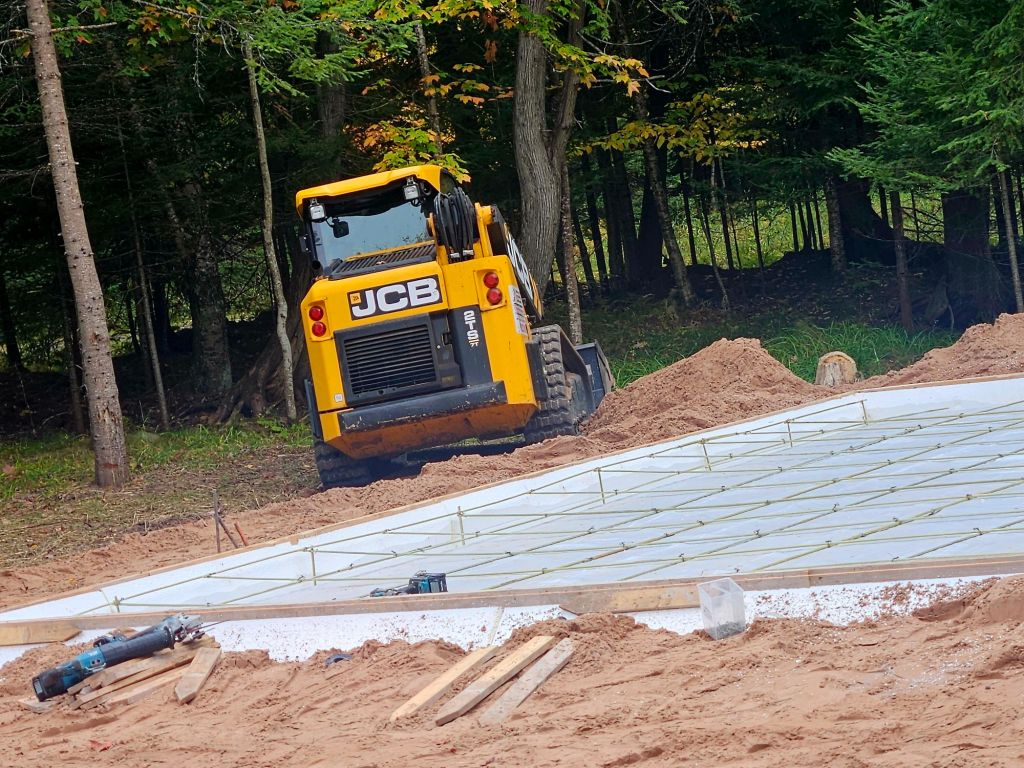
A layer of insulation was added to reduce heat loss, control moisture, and improve energy efficiency. (The house has in-floor heat, and we used a different process for that.)
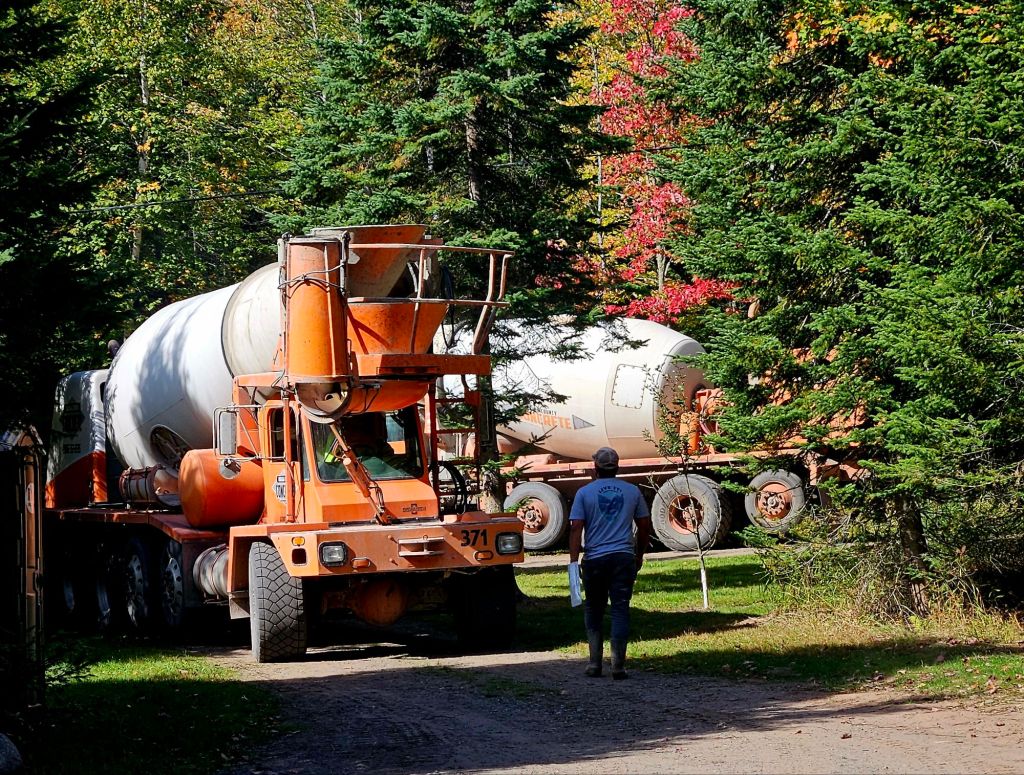
The contracting crew waits for the trucks to arrive…
…two trucks, actually, which had to negotiate the driveway and narrow private road when they happened to encounter each other.
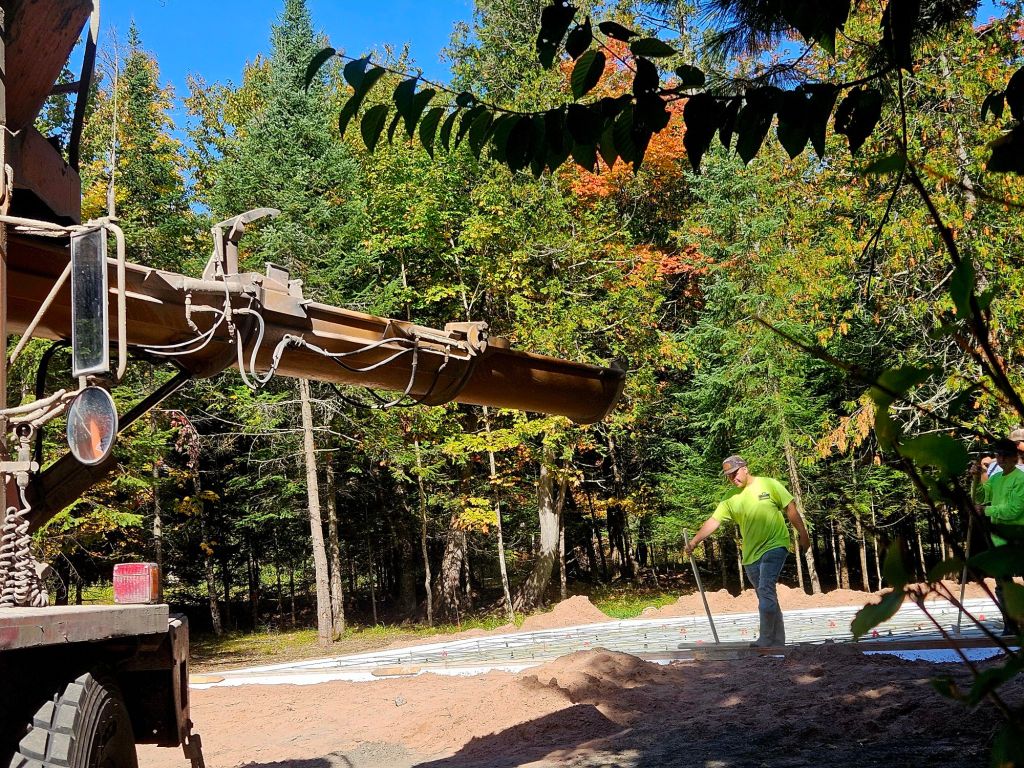
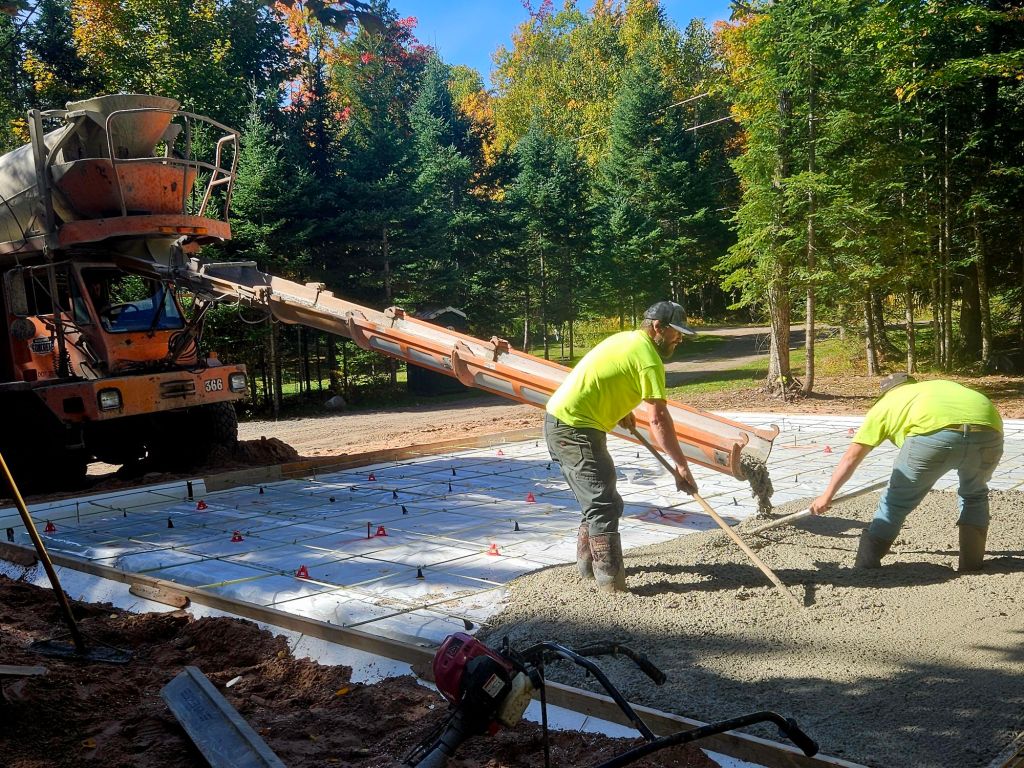
Out comes the boom from the cement mixer as the driver negotiates to put it in the right place.
The contractor tells the driver just where to lower the boom…
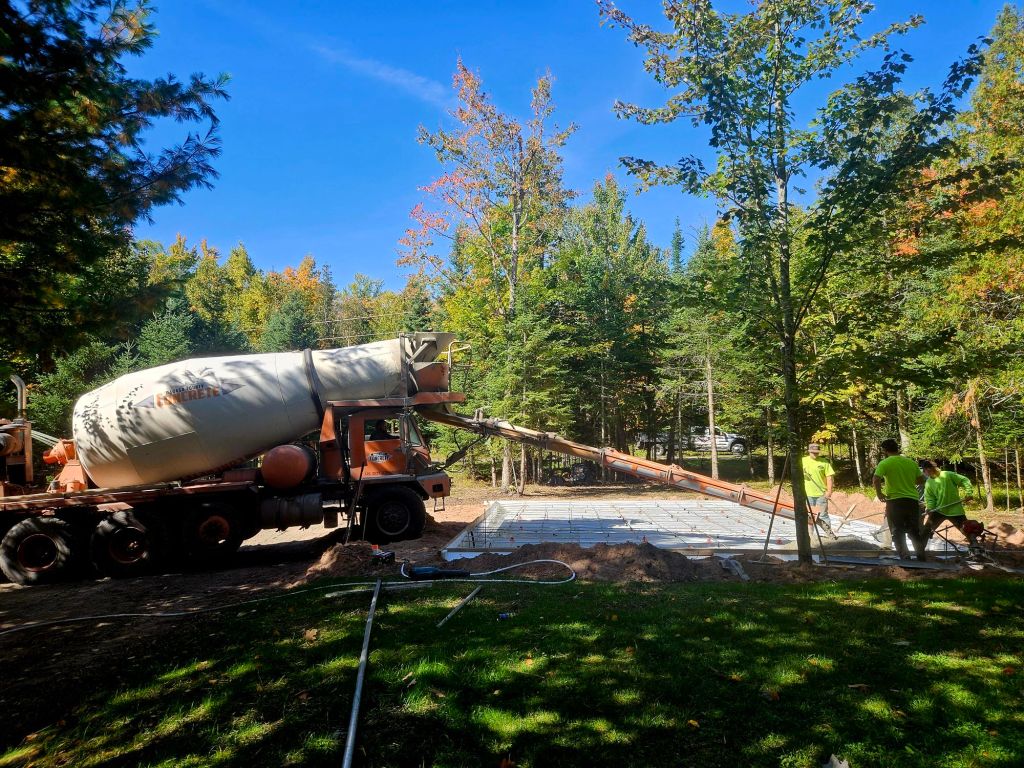
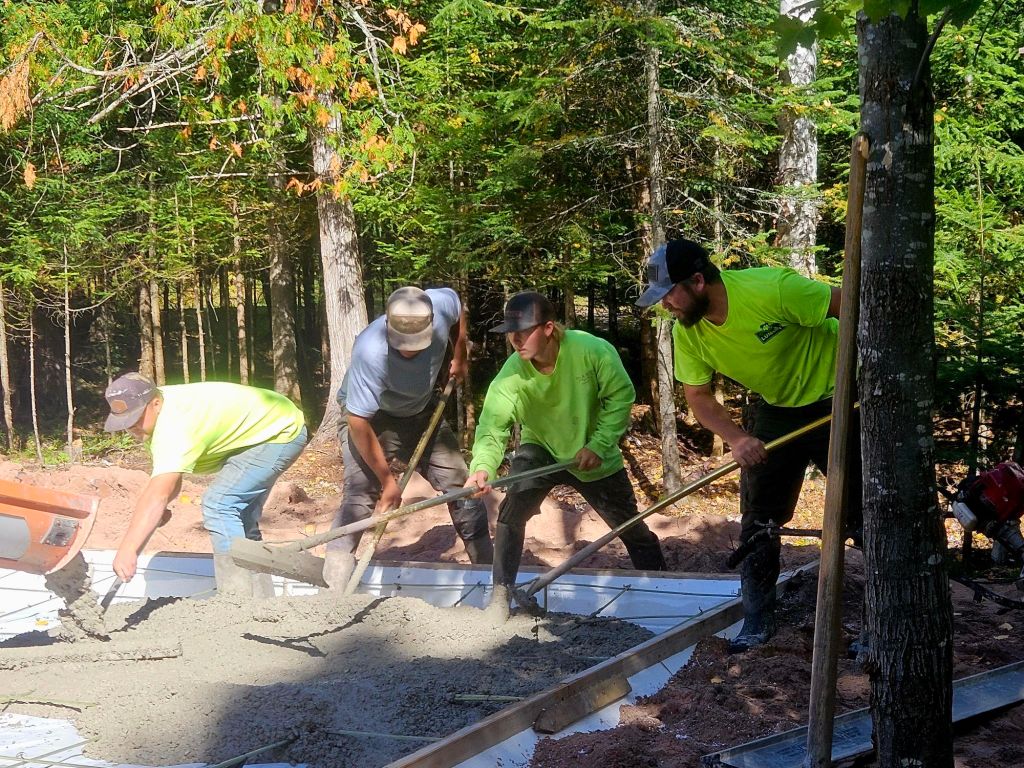
…and out it comes. The crew spreads it as it comes out.
The pouring and spreading goes quickly, because concrete begins to form up within 30 minutes.
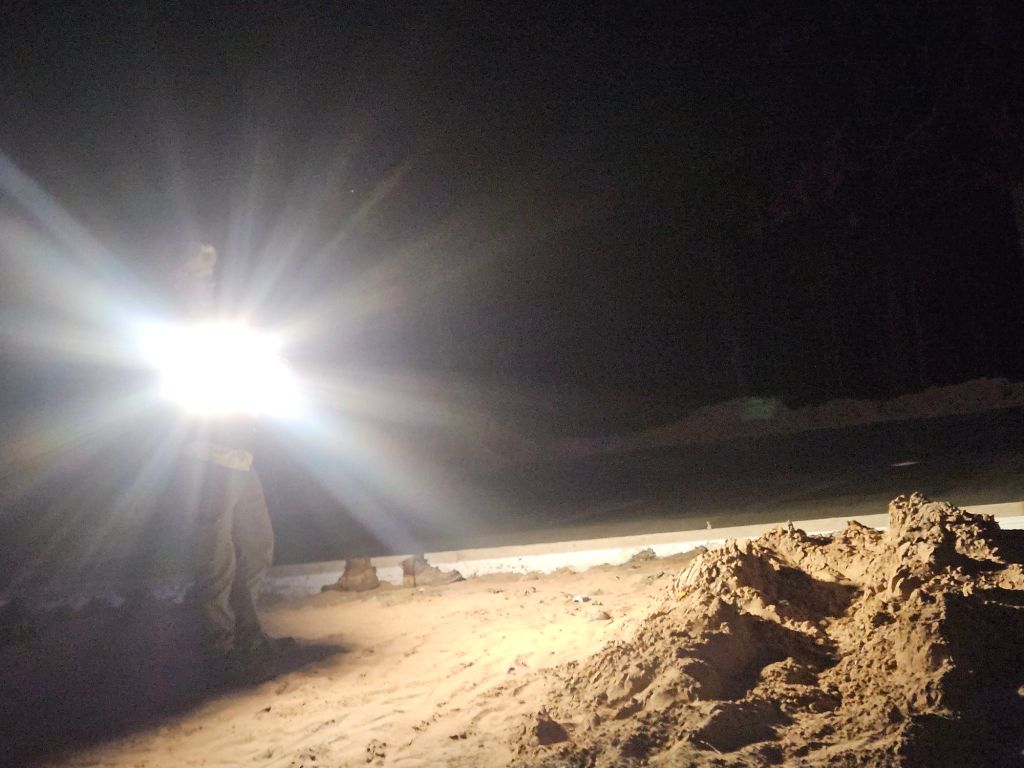
Daylight hours are short in autumn, so they worked into the dark, using a light. (It all depends on timing of truck arrival, and waiting for the concrete to harden enough for the sealer.)
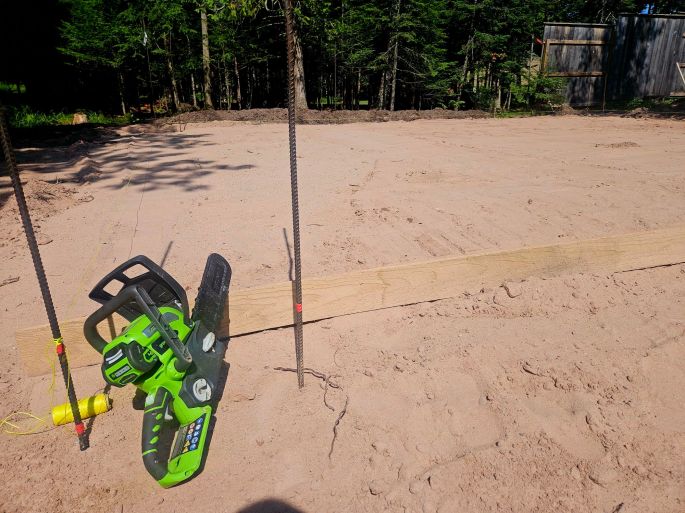
Not many people get to watch the process of a building evolve as it happens; they usually buy it once it’s done. I love seeing the “parts” fall into place — and sometimes help put them in place. Last month, after we finished preparing the plot for the garage, it looked like this.
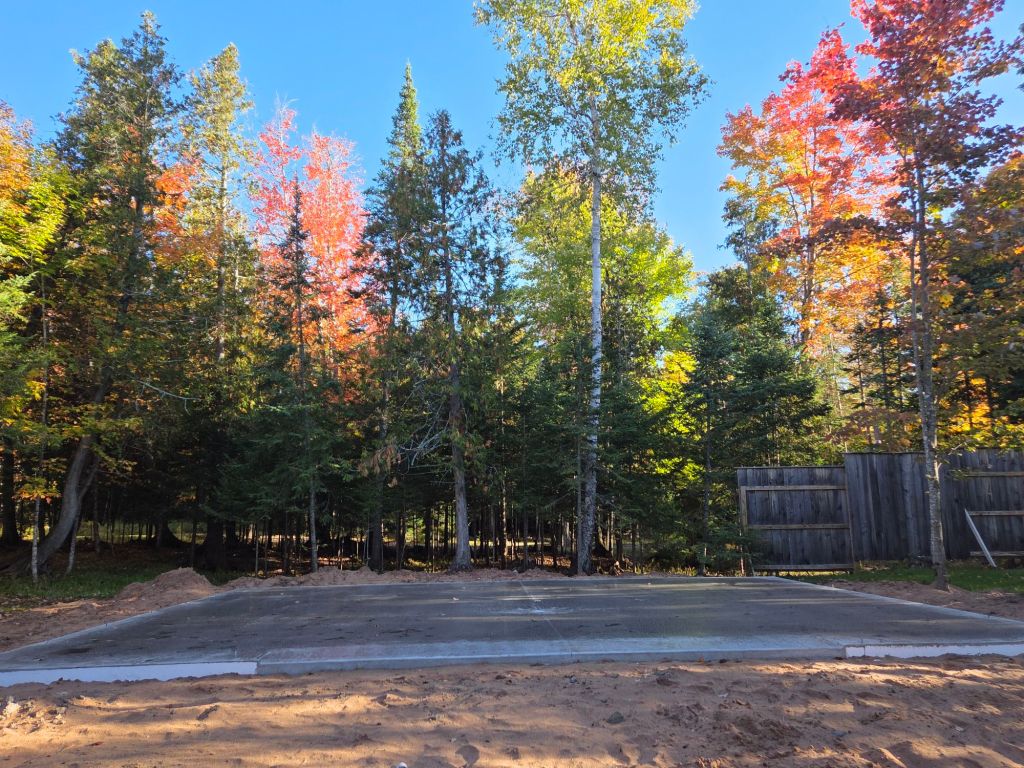
This month, it looks like this. The foundation will continue to dry slowly.
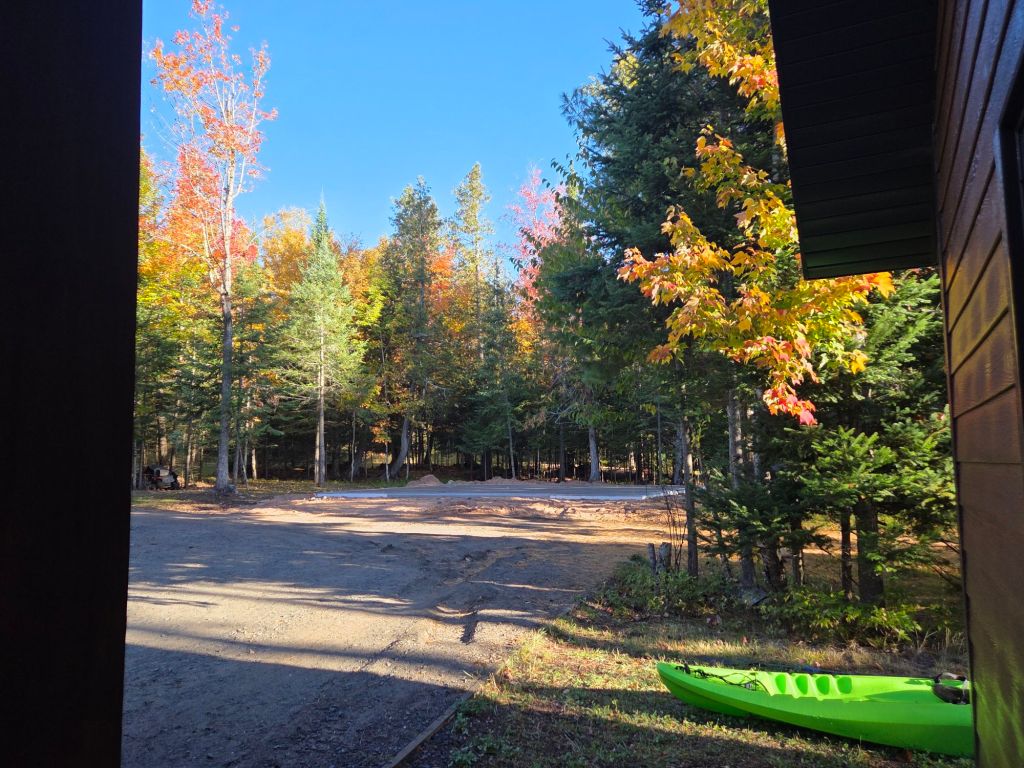
Before the snow flies, a building will be standing on that foundation and this view from my front porch will be entirely different. (Assuming no interruptions.) And next winter….
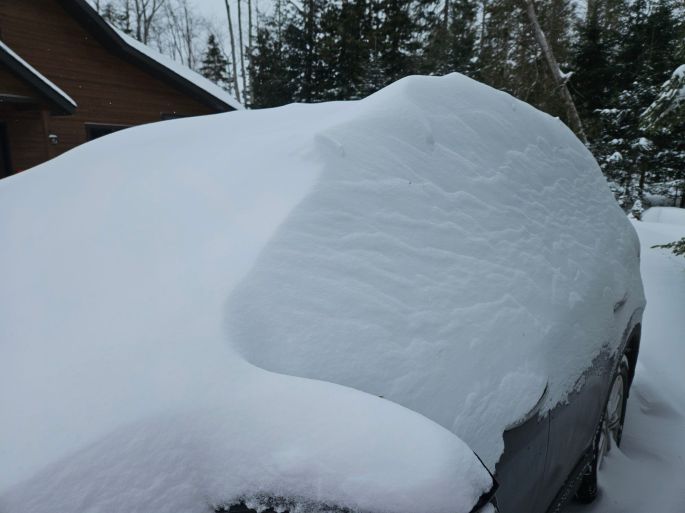
….I won’t have to shovel off my car before I can go anywhere! This was from last February. I do enjoy shoveling, but there is a limit. 😉