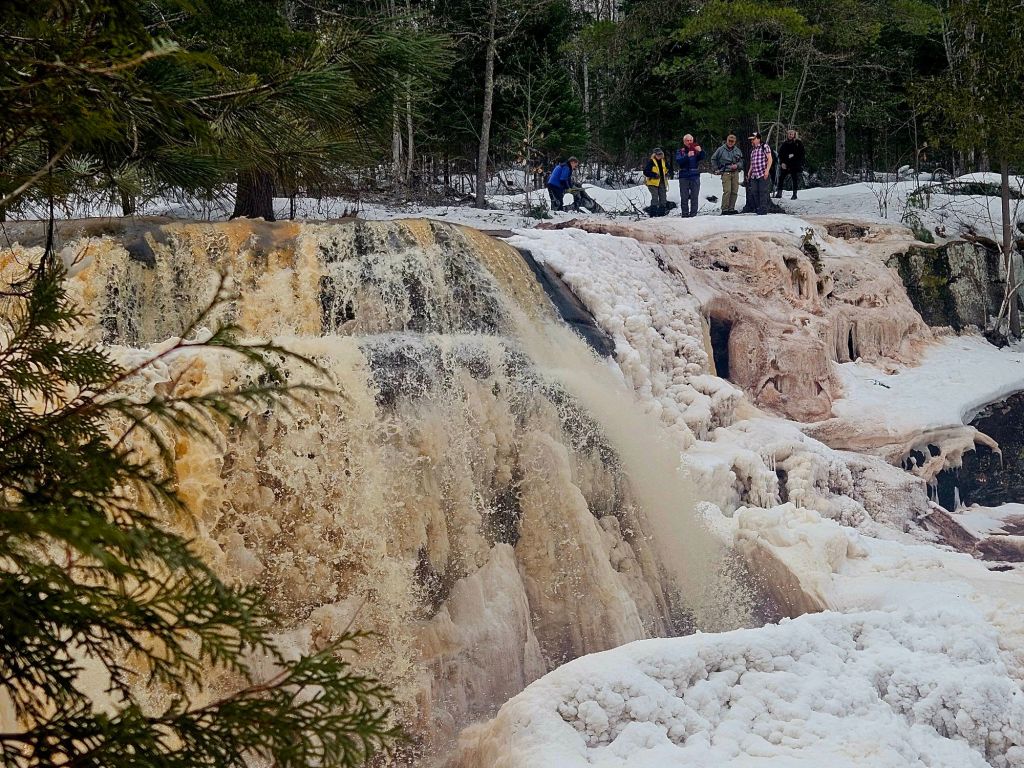
I don’t remember much from chemistry class. I wish I did. How does moving water turn into ice? How does it create such amazing structures? Those are the questions that arise when you visit O Kun De Kun Falls in Michigan’s Upper Peninsula at the end of March. More photos and thoughts below…
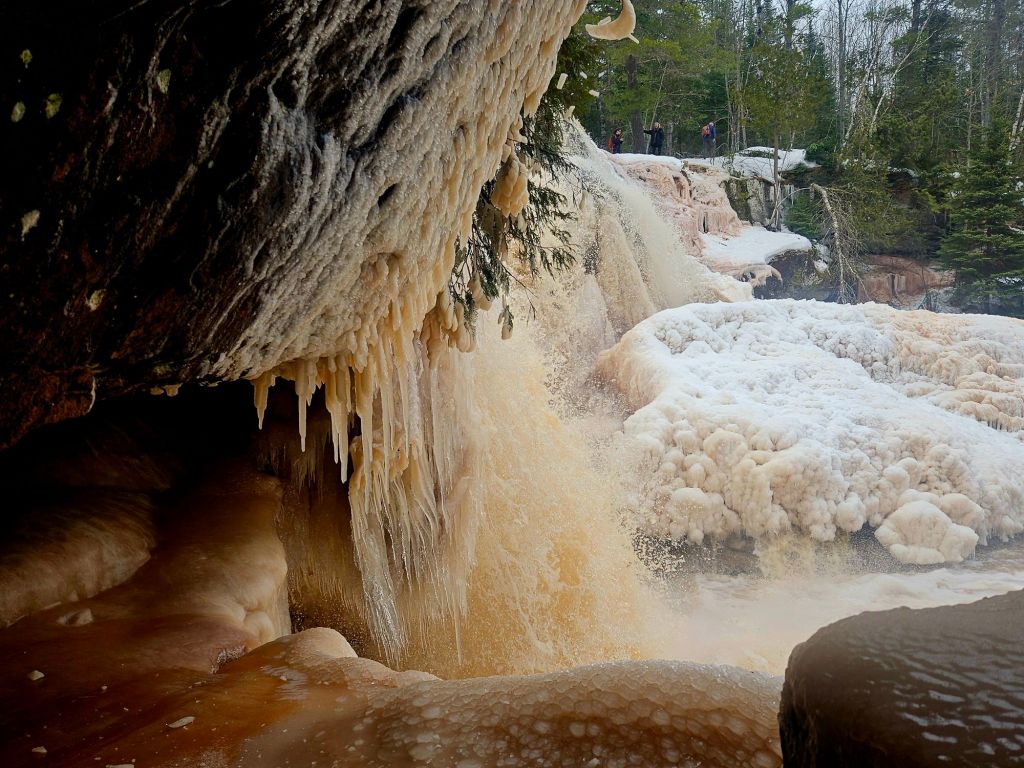
Flowing water travels alongside frozen water. How I wish the “two camps” of our divided nation could survive side-by-side this way until a thaw brings us together again. You may wonder why current events come to mind at such a time. They’re never far from my mind. It comes from 30 years in public and military service, and realizing that these are truly historic times.
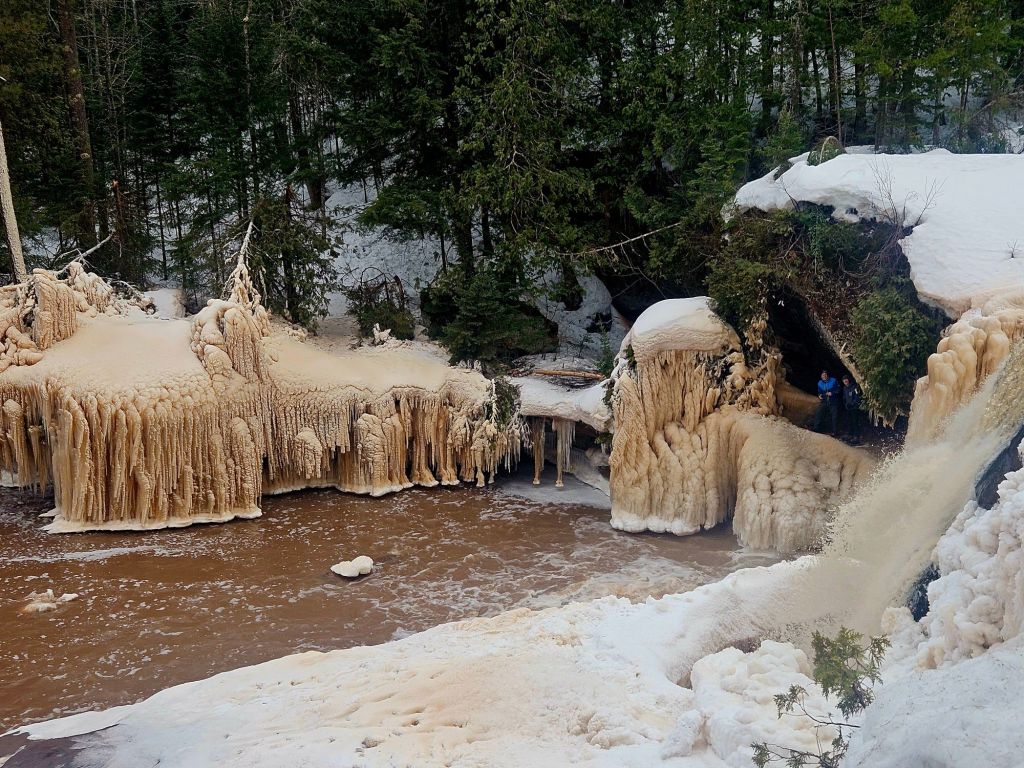
Standing nearly under the waterfall’s edge, one marvels at nature’s power.
How does water freeze in mid-fall? Or so it seems to do. If we could only freeze-frame the film of our nation, roll back a few decades, and start over where we used to listen to each other.
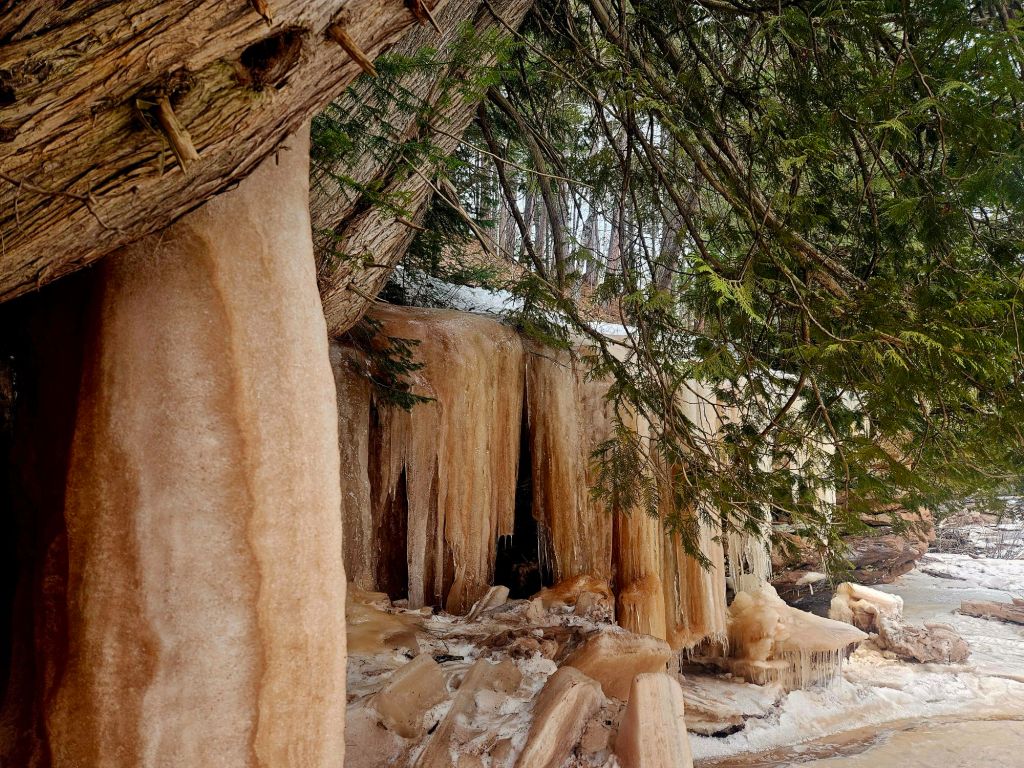
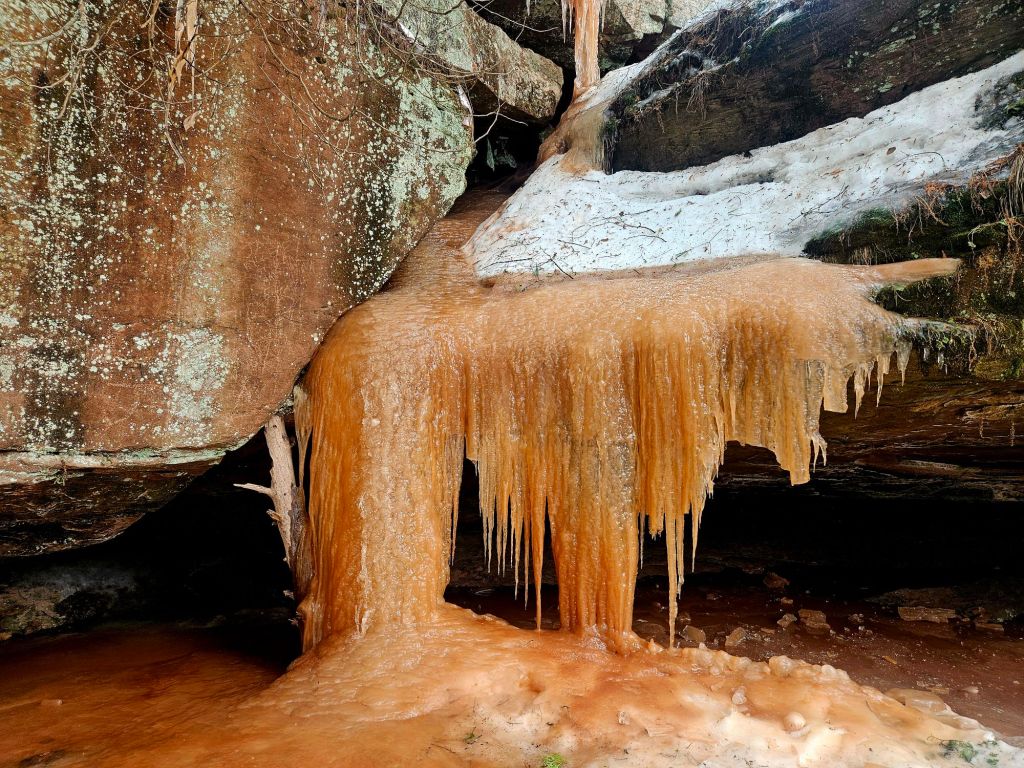
This reddish hue is caused by iron oxide, I believe. A dramatic example of this is Blood Falls in Antarctica. I will post about my time in Antarctica soon.
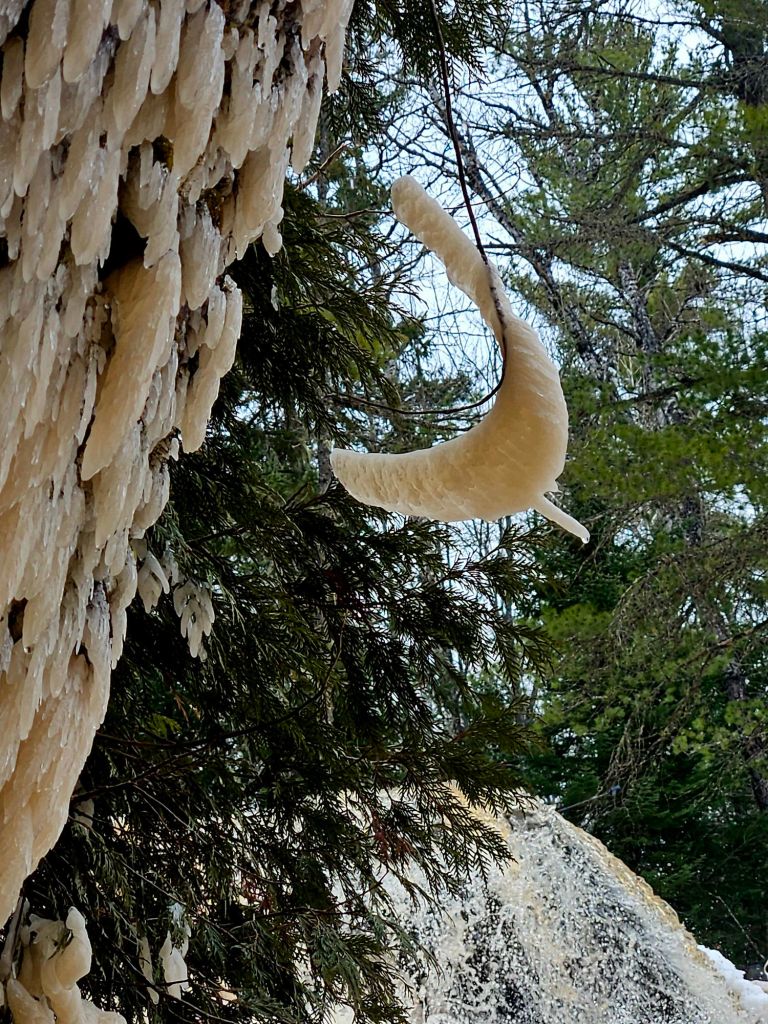
See how the water slowly dripping onto this skinny branch turned into a hardened mass over time? The same thing has happened to our nation. A slow drip of distrust hardened into a revolution. Small things can harden into big things if they aren’t acknowledged and addressed.
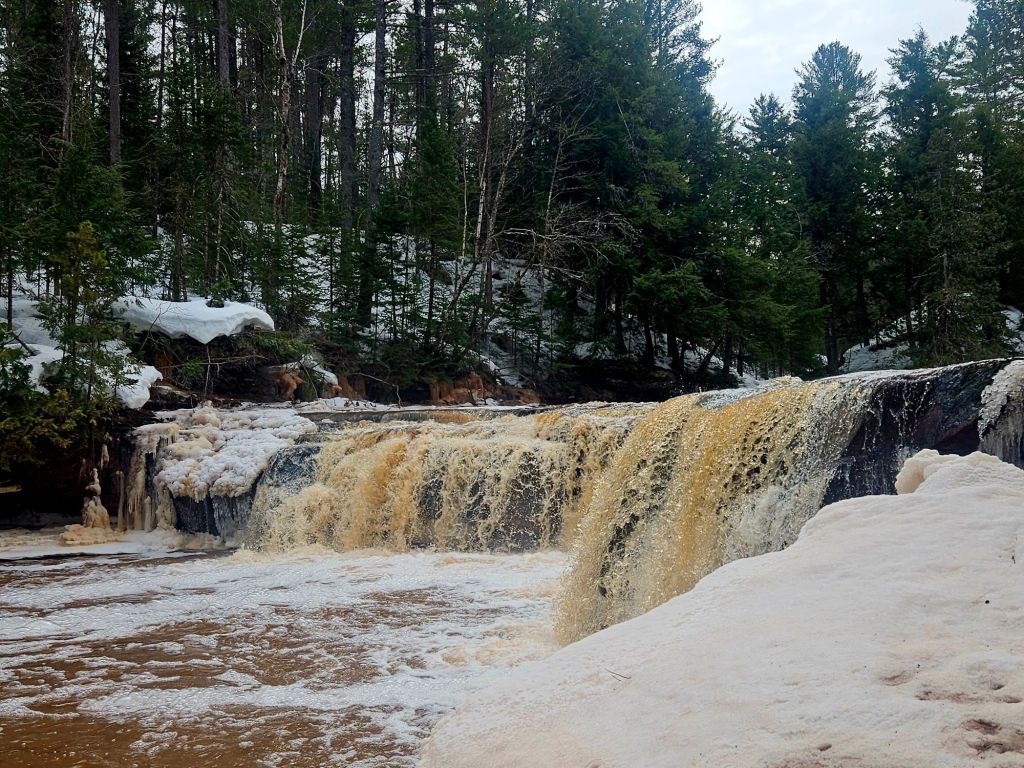
Two waterfalls make up O Kun de Kun. This is the smaller upper falls, which were more visually intriguing to me than the lower. These days, our national leaders prefer “bigger and glitzier.” Guess I’m out of step with the trends. Smaller and subtler is more my speed.
Another shot of the upper falls…
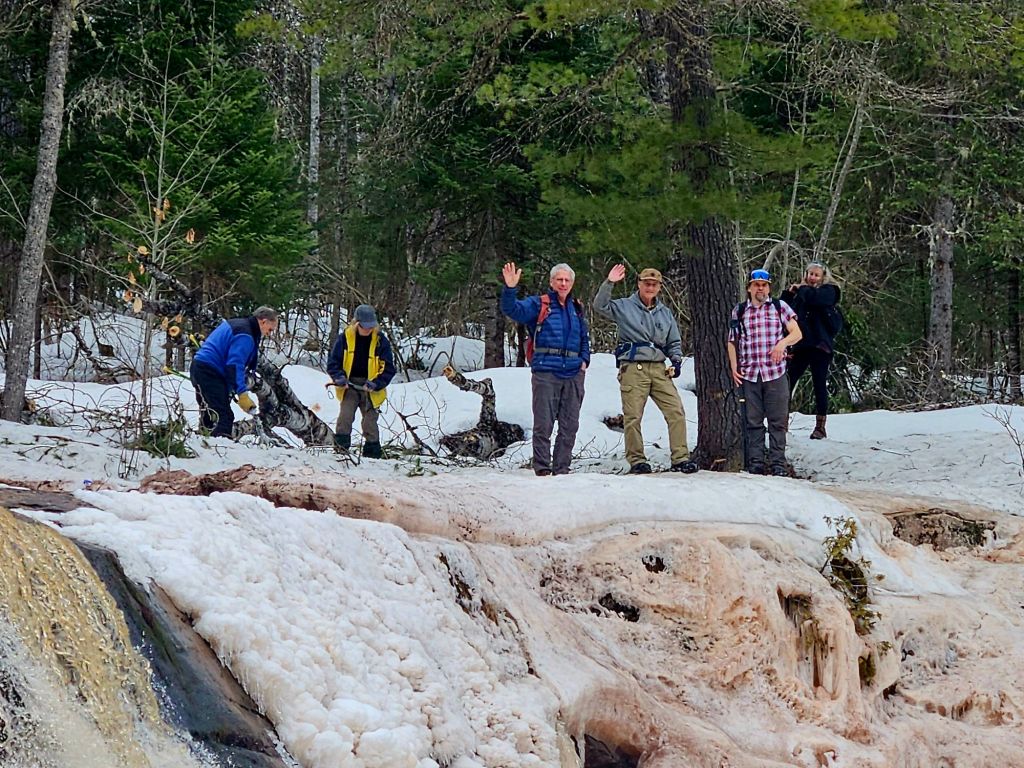
….and hiking buddies across the river from me on the lower falls. How did we cross the river?
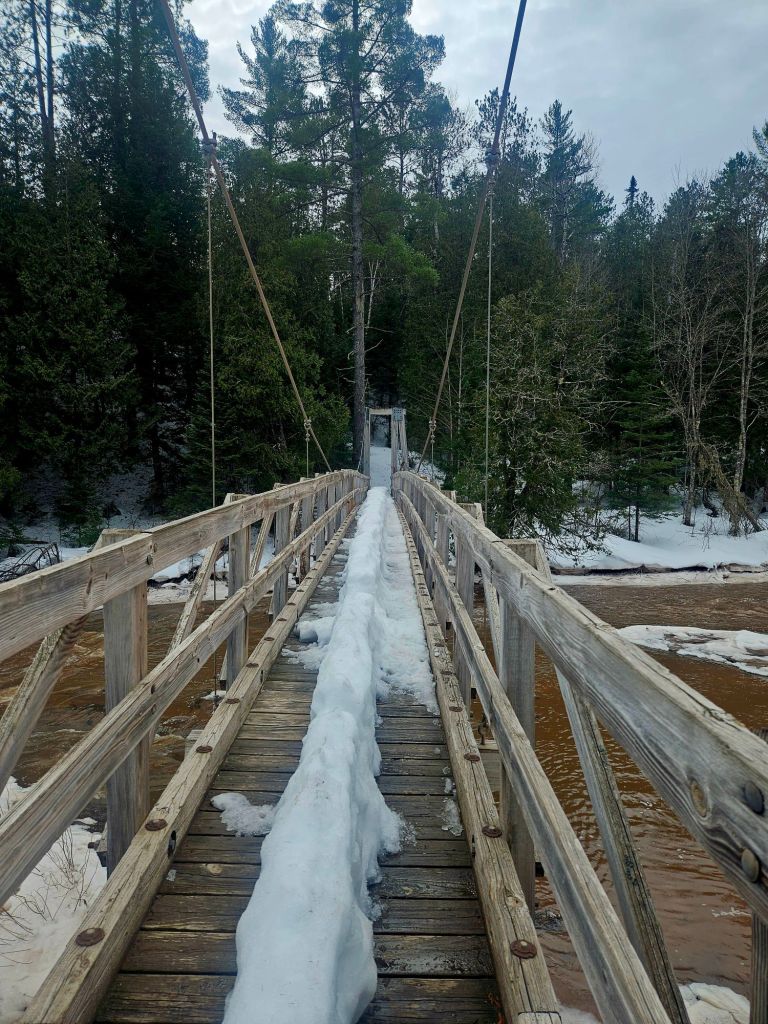
By this suspension bridge. I wobbled across on my snowshoes, on top of that snow ridge in the middle. (I enjoy balancing challenges.) Others walked in regular boots along the side.
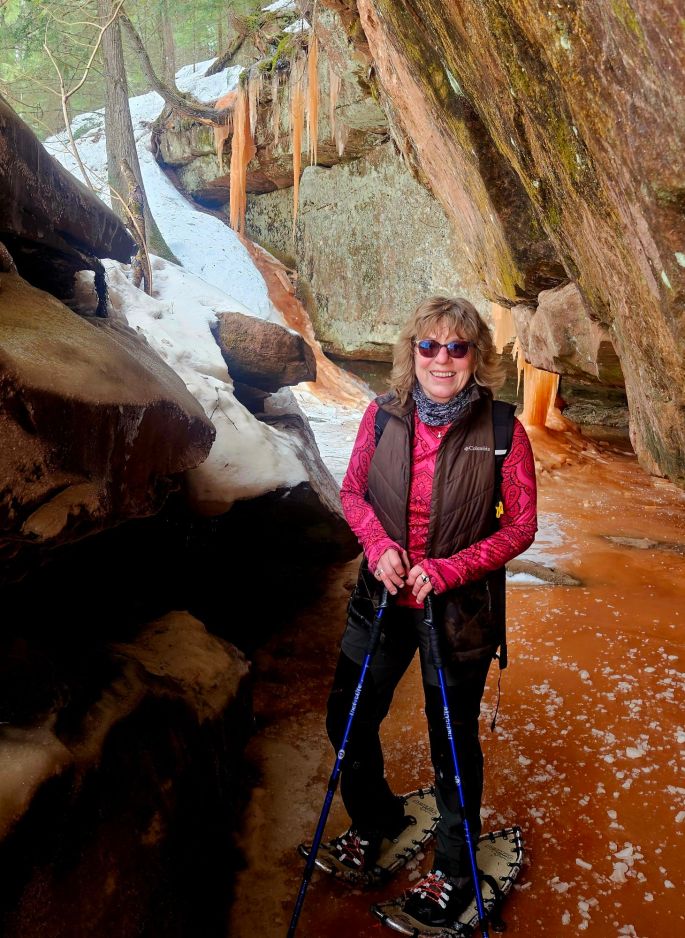
Snowshoes are useful on ice, too, due to their sharp teeth. They aren’t only for deep snow.
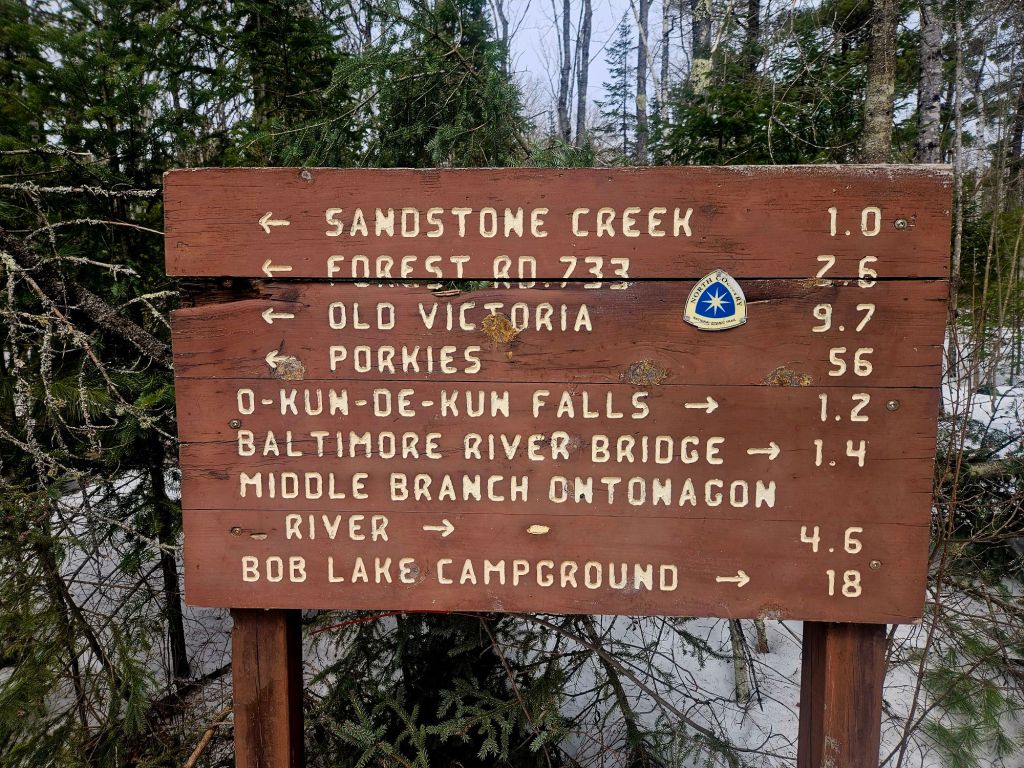
The trailhead sign. The U.P. is blessed with so many trails, lakes and waterfalls, I’ll never see them all. When I noticed the Ontonagon River on the sign, I realized how close I was to my Dad’s birthplace. He swam there as a boy. So, after the hike, I drove 10 miles…
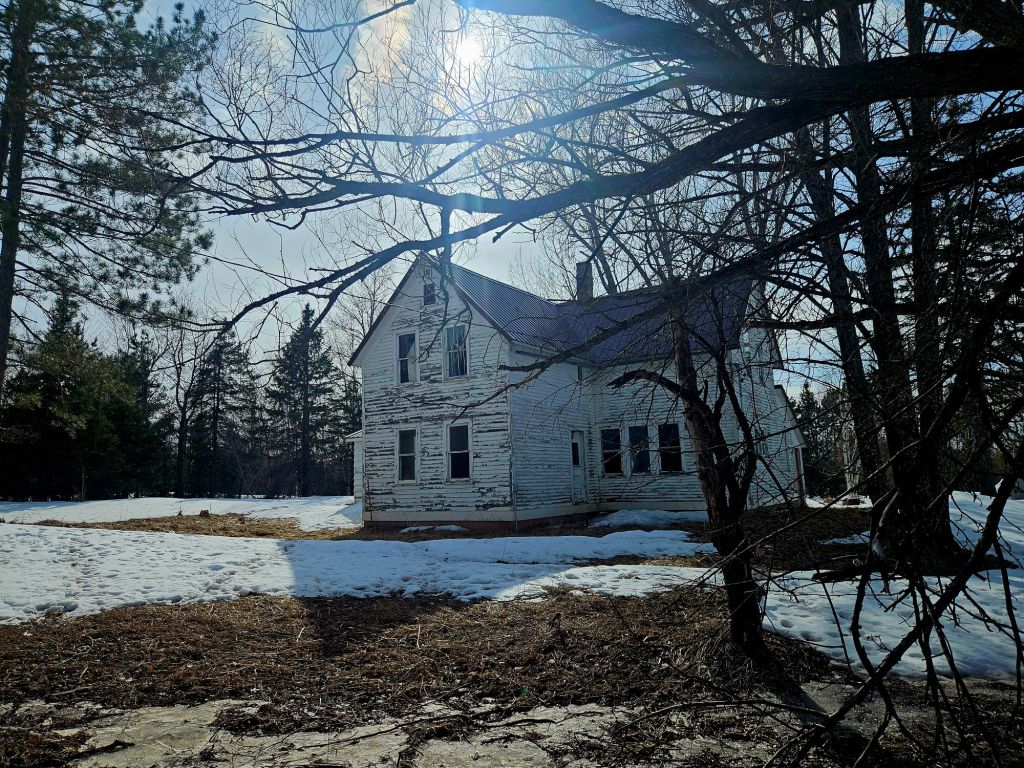
…to the abandoned farmhouse where my Dad was born and raised and where I (plus siblings and cousins) made many visits. My grandma gave birth to 12 children in this house…plus nine children in previous houses! (She birthed 21 children; 18 lived to adulthood.) That generation is gone, and this house and surrounding property now belongs to the state. It’s decrepit now, but in its day hosted many innovations — one of the first in the area to get electricity, and a car. My aunts (and some uncles) were voracious readers and this house still guards a trove of old books, including “How to Speak English Effectively” (1933). 🙂
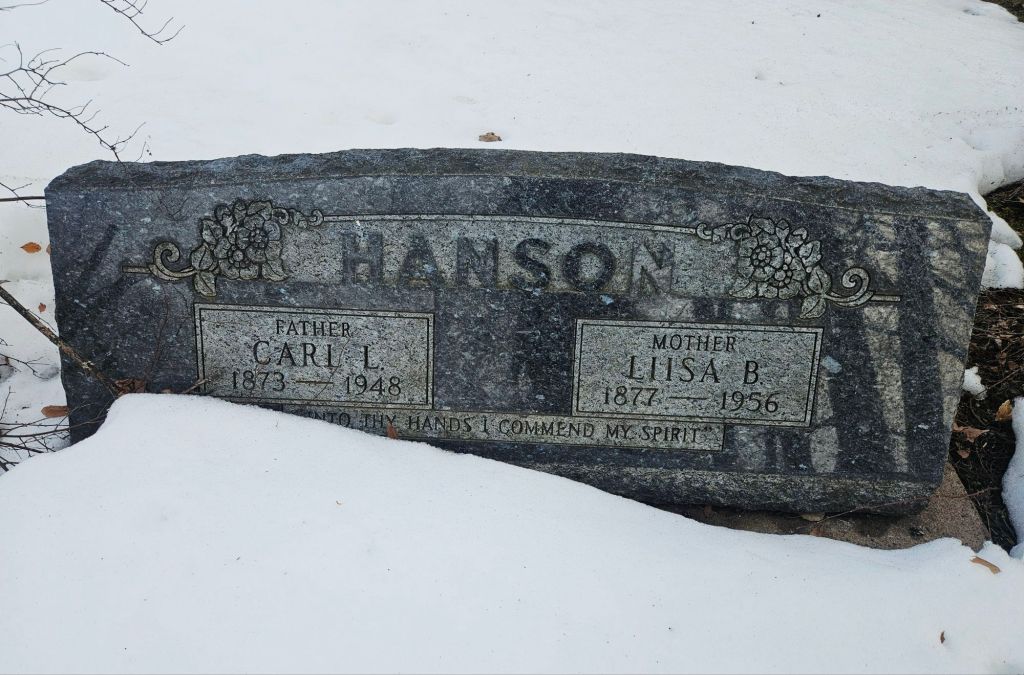
I also visited my grandparents’ grave. Both emigrated from Finland as teenagers in the 1890s, ending up here in an area so much like Finland with its forest and lakes. Thinking about the changes they lived through — the Depression, Progressive Era, World War II — gives me courage to face the changes of my own time.
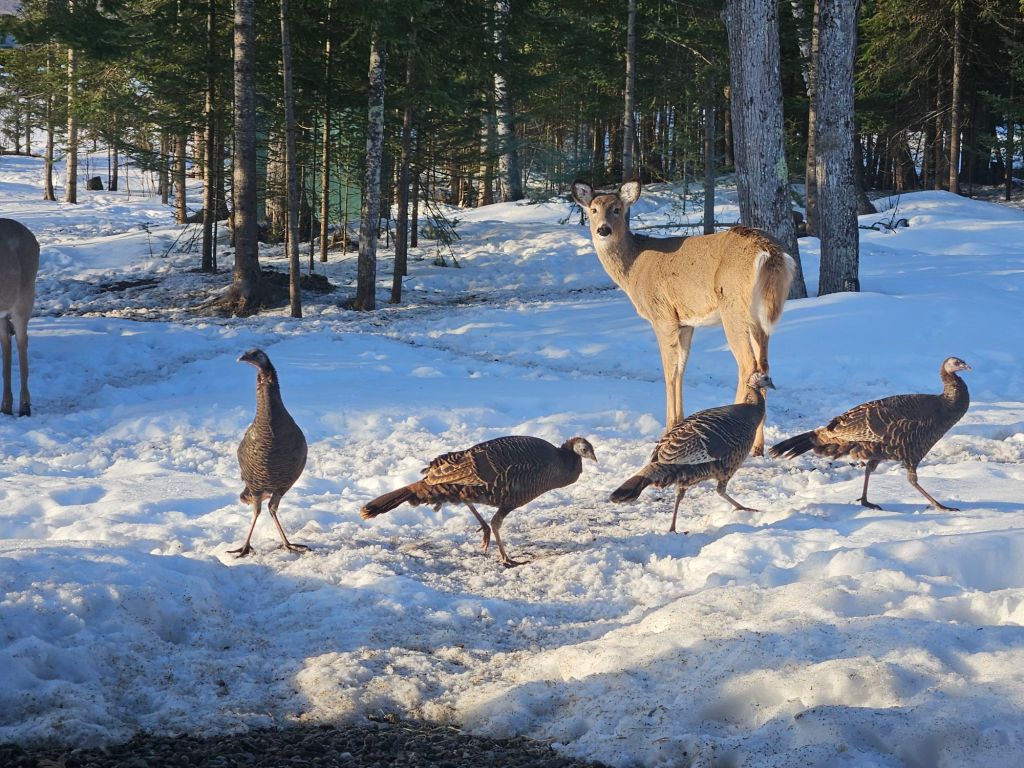
Back home at Camp Many Moons, turkeys have joined my wildlife menagerie. Deer and turkeys live peaceably side-by-side. (Some species get along better than some political parties these days!)
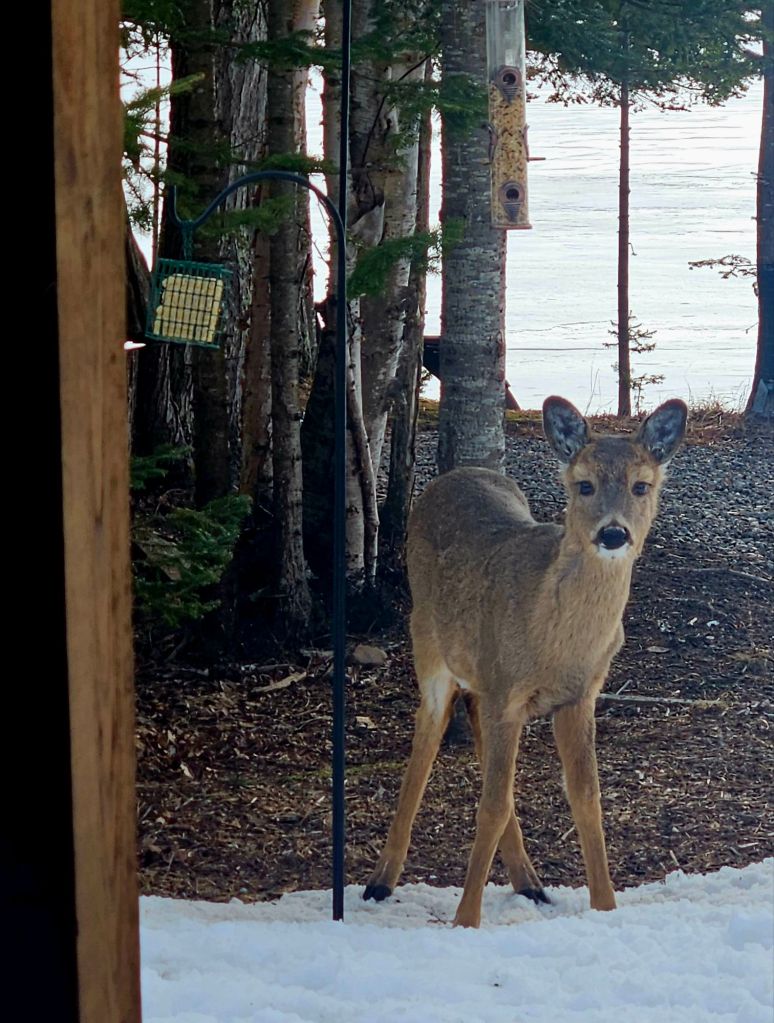
My “favorite” explores the spillover from the bird feeder. I’ve discovered “she” is a “he,” as the buds (bumps on the skull that will turn into antlers) have emerged. This means he’ll be targeted by hunters before long. Enjoy life while you can, little one! Extra treats for you!
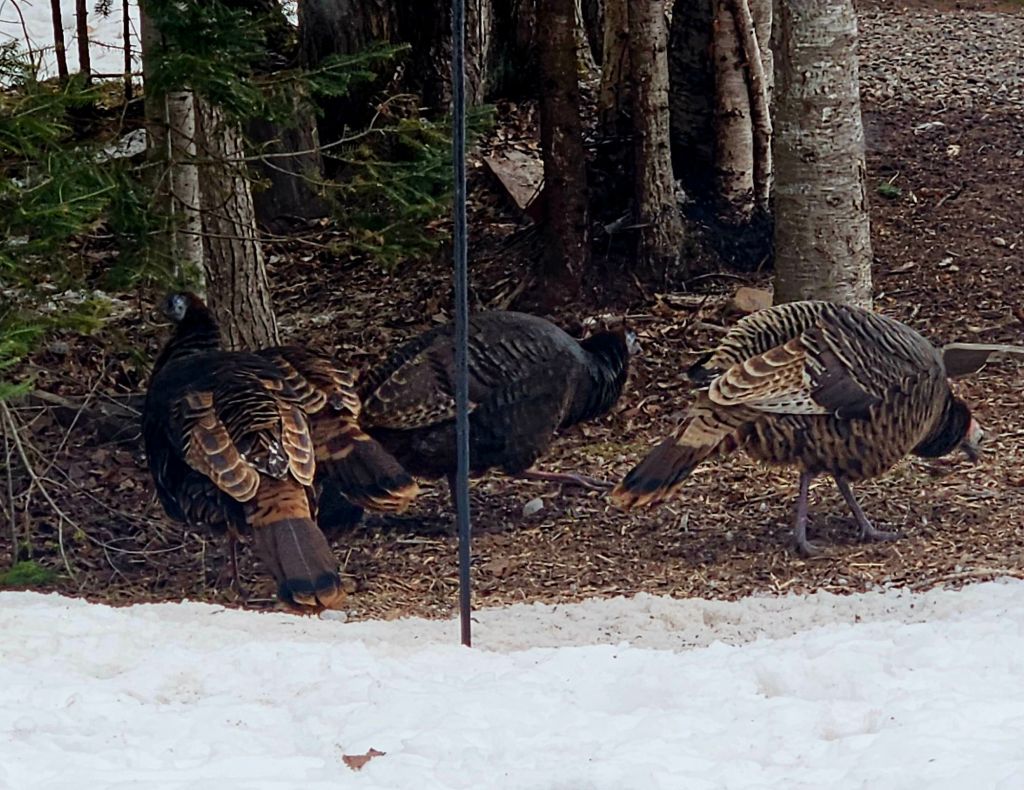
The turkeys forage under the bird feeder also. I like having them around as long as the flock doesn’t grow. It’s enough to keep up with deer poop–I don’t want to tackle turkey poop, too.
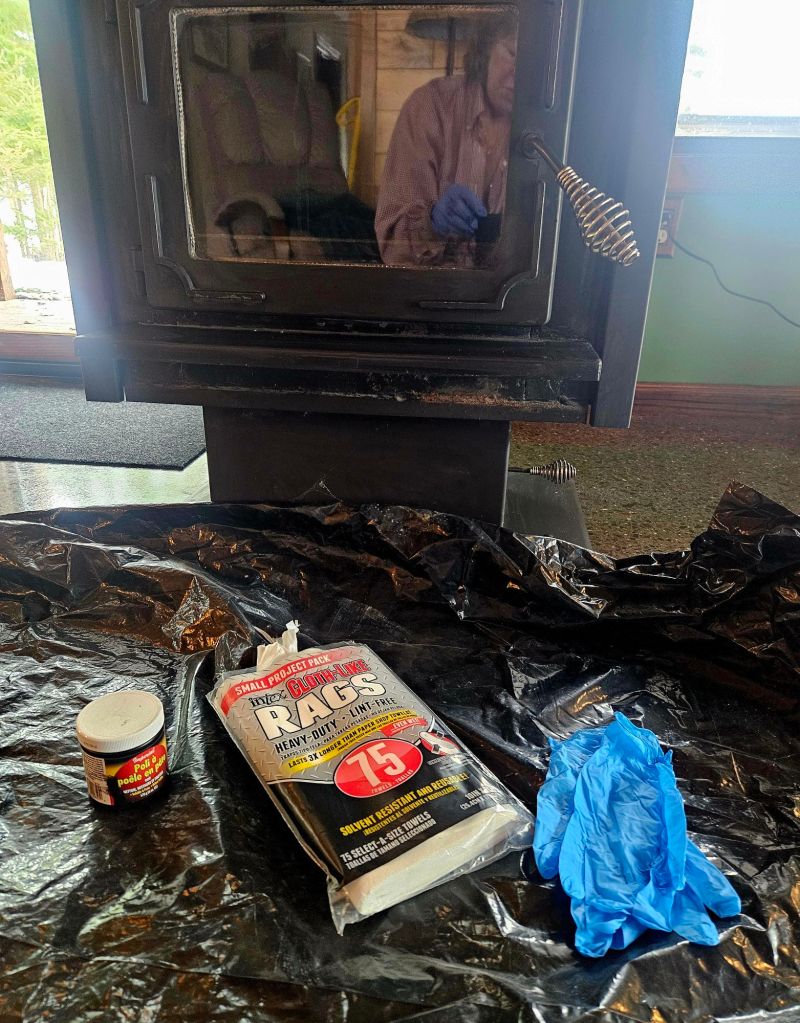
Indoors, I’ve continue the project mentioned in the last post–refurbishing the old woodstove. The glass is clean and the gasket is new, so polishing was next…a messy business requiring gloves.
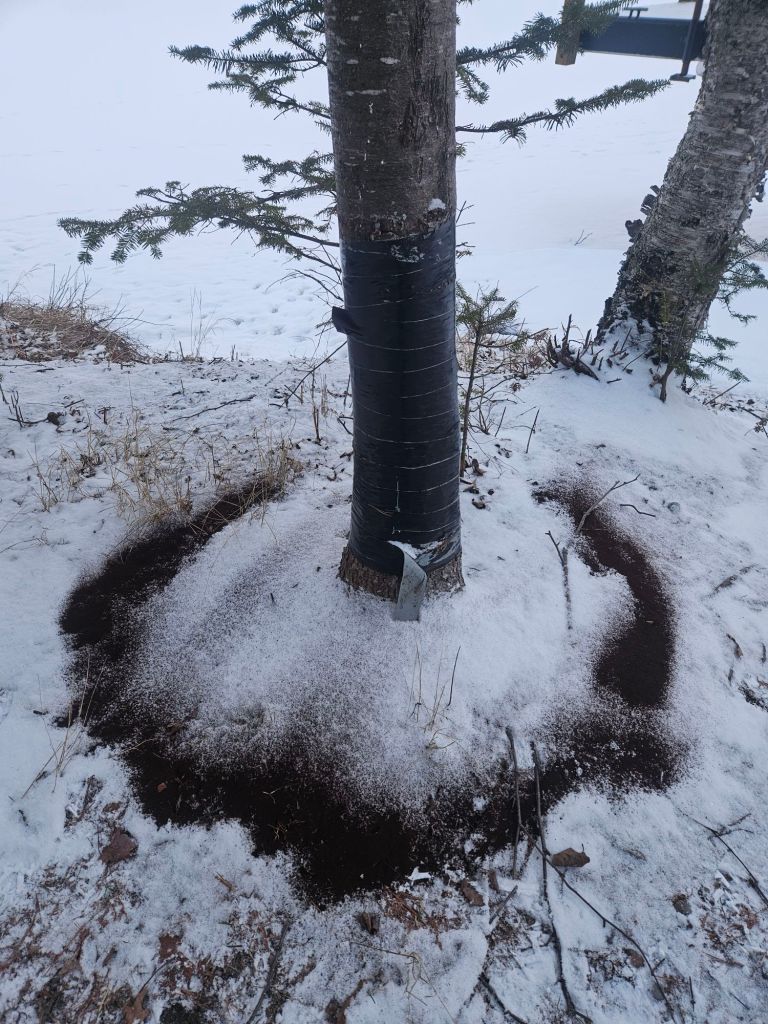
To answer a question in the last post, here’s what I do with dried coffee grounds to feed a little acid to evergreens. Not sure it helps, but it’s easy to try. And it gives me somewhere to put the grounds. I research which plants like wood ash and which like coffee grounds, as the experiment continues. (This spruce wears a bandage after being injured by a vehicle.)
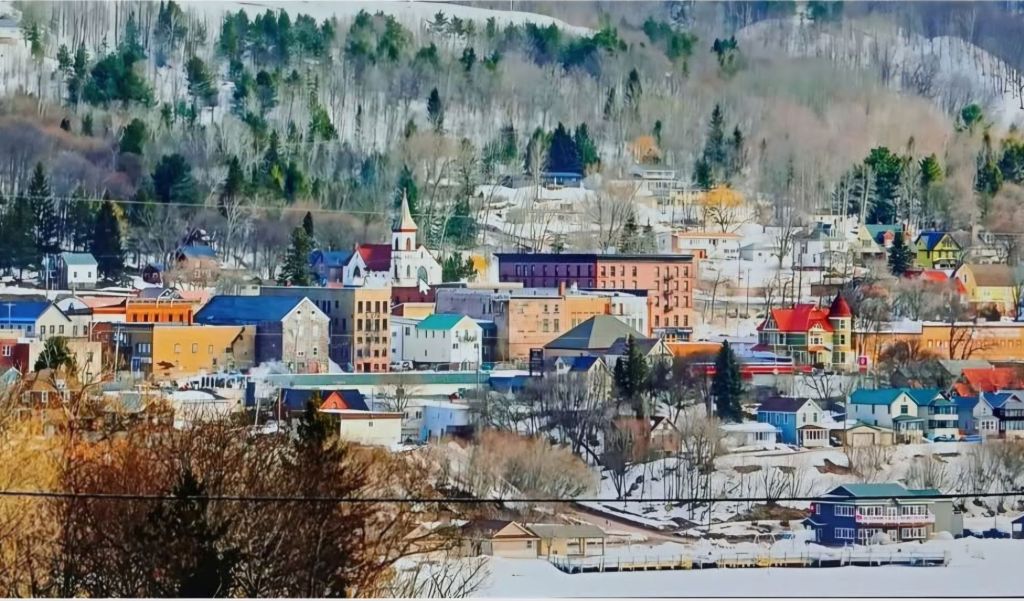
Ending this post with a recent photo of my own hometown of Hancock, Mich. (Photo by Nancy Hahn.) The distance from here to my Dad’s birthplace is about 60 miles. We made the trip often as a family and the drive seemed long. Now, I regularly drive 1,000 miles from my home in Virginia to my 2nd home in Michigan. Perspective sure changes with time and experience!


Good to see these photos again, along with some new ones! That one of your hometown looks like a painting!
Blessings,
LikeLike
Beautiful!
LikeLiked by 1 person