Human-animal interactions are complex! At least for us humans; maybe not for the animals. I’ve been observing this dynamic close-up — and participating in it, too — and it’s raised some questions in me. At what point does a wild animal become a pet? When is it a bad idea to support wild animals and when is it a good one? Is a house pet ever truly tame? Feelings run strong on these issues. Many people have instant answers but, unless they’re biologists, I tend to dismiss them. I’m no expert but I do consult them…and then do the best I can. After days of interaction with dogsled teams, I’ve learned a few things from them too. Here’s my view from the north-woods of Michigan’s Upper Peninsula. Standing by for strong opinions!
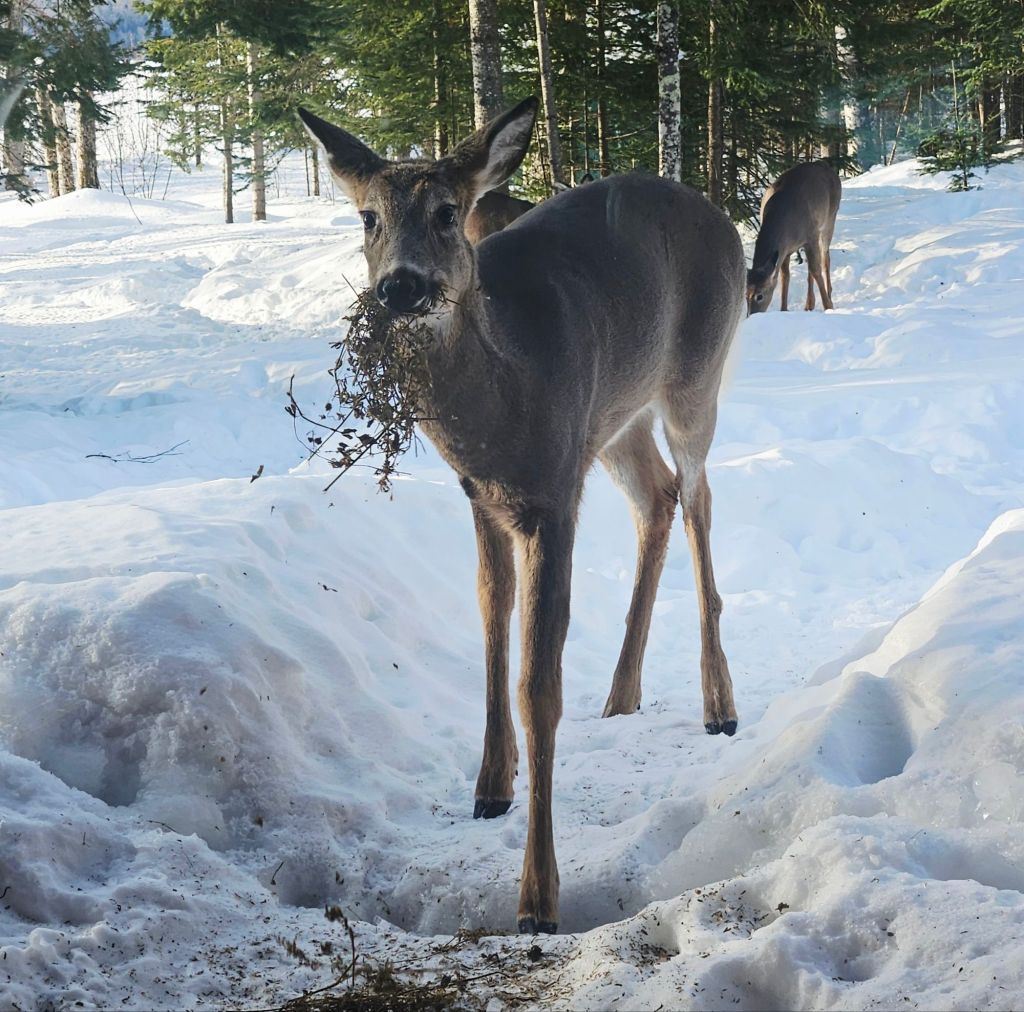
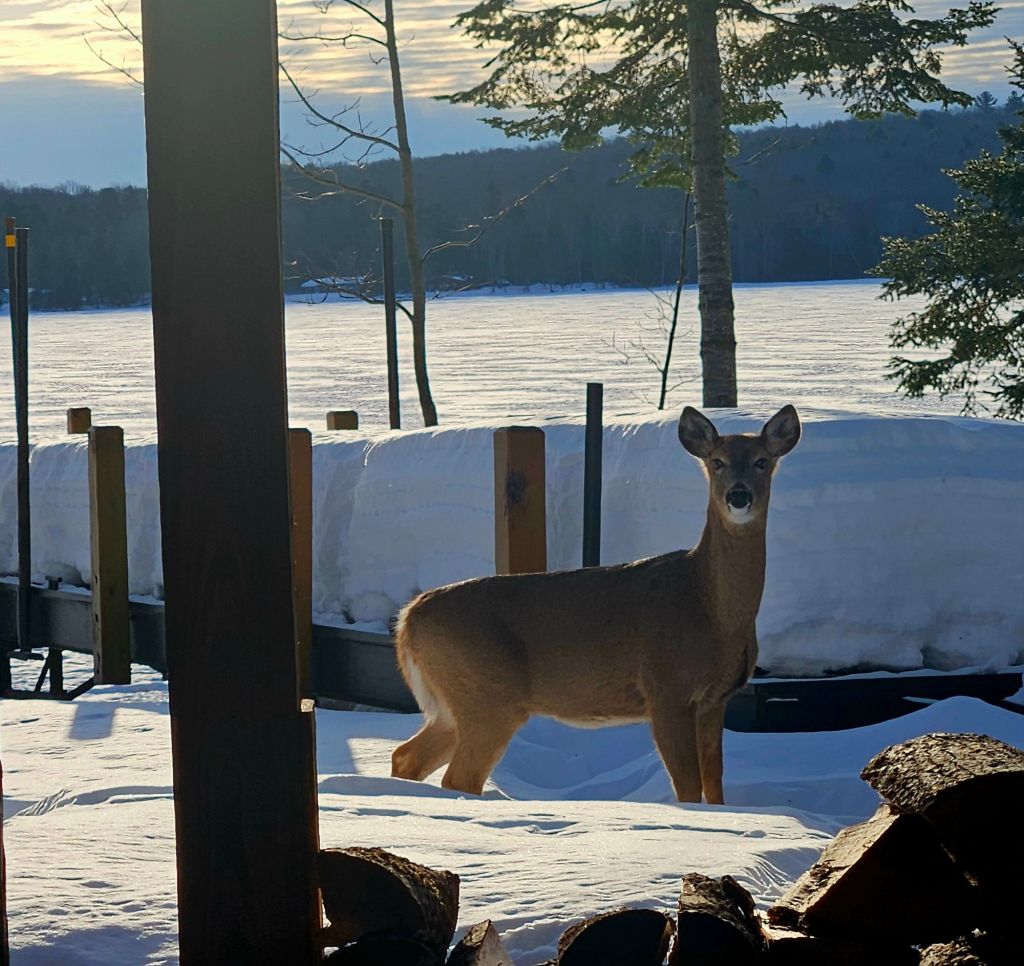
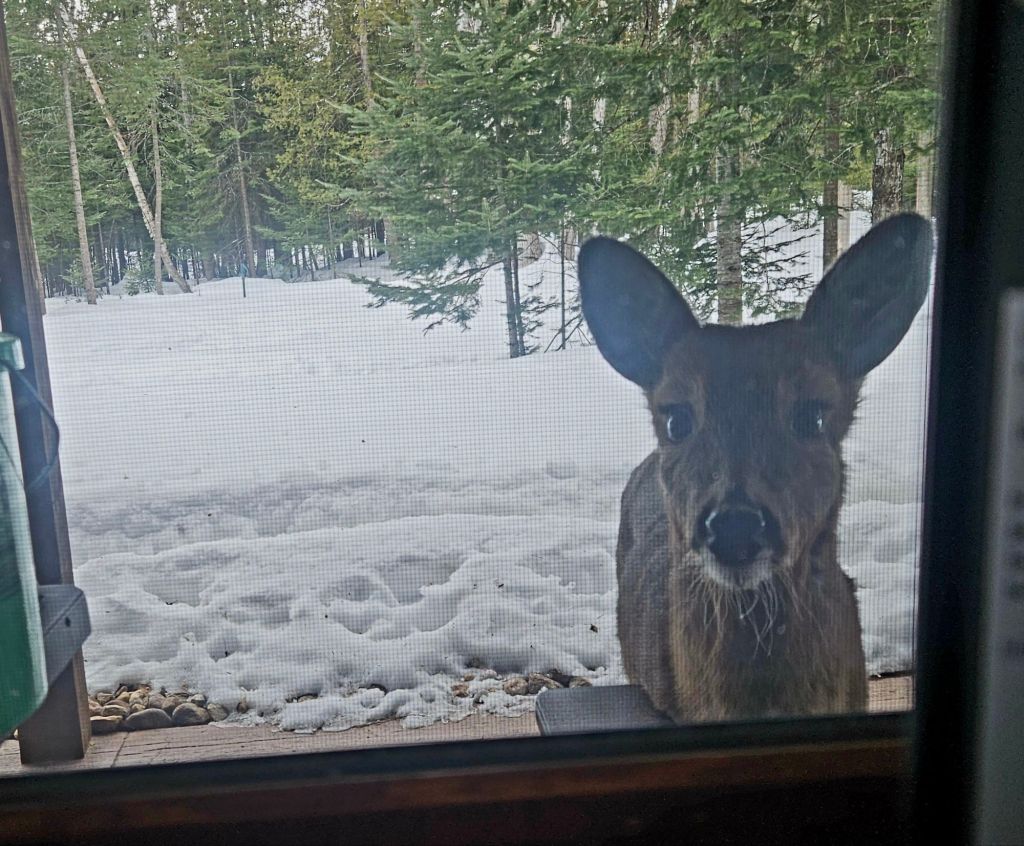
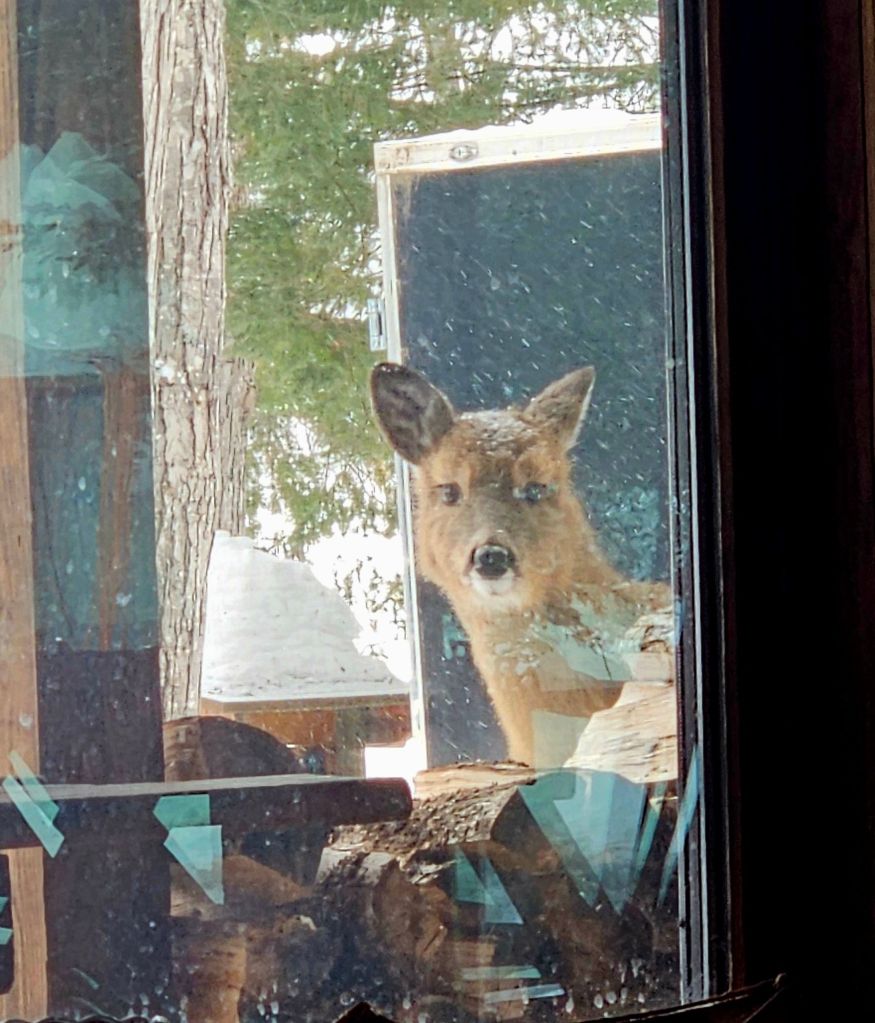
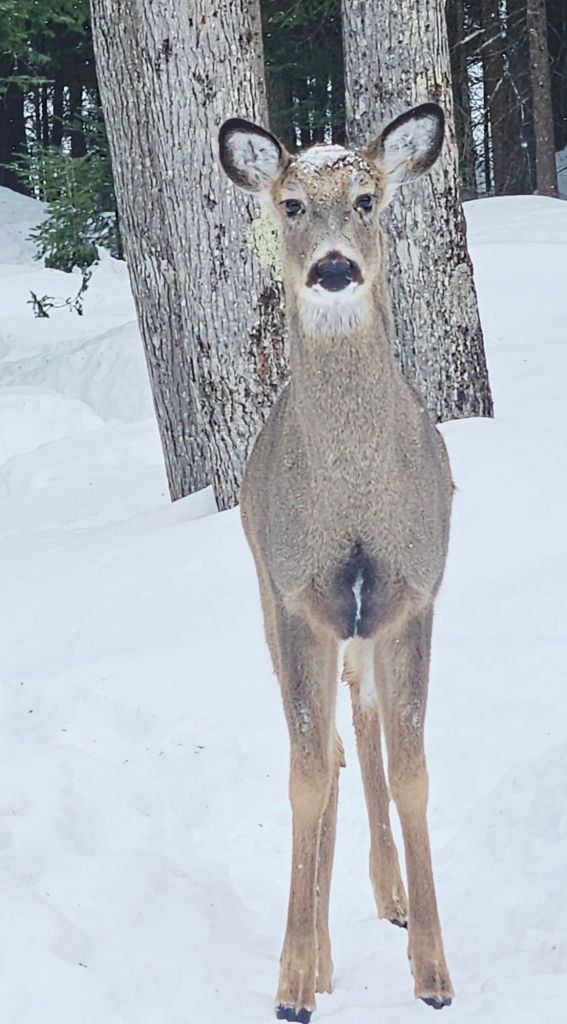
I feed just three deer. They watch me carefully. They approach the house regularly. One even “tapped” on the patio door. (See previous post.) The youngest seems nearly-tame. I’m feeding them because the snow is deeper than normal here and I want to supplement their natural diet.
I feed alfalfa, which mimics their natural diet, rather than corn, which can cause digestive issues. (Cracked corn is a bit better than whole.) Many people feed corn, which is marketed in areas that wild deer frequent. I learned last year that it can be bad for them. Some people dispute this. My main source is the DNR, which is often distrusted in rural areas where regulations are generally distrusted. But I knew a few wildlife biologists who worked for the DNR, and I know that they know more than I do.
I limit to three to avoid attracting a herd — because I don’t want that obligation, but also because disease can spread more quickly in a herd. (I limit the numbers by feeding only when “mine” are around. It’s working so far, partly because a neighbor does feed a herd.) I limit the amount because I don’t want to replace their browsing instinct. I vary feeding time because, if you feed on a schedule and miss one, they may get distressed — much as some pets do. Or so I read. (Not sure about that one.)
When she looks in on me as I sit on my computer, how can I resist?! By the way, feeding wild deer is illegal in downstate Michigan but not here in the U.P. Regulations vary by region depending on herd health and size.The snow on the roof is starting to shrink now that March is here, and I’m mindful when to stop feeding. I’ve also heard that once wild deer are dependent on you as a food source, you need to keep it up through winter. Hmm. They will probably head into the woods as their natural food source emerges.
They travel on both the road and the bay, and almost always show up when I get home. I live on a private road with very little traffic. This reduces the likelihood of deer/vehicle collisions, which is a big problem in more populated areas. (We keep our eyes open in all seasons around here, too, where the deer population may exceed the human one. I’ve had such a collision. No fun, especially for the deer.)
Feeding deer can make them more susceptible to hunters as they lose their fear of humans. This is a big deer-hunting area but it’s generally (not always) illegal to shoot does. I honor hunters’ rights, and skills, as long as they’re sporting about it–i.e., don’t shoot from their doorway–but I dislike it. Yes, I know I that whenever I eat meat, somebody “killed it” for me. This one is tough for me. Like I said, complicated!
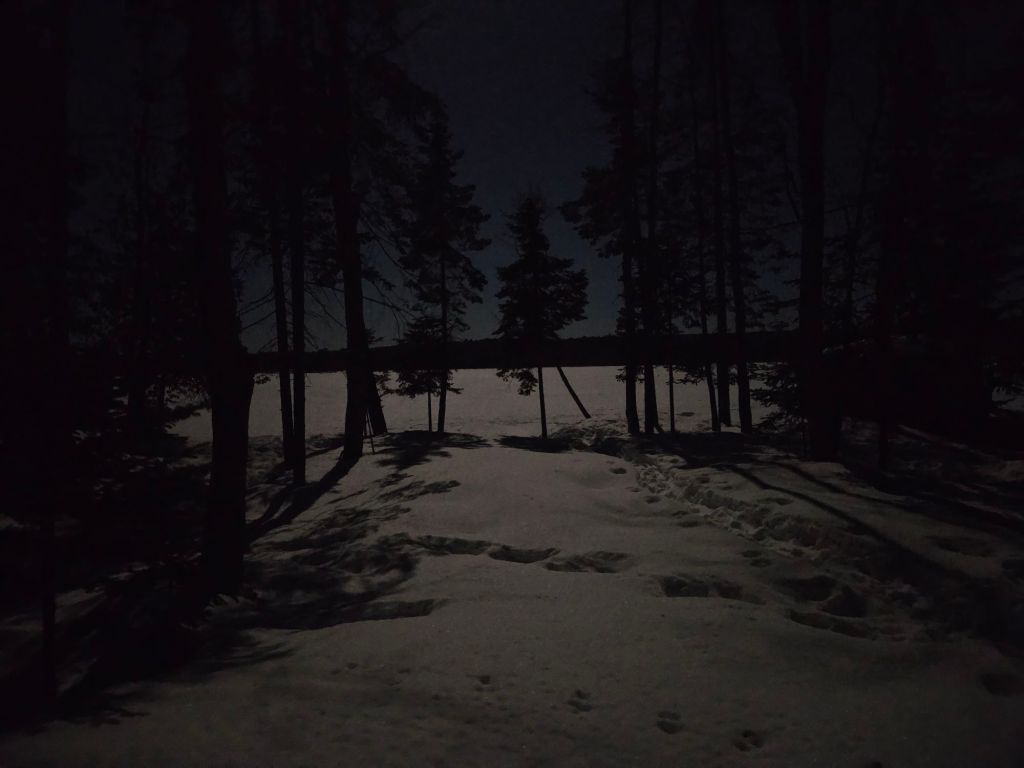
Sometimes wildlife just leaves tracks, such as these rabbit tracks (in front of deer tracks) that show up plainly in the moonlight. I throw out vegetable scraps for the rabbits sometimes but rarely see them. The thing about having rabbits and deer around…you have to be willing to sacrifice some plants. No point in getting mad at them. They’re just doing what’s natural. Aren’t we all!
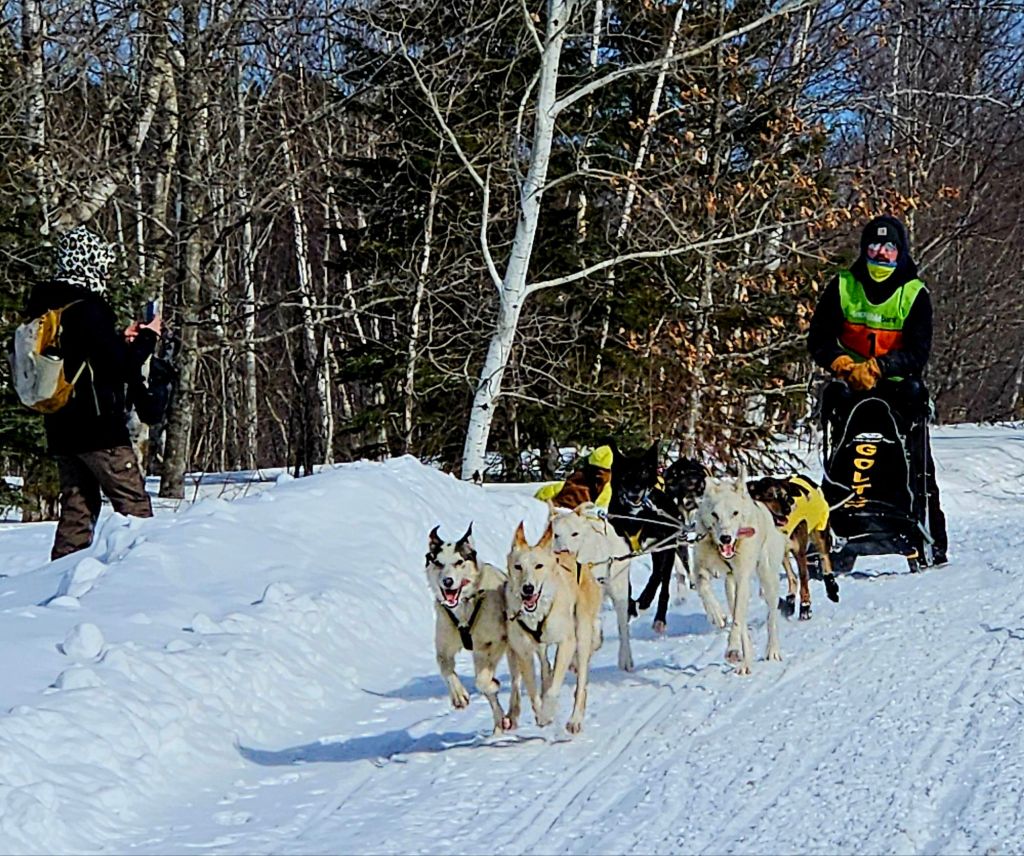
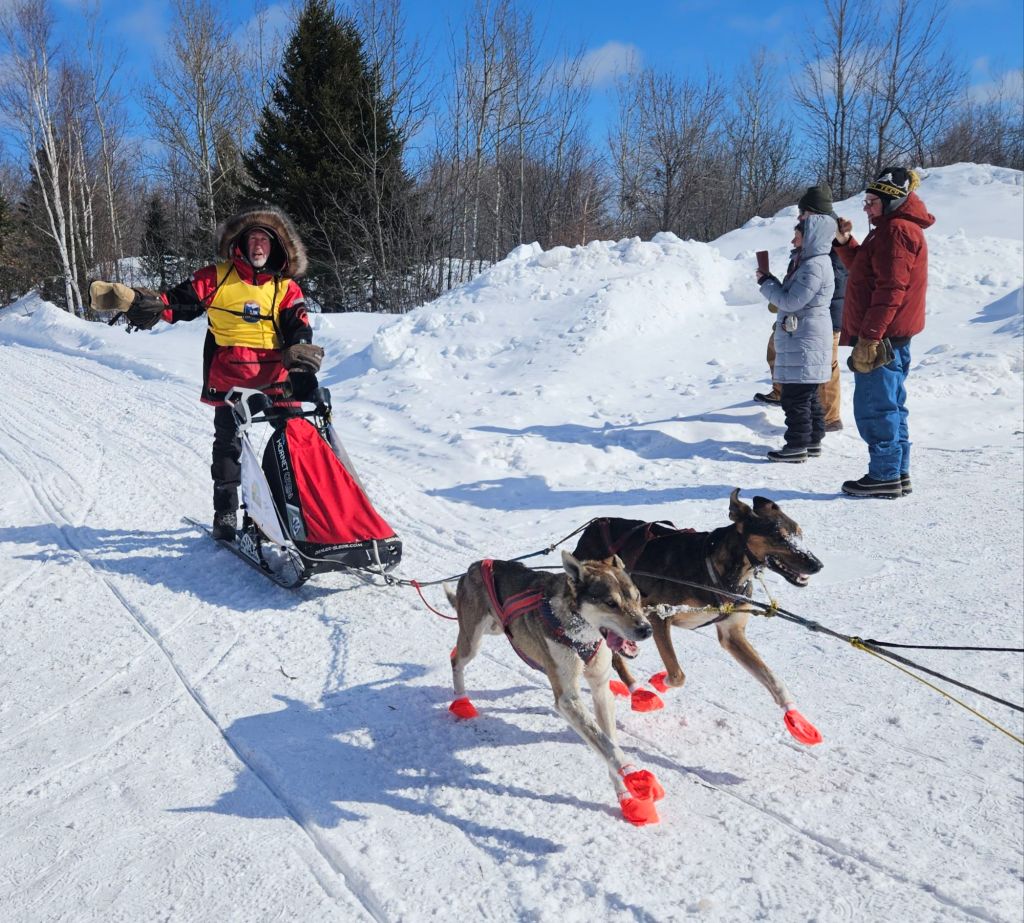
And then there’s the dogs! Working dogs, in this case. I volunteered for the annual CopperDog race — called that because it’s held in the Copper Country, where I grew up. (Both my grandfathers were copper miners here.) Watching 36 teams “at work” reminded me that some dogs need a job to be happy.
This is near the finish line of a 120-mile race. Do these dogs look happy? Yes, they do! Because they love to run! So often, people gets dogs without understanding the needs of the breed. The dogs are often labeled “bad,” when it’s really bad understanding (or lack of training) on the part of their humans.
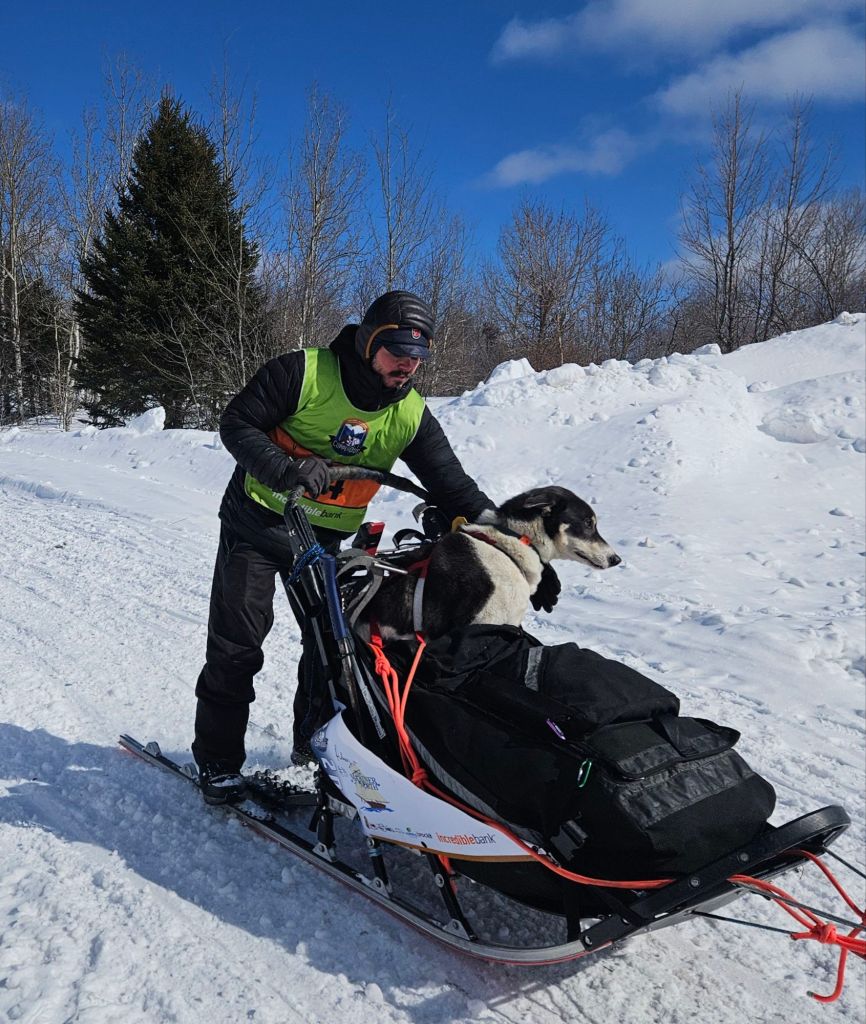
Sled dog owners take care of their dogs. I saw two riding in the sled instead of pulling it because the drivers took them off the job for some reason. Maybe indigestion, or sore paws, who knows. But the dogs are more important than winning to these responsible owners.
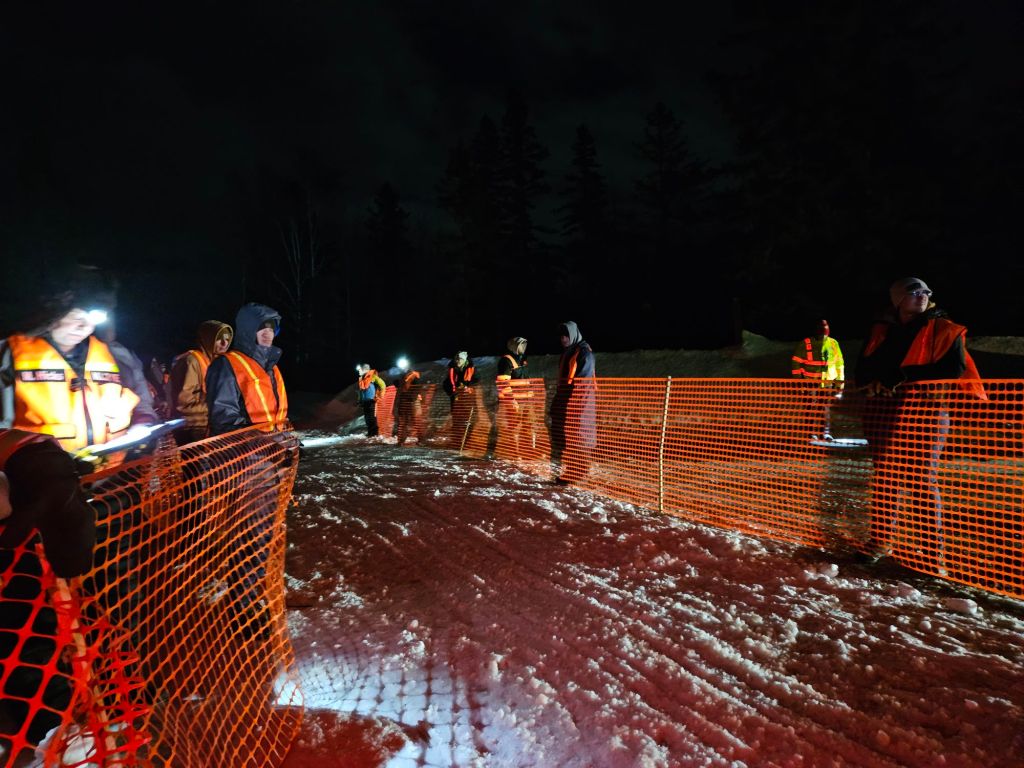
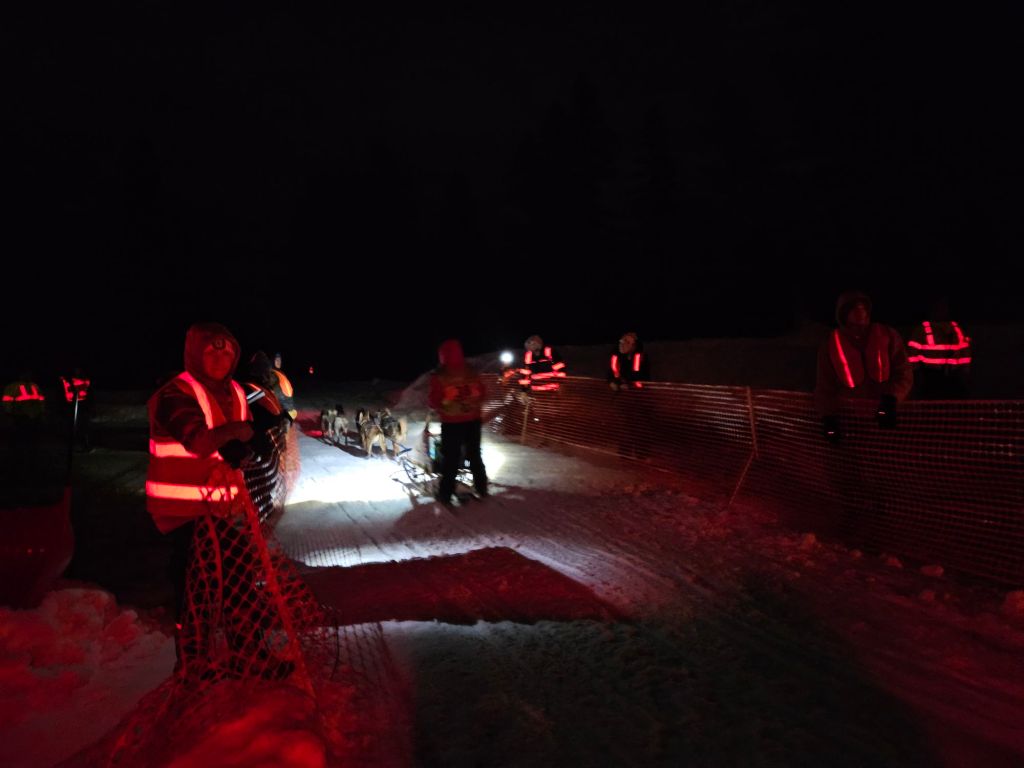
A nod to the crew who created safe passage across a highway for the sled dogs at night. I was the crossing coordinator at this busy spot and I ran “my crew” through a few drills to make sure we could run these snow fences across the road quickly and then remove them again to let vehicles pass. (We also put down that snow on the road, which was bare. Sleds do need snow!)
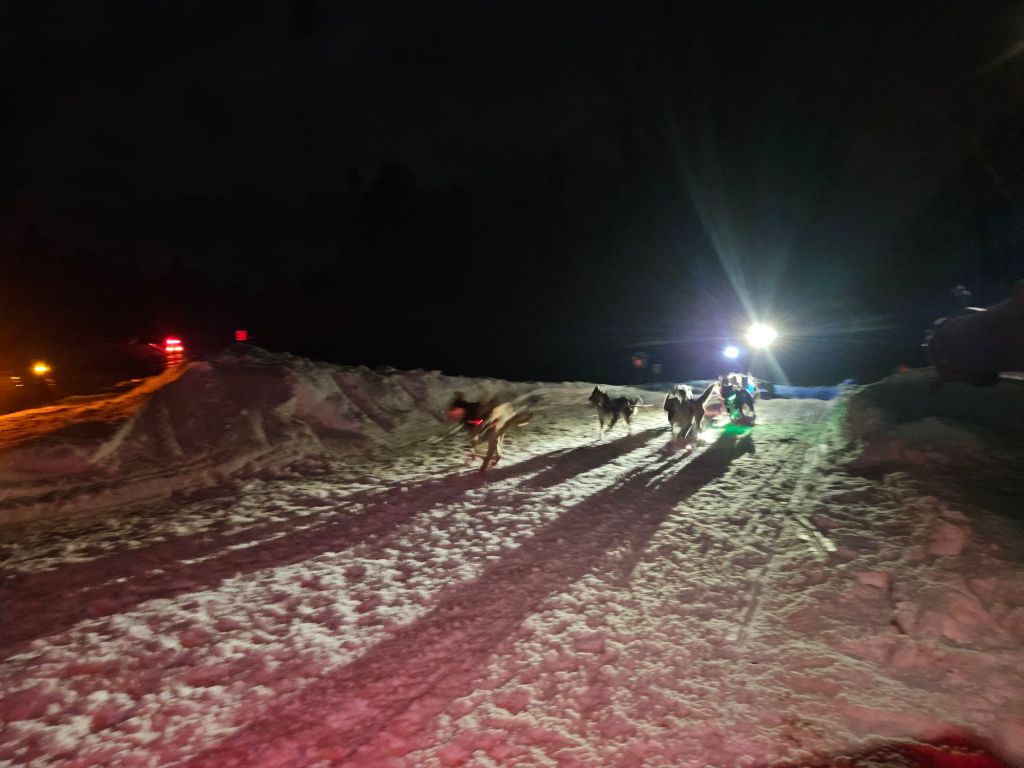
As the sleds approached the crossing, my spotter gave me a heads-up and I sent out the “fence crew” — after making sure that traffic was stopped first. (The spotter also would signal the sleds to stop if it wasn’t safe. It was my job to make that call. We didn’t have to stop any sleds; we stopped traffic instead.)
It was a bit nerve-wracking when several sleds came through close together as traffic waited, because it was hard to judge distances in the dark, but it worked. The sled drivers yelled “thank you!” to the volunteers for making sure they were safe.
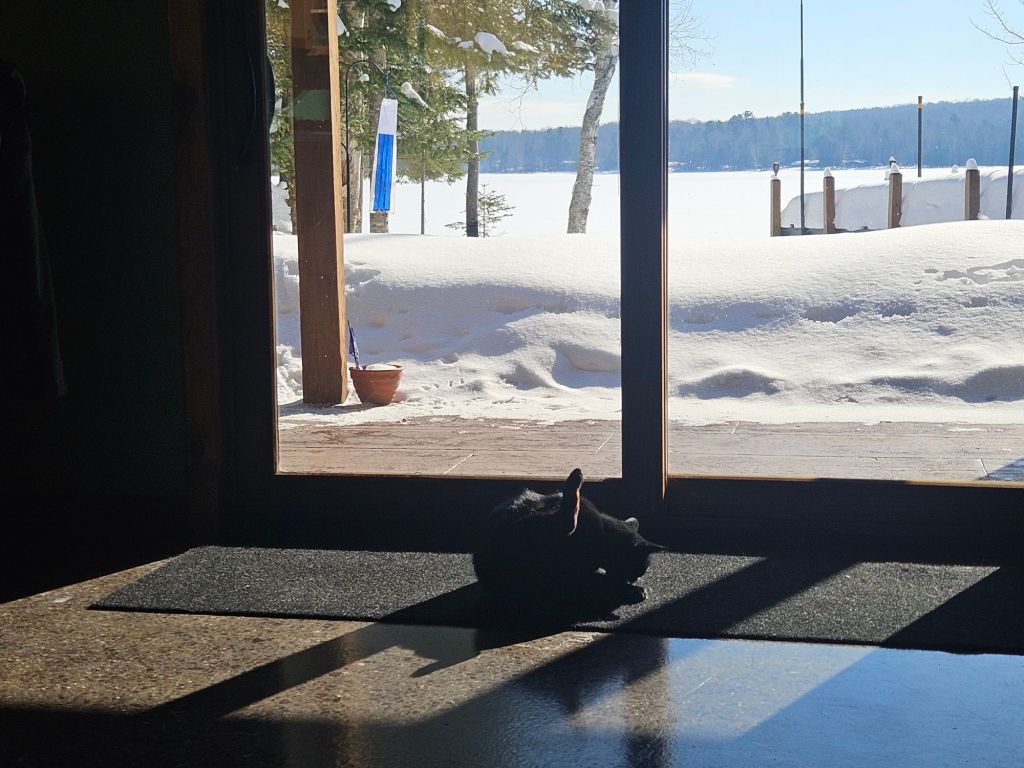
Then there’s the cats – like Boo, basking in the sunbeams. (See the snowbank in front of the door? The ground actually slopes downward there. Strange winds put drifts in strange places this year.) Boo is an indoor/outdoor cat — because she loves to explore, and her quality of life is as important to me as her longevity — but she hadn’t been out much this winter. After 17 years with her, I still don’t understand her behavior. Sometimes she acts like a wild cat. Because those genes are still in her.
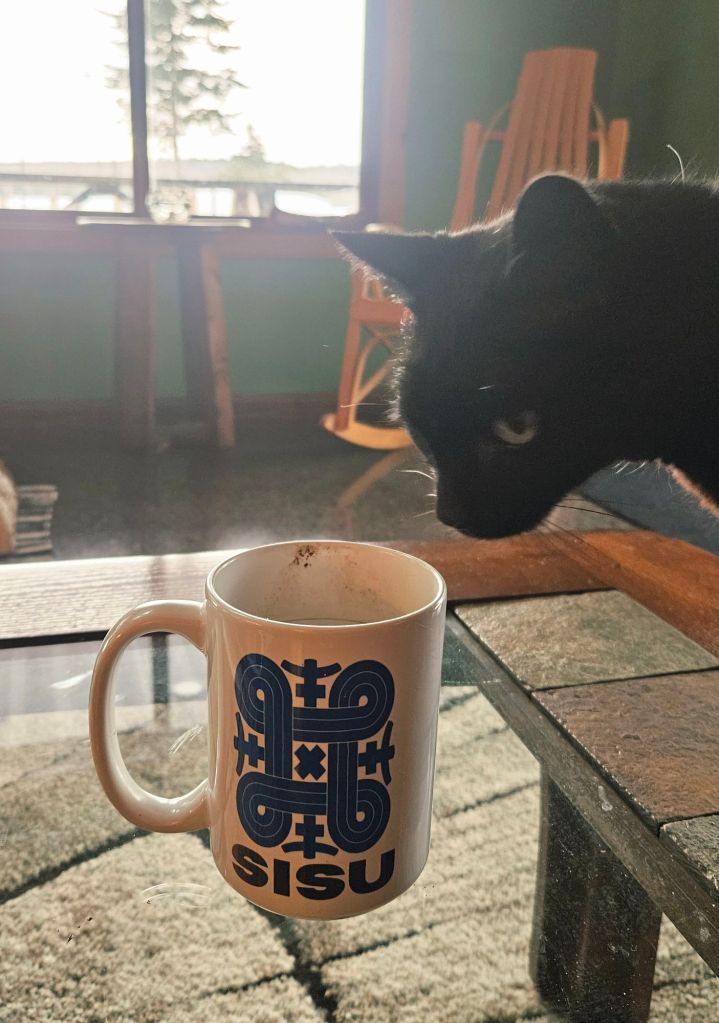
She perched on the coffee table (which has a glass center) this morning to investigate my dirty coffee cup. As if to say, “You drink from THAT??” 😉 She’s done many things that people assume cats won’t do, such as a long boat trip, riding on my paddleboard, and swimming. Instead of assuming she can’t, I tested her out and learned she can–partly because she trusts me. Her diet is an ongoing puzzle though. What’s tasty one day is boring the next!
Speaking of diet. This happened after I let my own slip. I call it “biscuit-and-gravy overload!” (My treat to myself after the dogsled races ended.) I worry over the deer’s diet but sometimes forget my own…and the impact of eating the wrong thing.
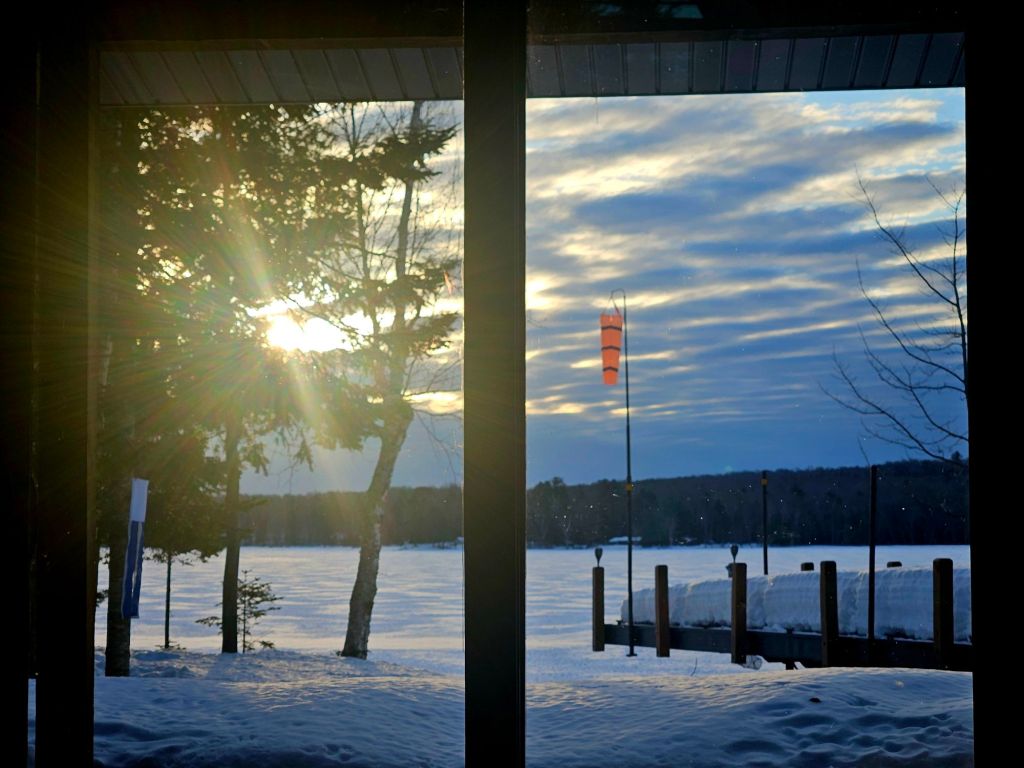
I’ll end this post with some more winter scenes, including a cold sunrise as seen through the patio door…
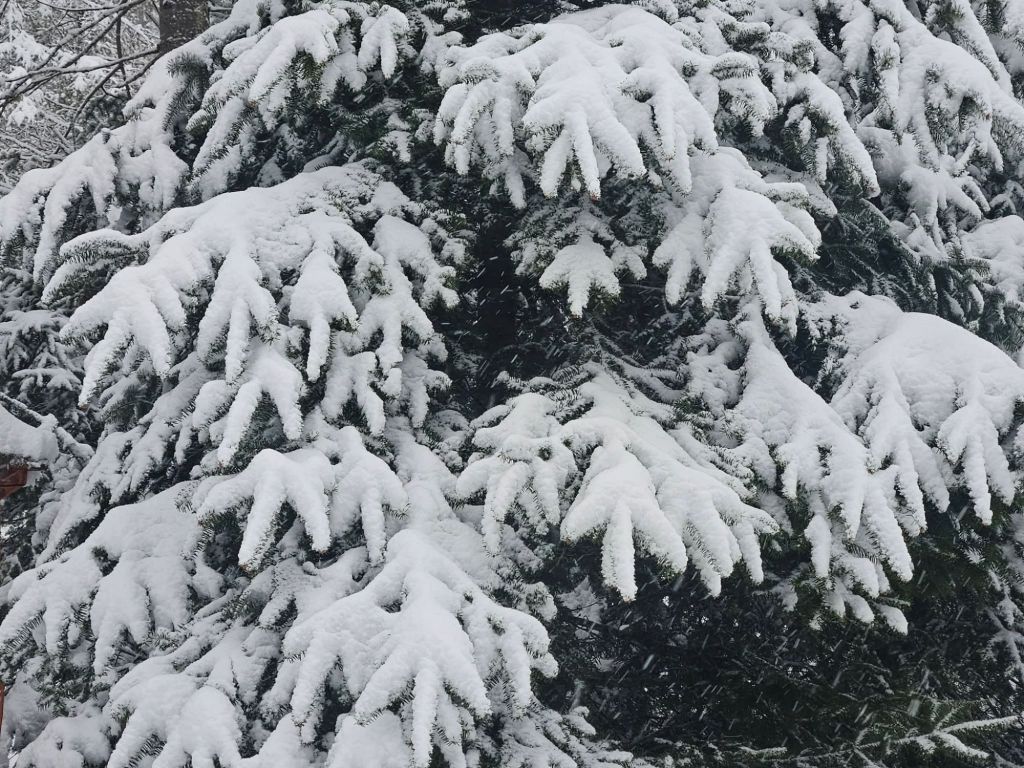
…and snow-laden balsams….
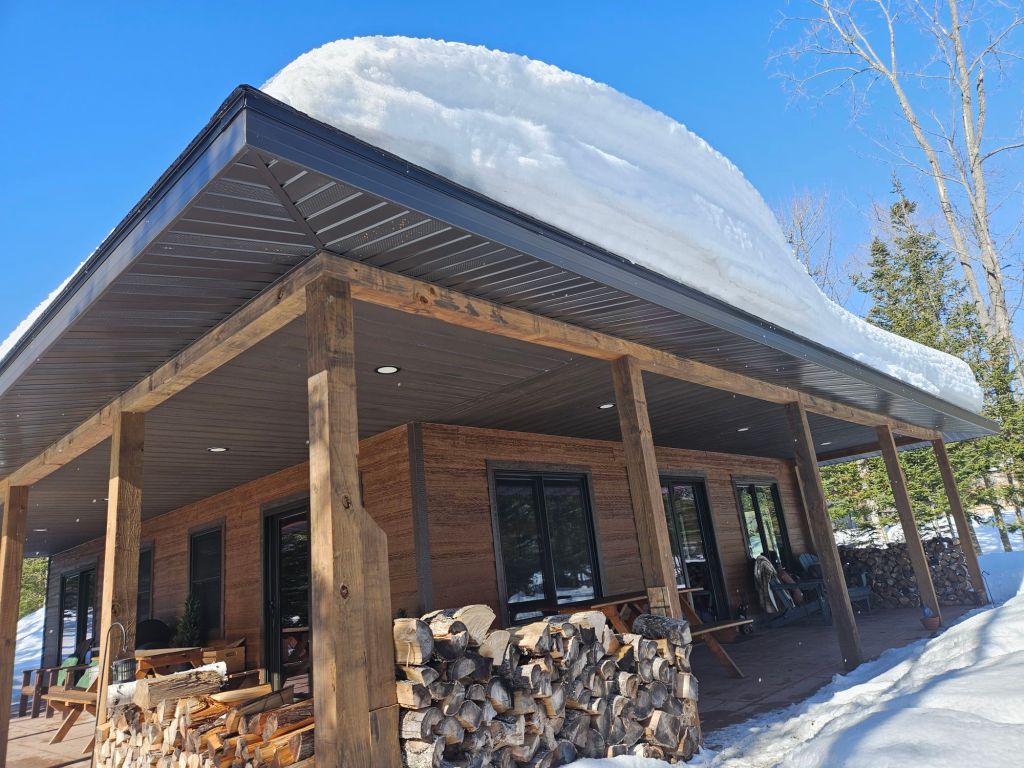
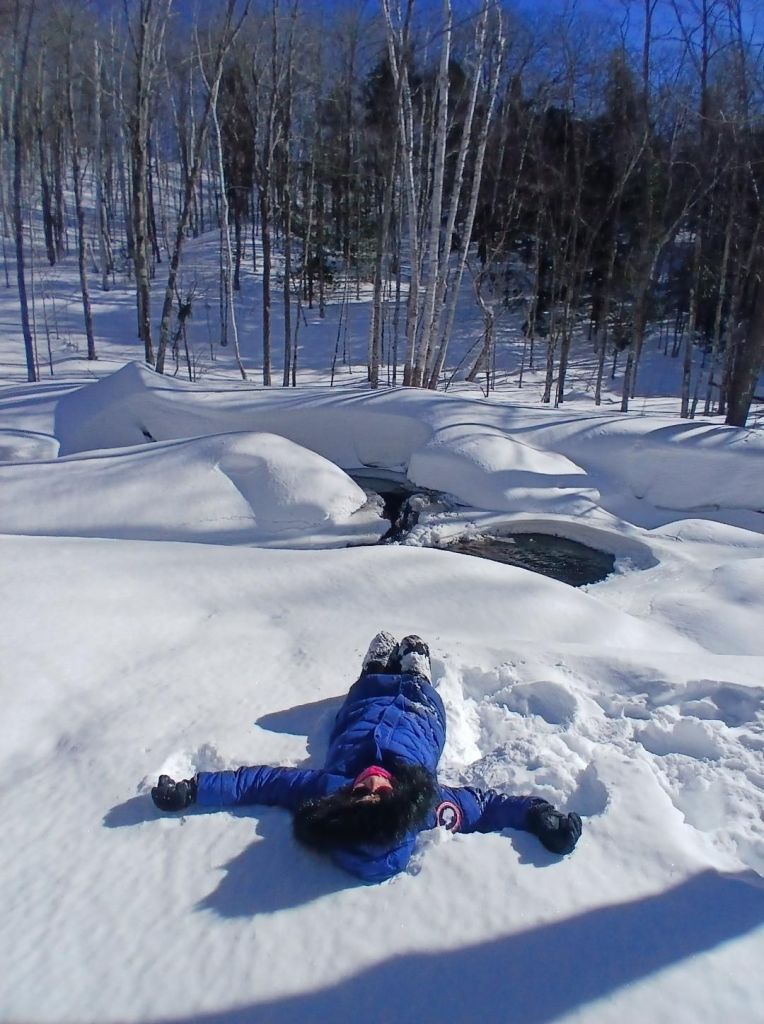
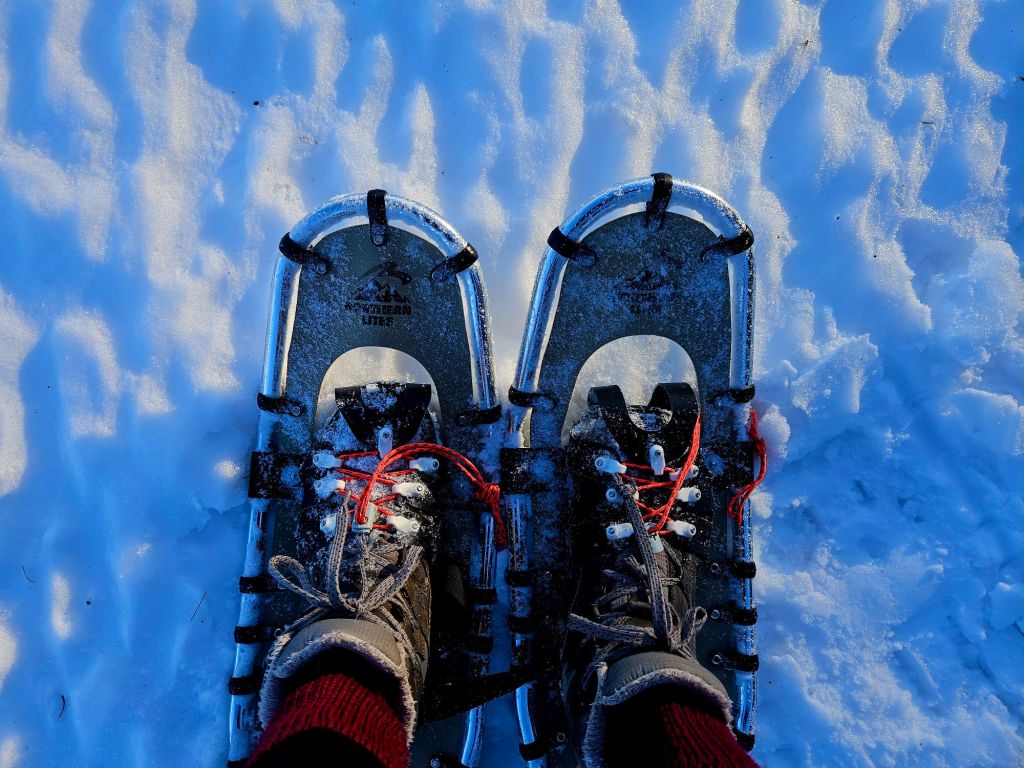
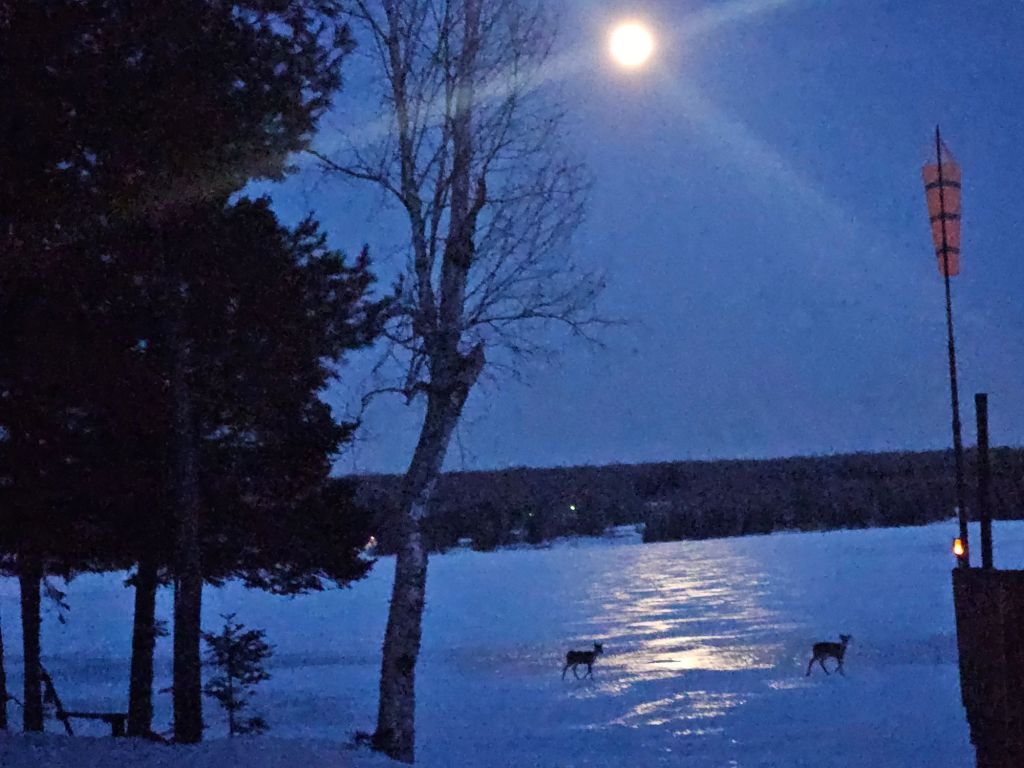
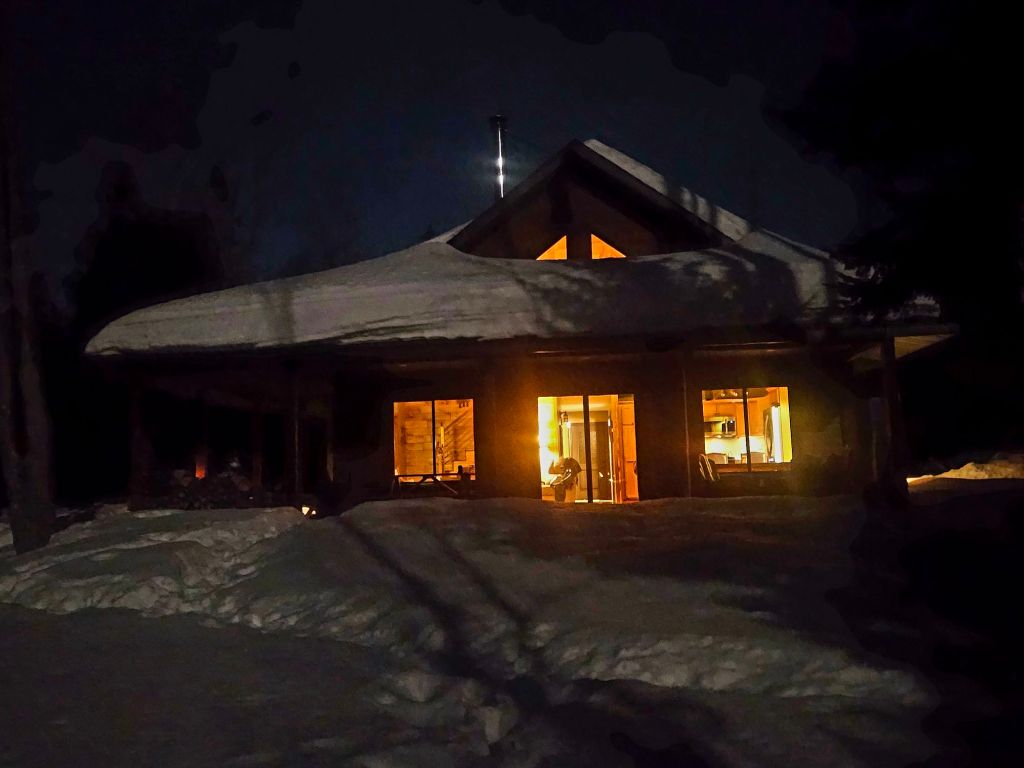
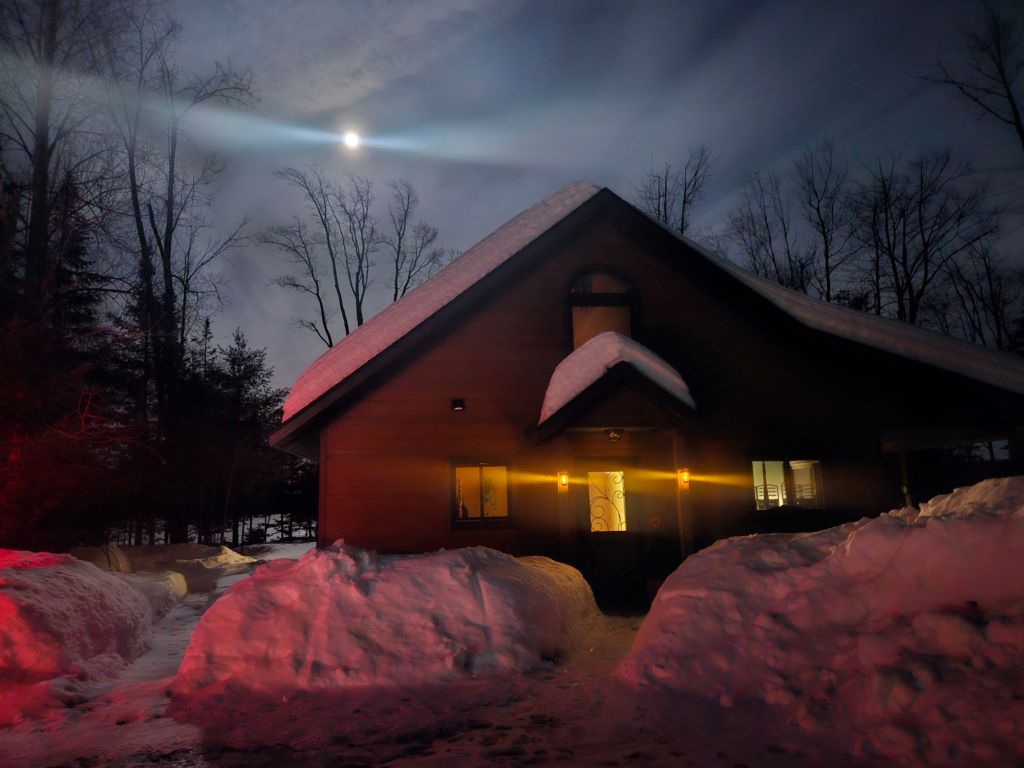
… and snow-shoeing on the rippled ice of the frozen bay in today’s sunshine…… and the deer doing their evening commute on that same frozen bay as tonight’s bright moon rises…… and the water side of the Cabin at Many Moons as the moon throws shadows on the snow…… and the front door as the moon rises over the roof. It’s a cozy place and both Jeff and I are proud of how it turned out.
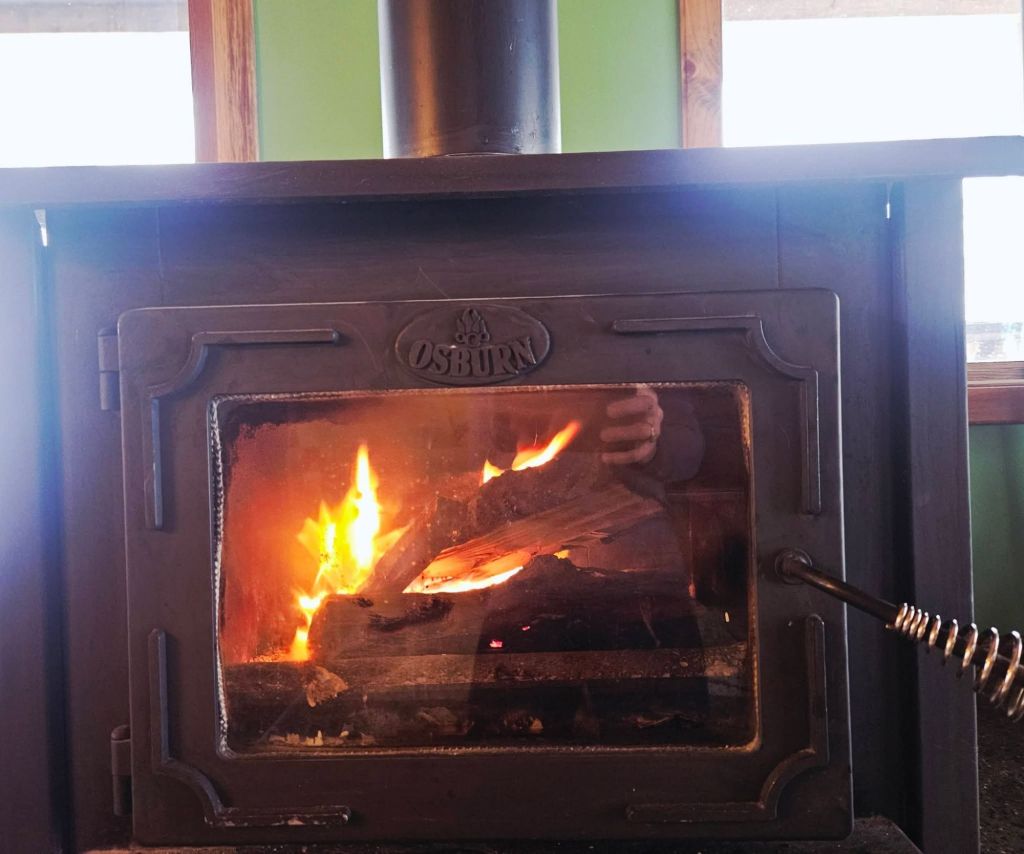
Indoors gets pretty cozy, too, especially with a fire in the woodstove.
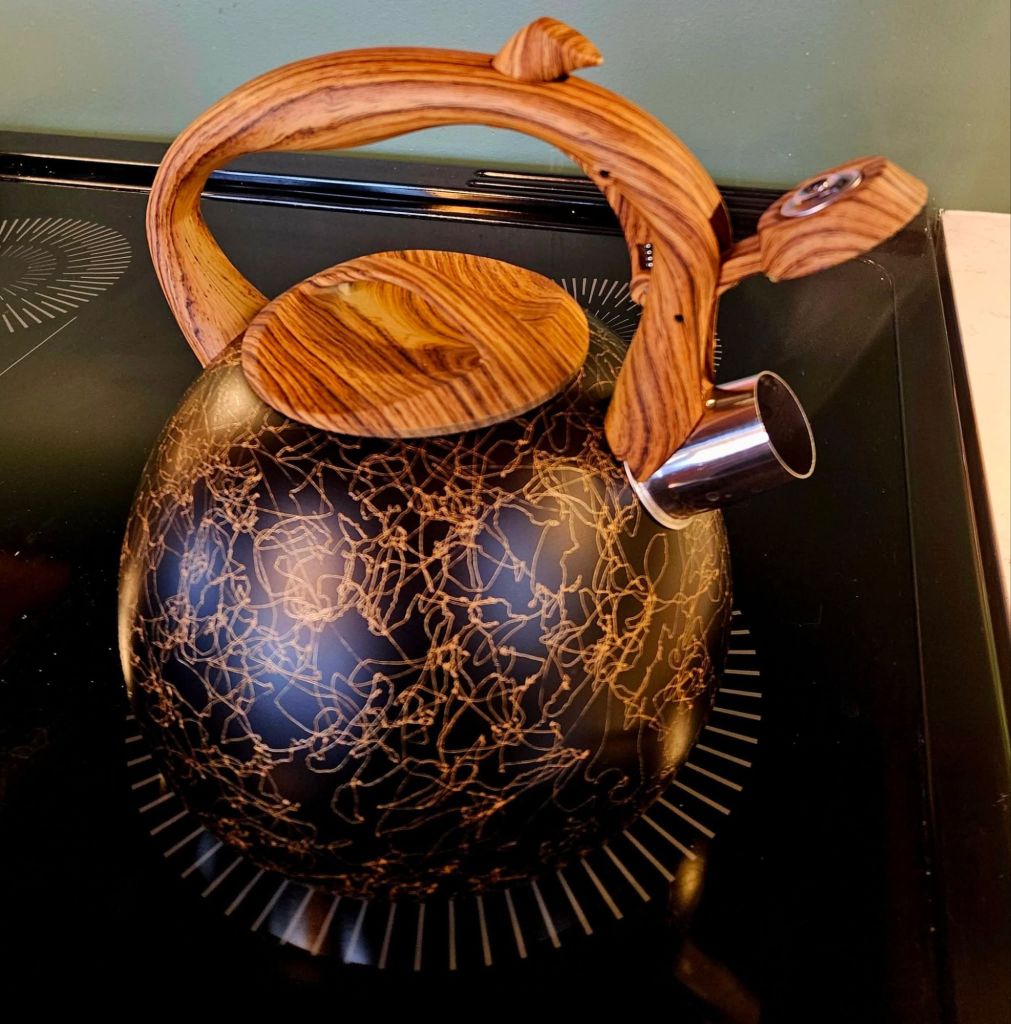
Here in the northwoods, we often leave a steaming kettle on the stove in winter to improve humidity. This is important if using a woodstove, but I’ve learned that houses with in-floor heat also get very dry. I’m concerned about the wood ceiling cracking but should also be concerned about my nose cracking. 😉
Leaving you with the sound of crunching snow as I walk in moonlight in 4 degrees. Is crunches like this only when it’s cold. How I love this sound, and miss it when I’m in “the south.” There’s something so clean about it…


Happy St. Urho’s Day?
LikeLiked by 1 person
Indeed!! I planned a party as I have had for many decades, but had to cancel it due to the weather. I even made homemade pasties!
LikeLike